Automated Wet Bench Systems for High-Precision Semiconductor Cleaning
Industrial-grade automated wet processing workstations engineered for high-throughput wafer cleaning, chemical etching, and surface preparation. KOSEN SEMI automated wet benches deliver operator-free, high-consistency chemical processing across advanced semiconductor production lines.
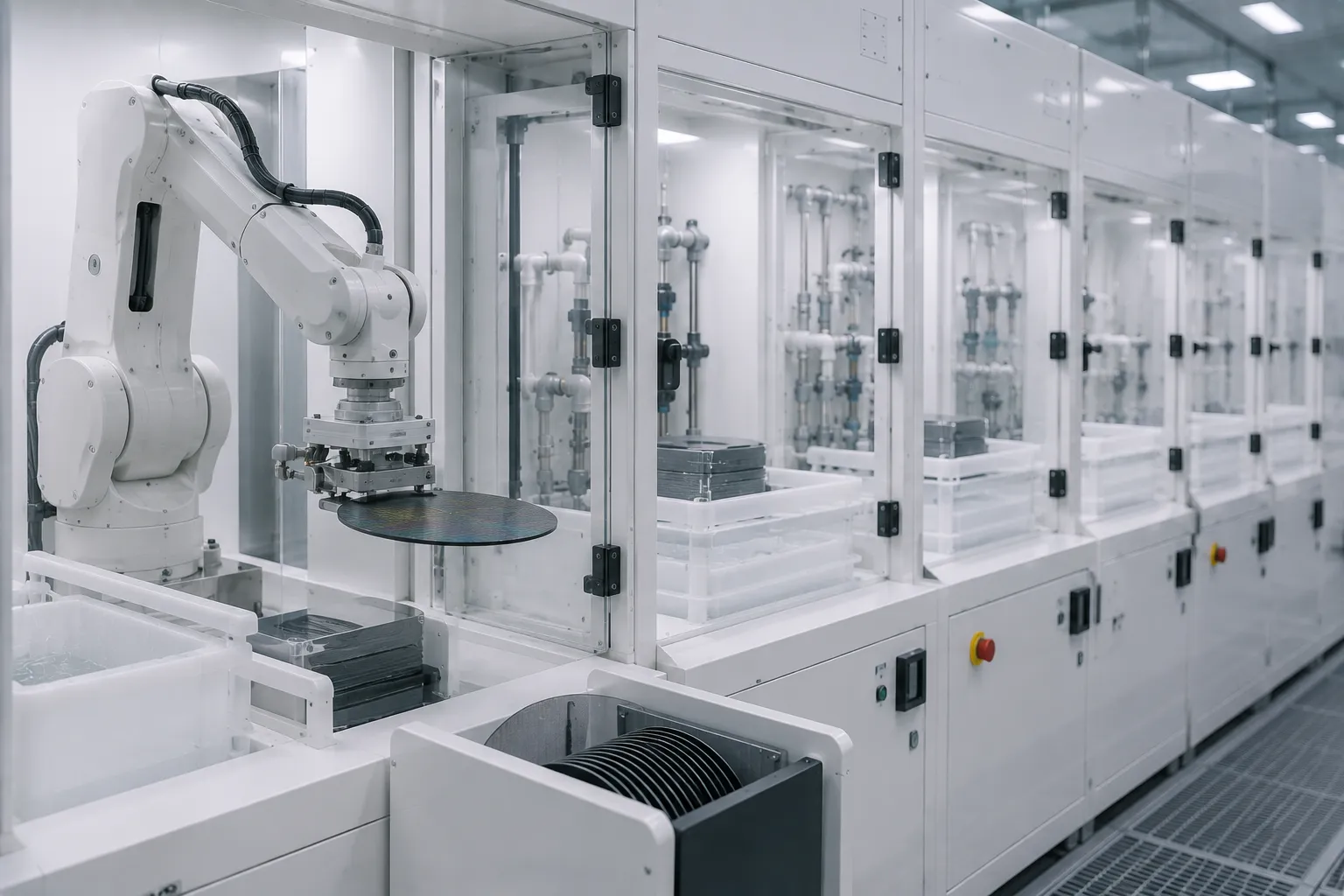
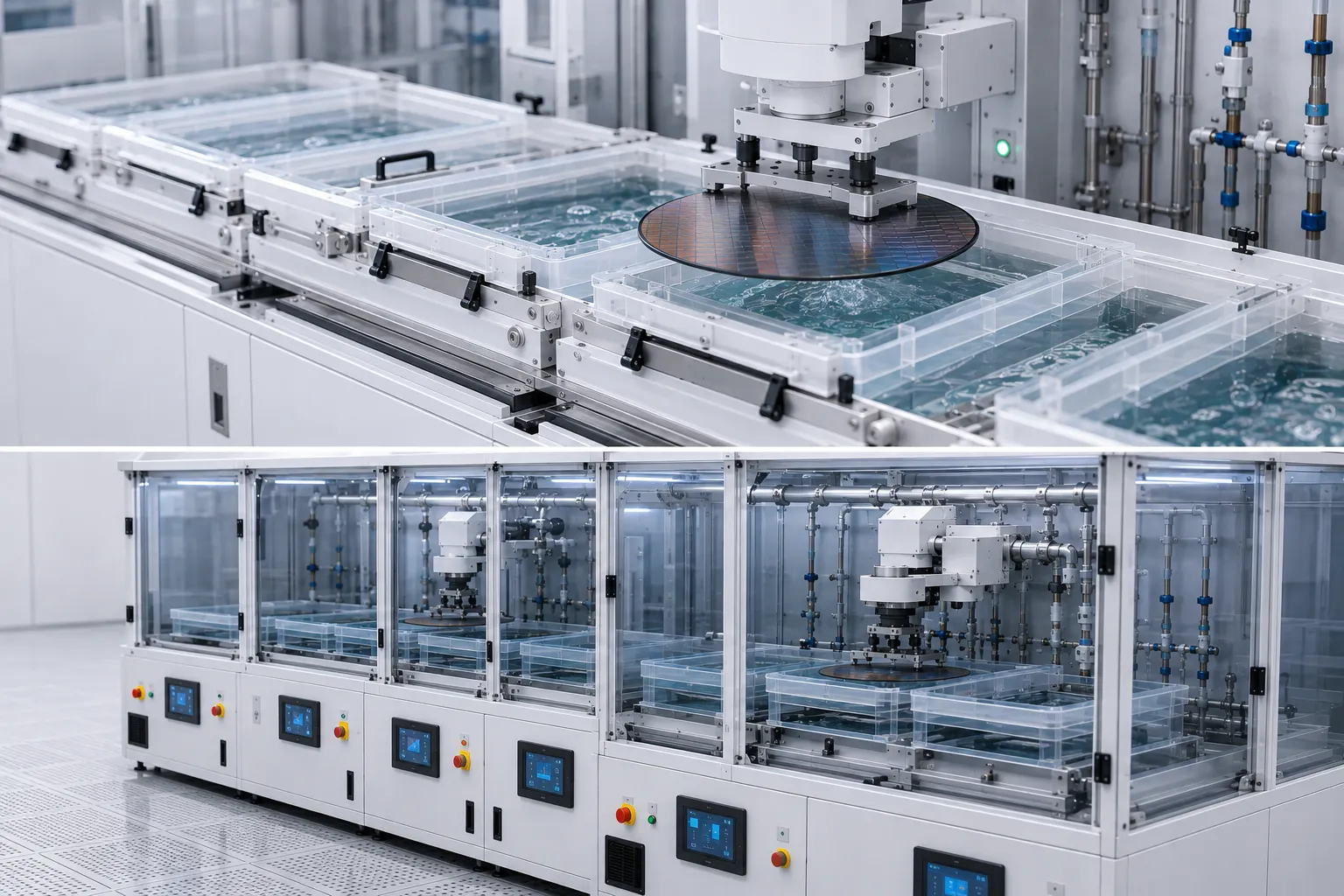
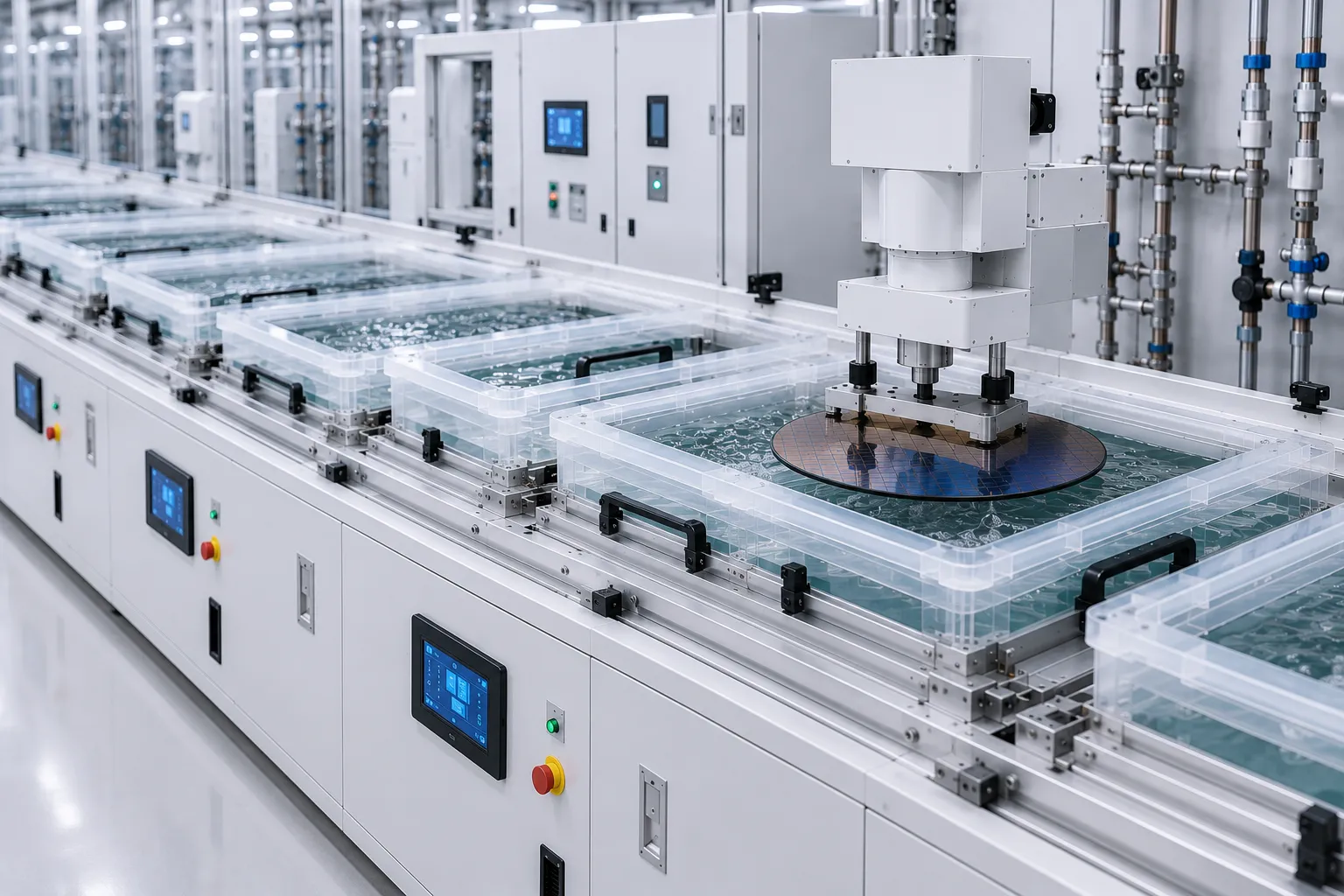
Robotic Wafer Transfer System
Automated high-precision material handling
Why Transition to Automated Chemical Processing
Manual and semi-automated wet bench tools introduce operator variability and particle contamination that compromise semiconductor device performance. KOSEN SEMI automated wet bench systems transform automated chemical processing into a precise, highly repeatable production standard. By integrating closed-loop multi-axis robotics, real-time chemical dosing, and SEMI-compliant containment, our platforms drive meaningful wafer yield optimization and maximize overall equipment effectiveness (OEE) across commercial manufacturing lines.
Robotic Precision Transfer
Sub-millimeter position accuracy engineered with multi-axis servo robotics eliminates particle generation, wafer slippage, and manual handling errors across every high-throughput transfer cycle.
Closed-Loop Chemical Dosing
Automated chemical replenishment, inline concentration monitoring, and continuous circulation filtration preserve bath purity for precise wet etching and single Single Wafer Cleaning Systems yield optimization.
Facility Operator Safety Enclosure
SEMI S2/S8 certified anti-corrosion cabinets equipped with ultrasonic liquid level sensing and toxic vapor detection prevent cleanroom contamination and safeguard technical staff.
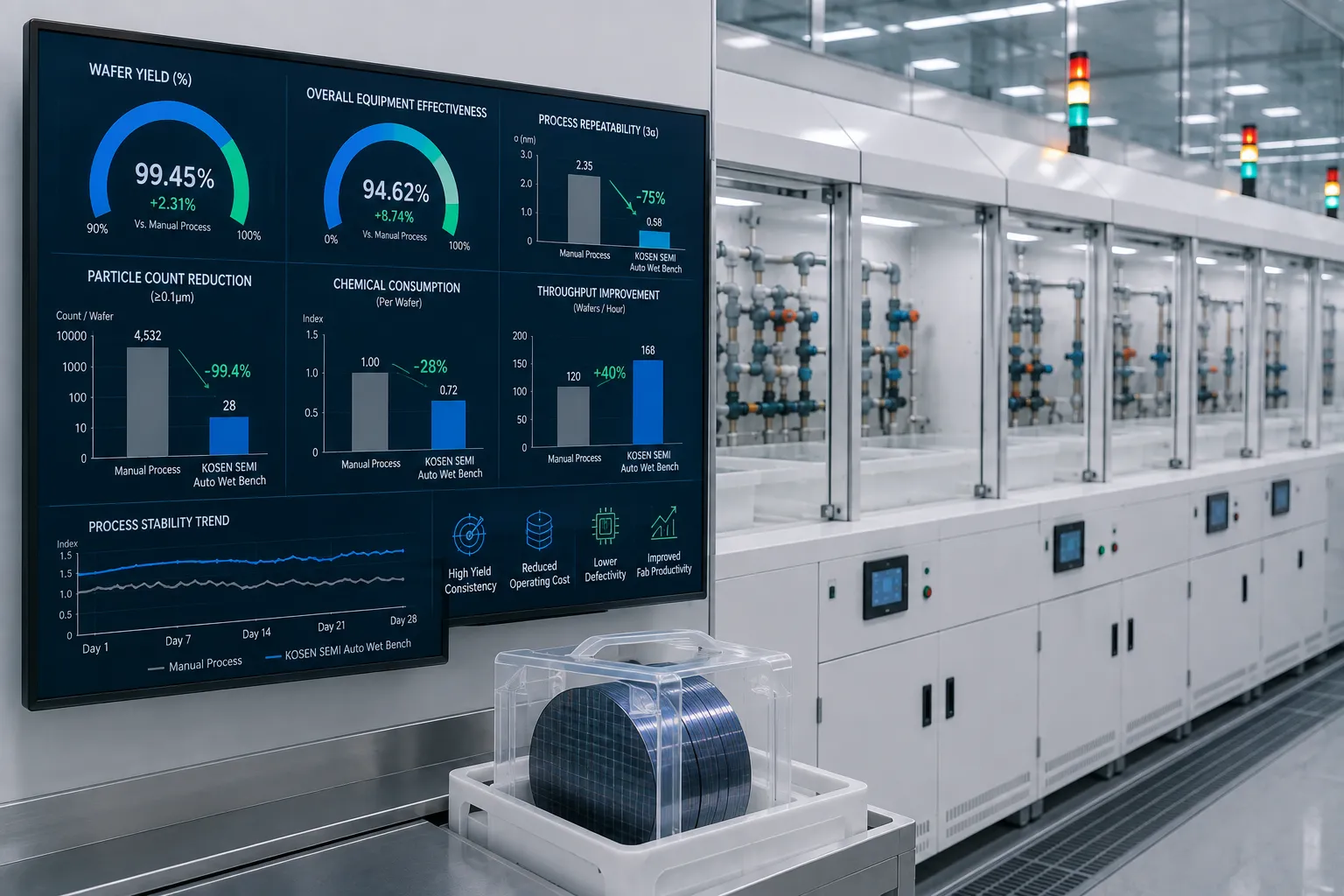
Measurable Impact on Wafer Yield and OEE
KOSEN SEMI's proprietary control architecture empowers high-volume semiconductor fabs to eliminate processing bottlenecks and manual handling risks, using Engineering Capability to optimize performance. Our automated chemical processing tools deliver unmatched batch-to-batch repeatability, lower chemical consumption, and ensure optimal Fab productivity across every operational shift.
- Drastic reduction in wafer scrap rates through non-contact robotic handling and tight chemical bath control
- Substantial boost in overall equipment effectiveness (OEE) via uninterrupted recipe execution and automated tank sequencing
- Comprehensive digital process traceability with real-time logging of bath temperatures, flow rates, and chemical concentration
Modular Hardware Architecture & Subsystem Engineering
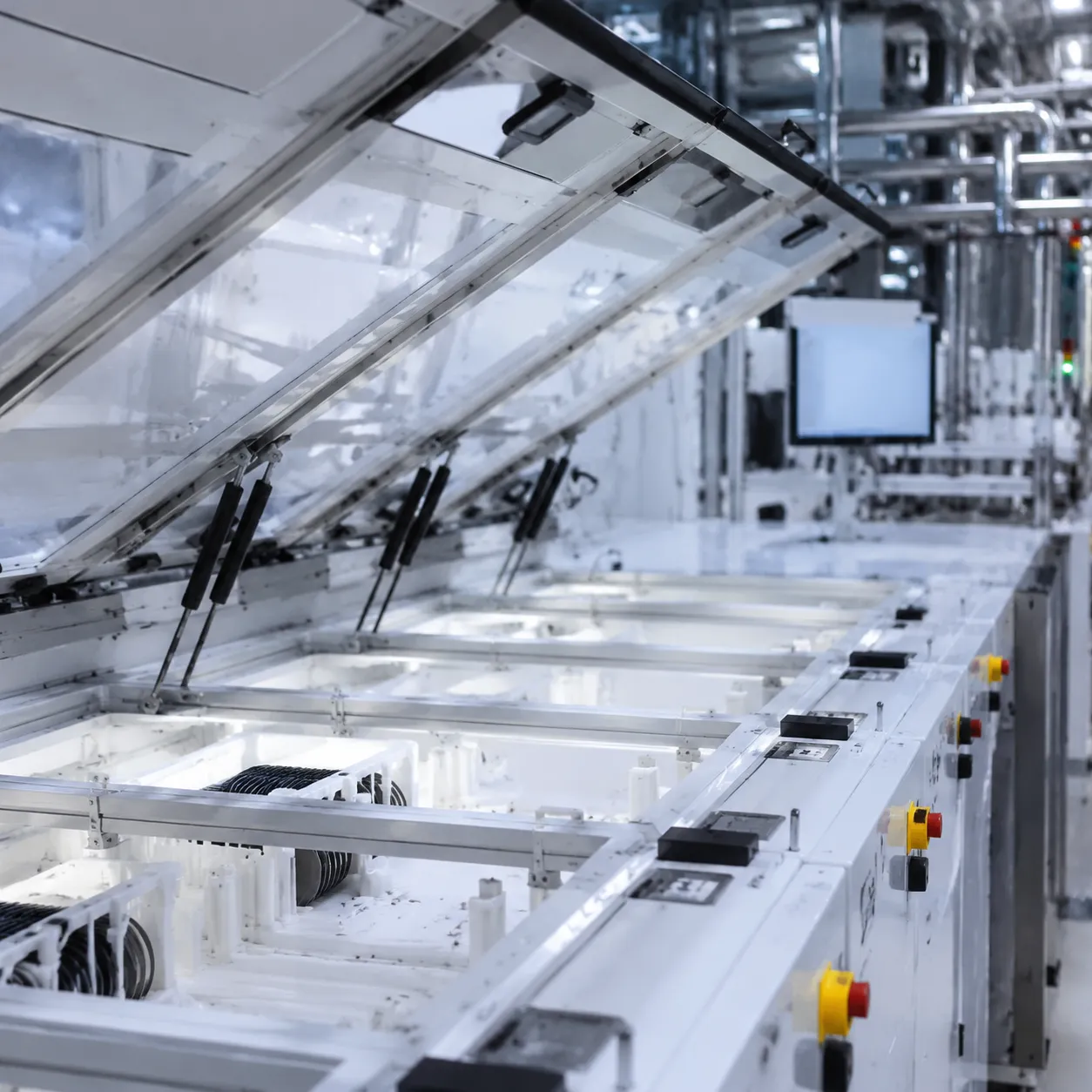
KOSEN SEMI’s modular wet bench architecture adapts to unique fab layouts and complex recipe sequences. Built for process reliability and low cost of ownership, our hardware simplifies long-term maintenance and future throughput expansion. Built on our core Engineering Capability, every system is designed to earn customer trust.
Robotic Wafer Transfer Unit
Engineered specifically for aggressive semiconductor cleanroom environments, our robotic wafer transfer system utilizes closed-loop servo control and anti-corrosion structural armoring. It delivers dynamic multi-bath recipe dispatch to maximize wafer throughput while eliminating handling bottlenecks across our advanced wafer-cleaning-systems.
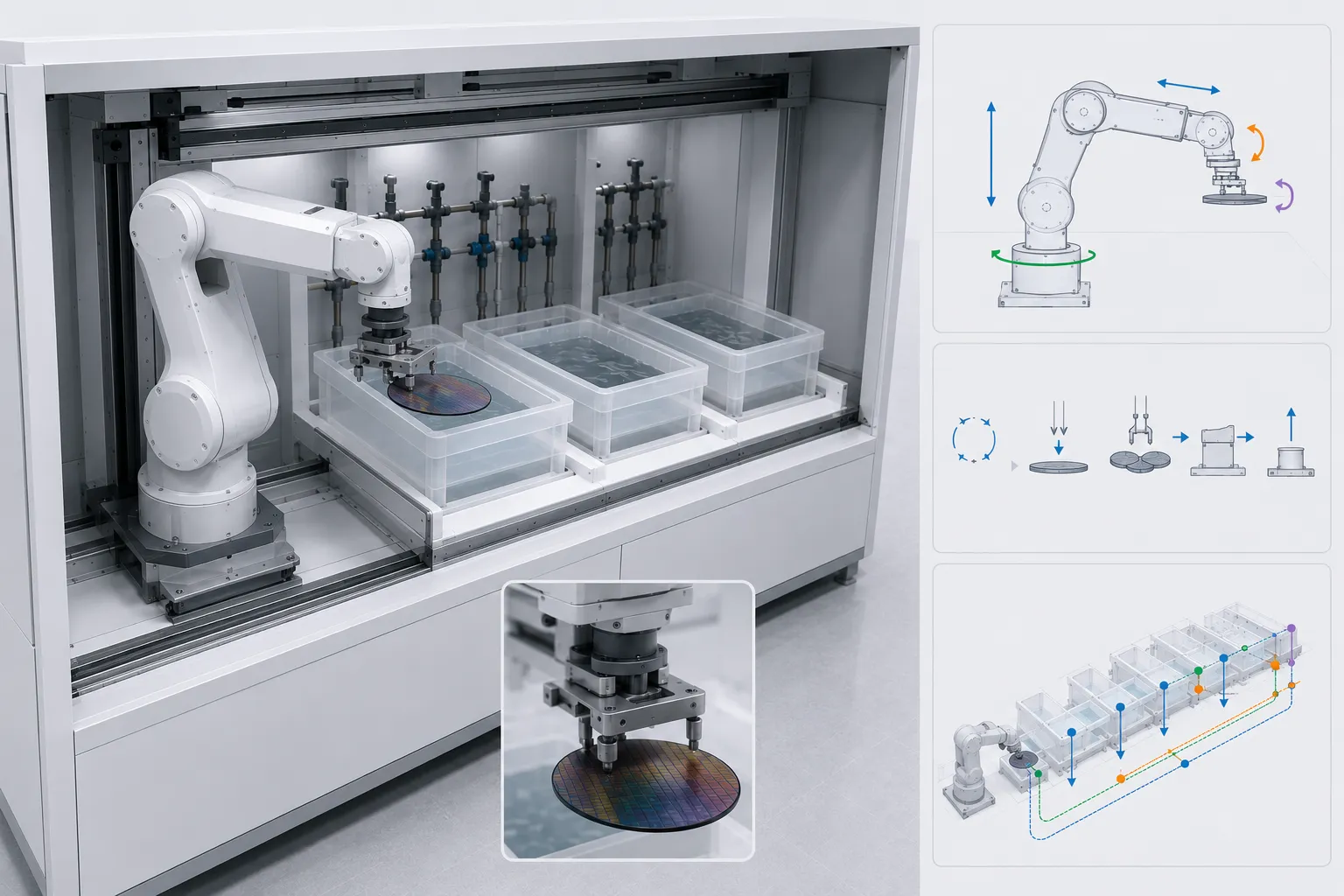
Subsystem Schematic: Multi-Axis Robotic Motion & Path Optimization
| Parameter | Specification | Operational Advantage |
|---|---|---|
| Positional Repeatability | ±0.03 mm | Prevents micro-chipping and carrier alignment errors. |
| Recipe Dispatch Logic | Dynamic Multi-Tank Routing | Optimizes immersion times across concurrent wafer lots. |
| Corrosion Resistance | Encapsulated PFA Armor & Sealed Jointing | Prevents acid vapor intrusion and extends system MTBF. |
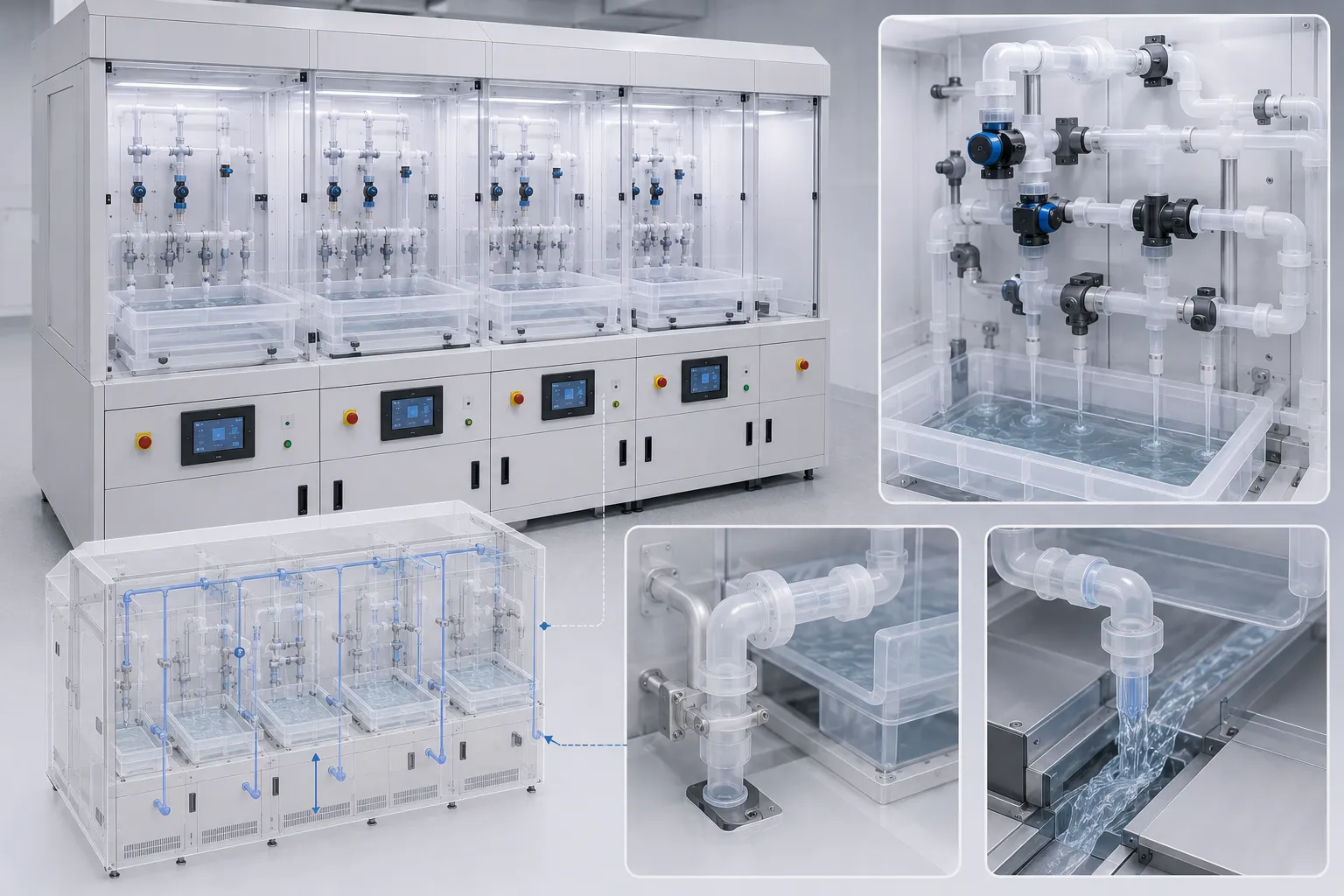
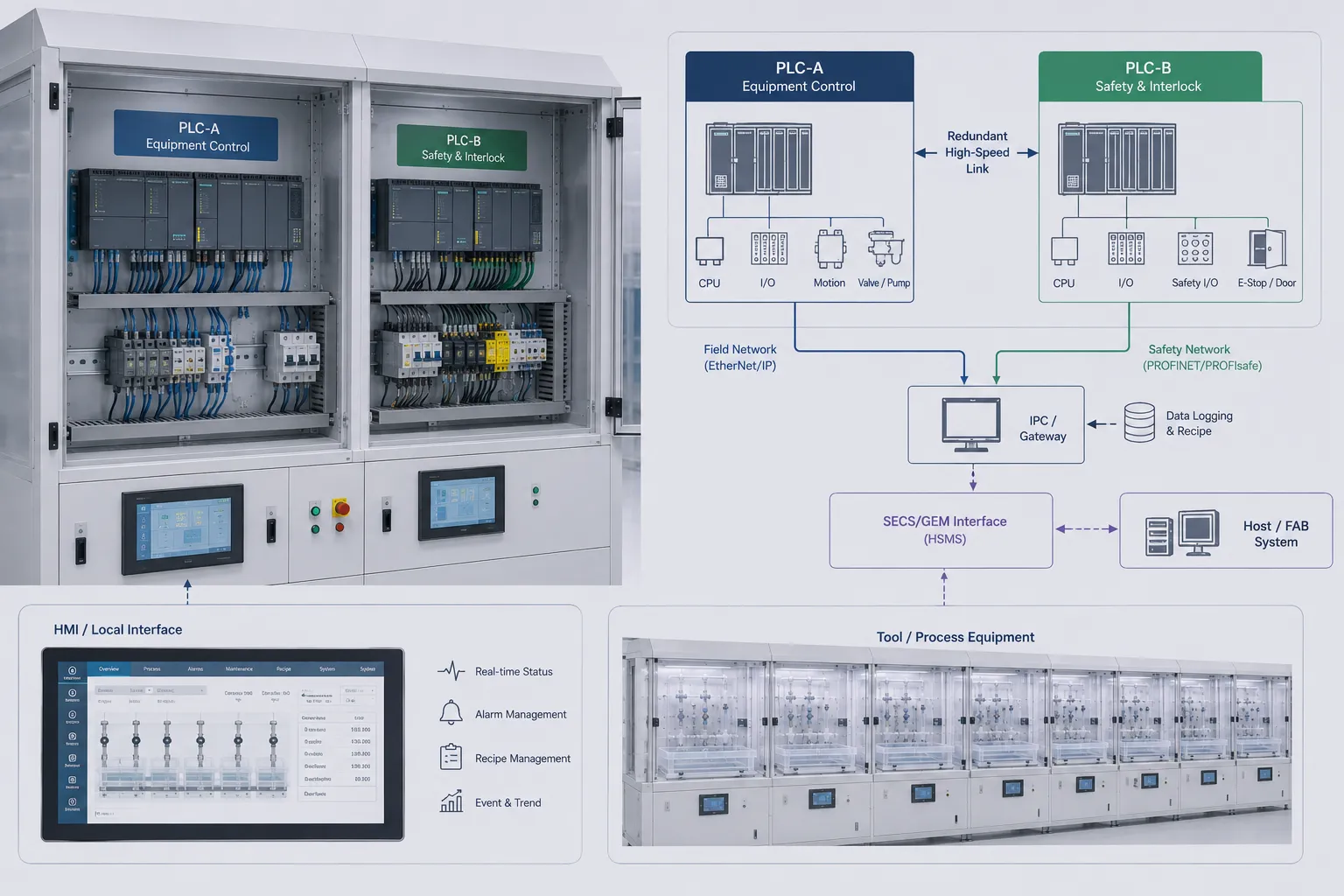
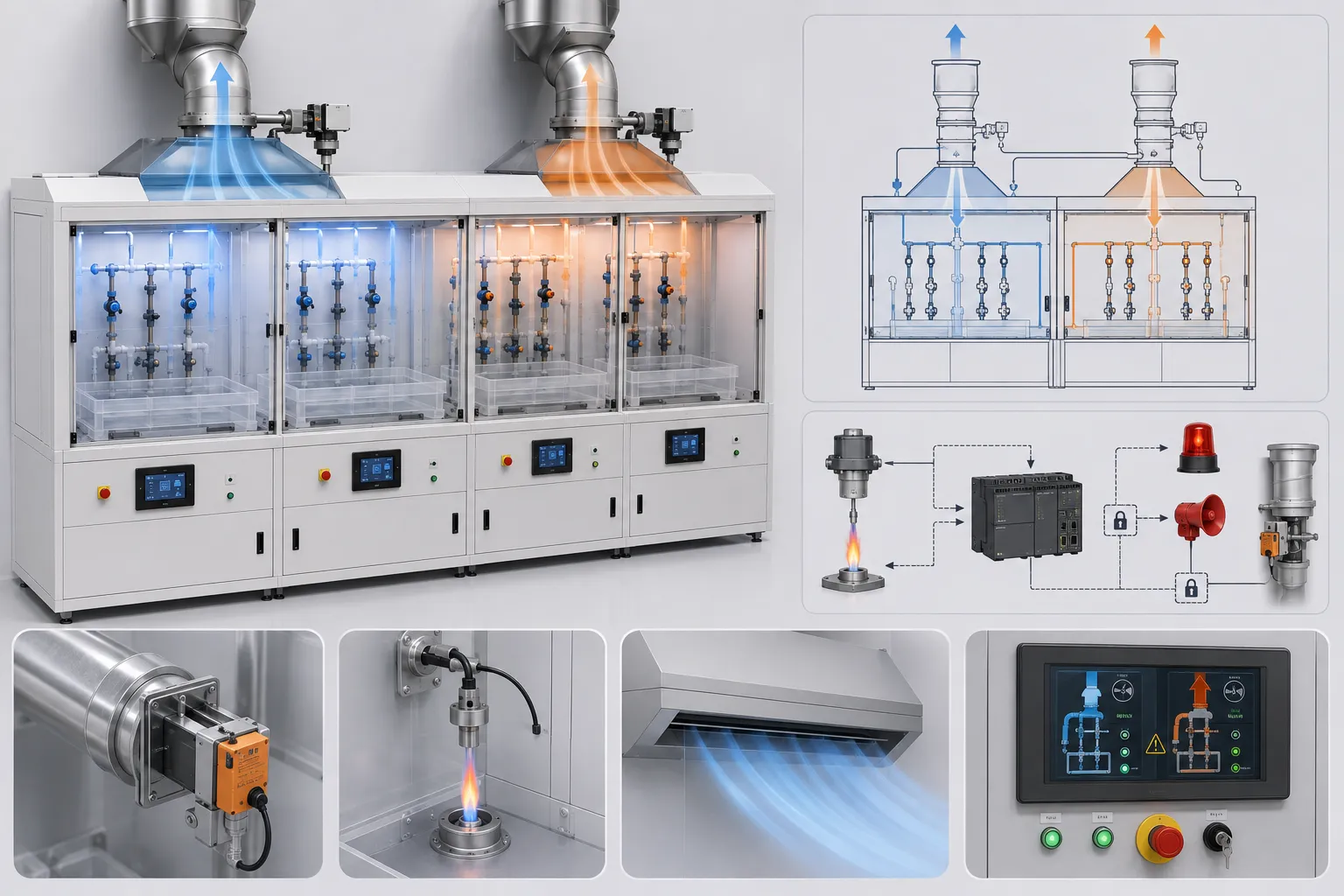
Engineered for Scalable Fab Integration
KOSEN SEMI's modular architecture accommodates custom cleanroom floorplans, flexible bath sequencing, and seamless capacity upgrades.
Wet Process Compatibility Across Semiconductor Fab Automation
High-yield silicon wafer fabrication demands uncompromising chemical process repeatability. KOSEN SEMI automated wet benches provide multi-bath integration, precise dynamic fluidics, and closed-loop thermal control tailored to high-volume semiconductor fab automation for various semiconductor industry applications.
Universal Substrate & Wafer Size Support
Modular, fully scalable tool architectures validated across all standard substrate diameters and material types. Explore our complete range of semiconductor equipment on our products page.
Front-End and Back-End Wafer Cleaning
Maximizing device performance in semiconductor fab automation relies on absolute surface purity. Our advanced wafer-cleaning-systems and chemical processing equipment remove organic residue, trace heavy metal contamination, and fine particulates while preventing native oxidation across complex clean sequences.
- RCA Standard Cleans: Configurable SC-1 particle extraction and SC-2 trace metallic impurity stripping cycles.
- DHF Oxide Stripping: Controllable native oxide layer removal with tight immersion time control to prevent substrate over-etching.
- Photoresist Stripping: Dedicated chemical dispensing system pathways configured for high-temperature solvents and aggressive acid formulations.
- Post-CMP Routines: Megasonic-assisted particle dislodgement engineered for advanced logic and memory silicon wafer fabrication lines.
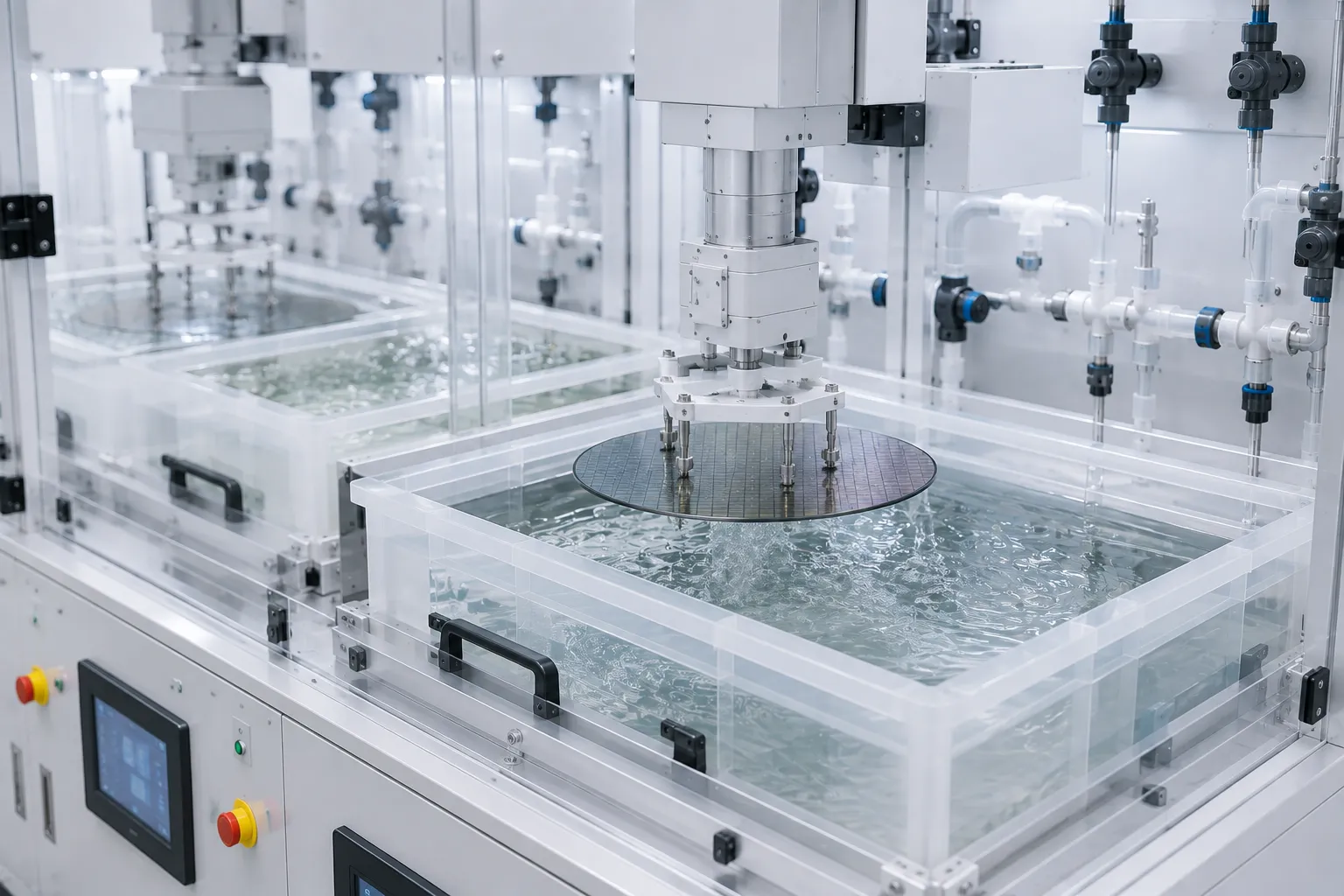
Precision Wet Chemical Etching
Achieve uniform controlled etch profiles for standard 200 nm processes, with optimized capability down to 100 nm. Integrated automated fluidics and concentration monitoring eliminate bath depletion and process drift, driving sustained wafer yield optimization across high-throughput production runs.
- Micro & Nano-Scale Etching: Highly uniform isotropic and anisotropic etching capabilities for silicon, polysilicon, metals, and dielectrics.
- Selective Dielectric Removal: Precise bath temperature and chemical dosing for tightly controlled oxide, nitride, and sacrificial layer etching.
- Continuous Recirculation: High-purity in-line filtration continuously traps micro-particulates to prevent re-deposition during extended etch steps.
- Closed-Loop Thermal Management: Dynamic bath temperature stability maintained within ±0.1°C guarantees repeatable etch rate kinetics.
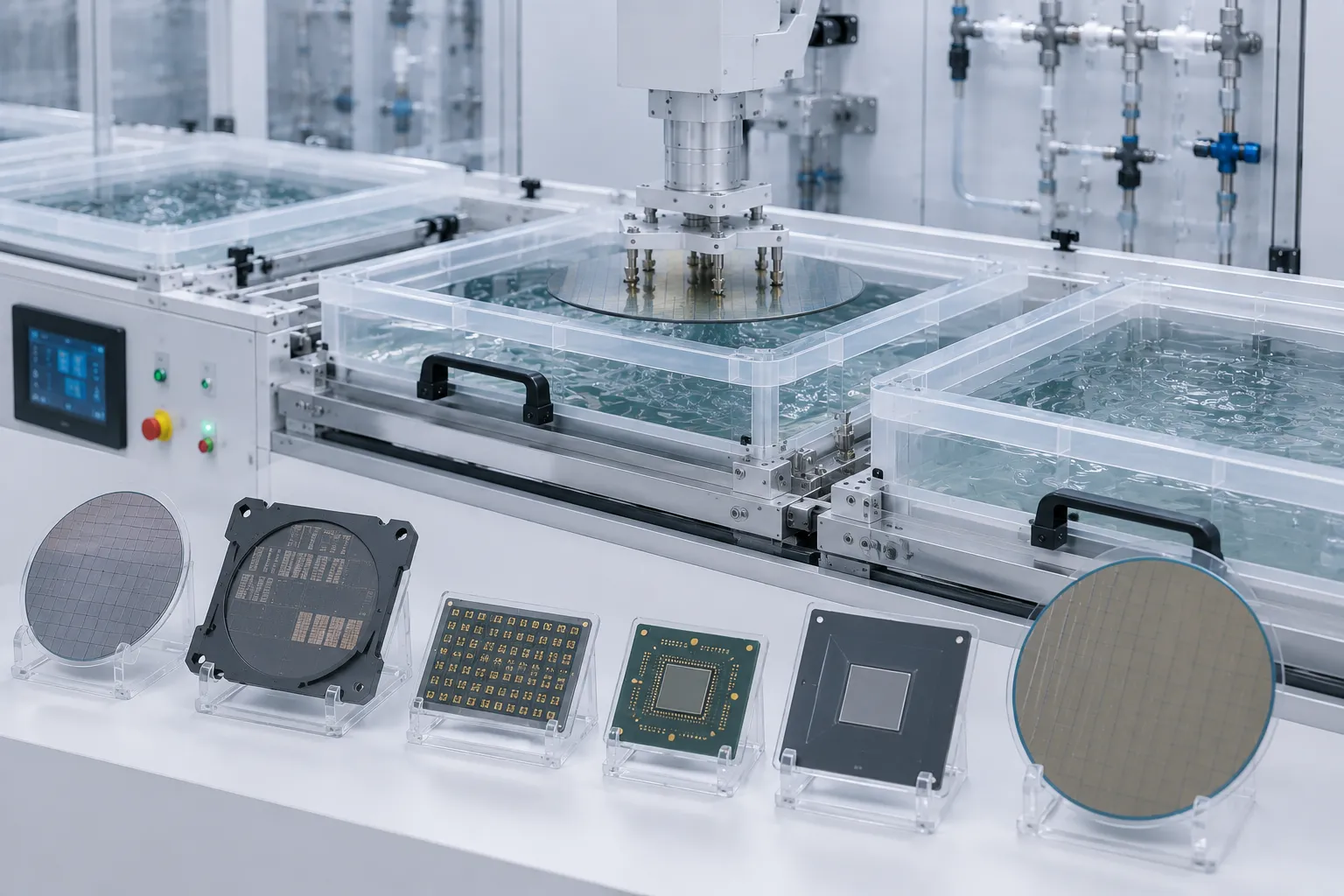
Advanced Substrate & Packaging Compatibility
KOSEN SEMI automated wet processing tools deliver superior process stability in demanding SiC and GaN wafer production environments. Our chemical processing architectures easily adapt to the unique thermal and handling requirements of third-generation power, RF, and advanced 3D heterogeneous substrates.
- Wide-Bandgap Substrates: Customized chemical recipes and tank fluidics engineered specifically for Silicon Carbide (SiC) and Gallium Nitride (GaN).
- Fragile & Thin Wafer Handling: Precision robotic wafer transfer motion profiles safely accommodate thin, warped, or high-stress substrates without edge contact stress.
- Aggressive Chemical Resistance: Full fluoropolymer (PFA/PTFE) fluid plumbing lines safely withstand concentrated hot acids and strong oxidizers.
- Heterogeneous Packaging: High-aspect-ratio surface wetting and cleaning routines optimized for TSV, fan-out, and 3D bump preparation.
Selection Guide: Automatic vs. Manual Wet Bench Systems
Choosing between an automatic vs manual wet bench is one of the most consequential equipment decisions in semiconductor fab planning. This guide evaluates key throughput, operator safety, process repeatability, and financial ROI factors to help process engineers, fab managers, and procurement specialists make an informed, data-driven selection.
Semiconductor wet process automation has advanced dramatically over the past decade. Today’s automatic wet bench systems integrate multi-axis robotic wafer transfer, closed-loop chemical dosing, and continuous bath monitoring to deliver high throughput and yield consistency that manual workstations cannot match at production scale. Our specialized wafer cleaning systems demonstrate how modern batch and Single Wafer Cleaning Systems provide advanced surface preparation capabilities beyond traditional manual methods. However, manual wet benches remain practical and cost-effective tools for specialized research, prototyping, and low-volume processing.
Evaluating an automatic vs manual wet bench requires analyzing how production scale impacts long-term capital efficiency and operational risk. The comparison matrix below outlines critical operational metrics—including wafer throughput, operator safety, data logging, wafer breakage, initial CapEx, and lifetime ROI—across commercial manufacturing and development environments.
| Evaluation Criteria | Automatic Wet Bench | Manual Wet Bench |
|---|---|---|
| Throughput Capacity | High & Scalable. Multi-axis robotic wafer transfer enables continuous multi-batch processing and optimized recipe scheduling with zero operator downtime. Throughput scales predictably with station configuration. | Constrained. Throughput is limited by operator availability, manual dwell timing, shift handoffs, and physical transfer speed. Batch sizes are inherently smaller and variable. |
| Operator Exposure & Safety | Maximum Protection. Fully enclosed cabinet with SEMI S2/S8 compliance, automated shutter doors, and continuous chemical vapor extraction physically isolates operators from dangerous acids and solvents. | Elevated Risk. Operators directly manipulate wafer carriers over open chemical baths. Safety relies heavily on personal protective equipment (PPE), manual exhaust hoods, and procedural rigor. |
| Process Data Logging | Full Traceability. Integrated PLC/PC controls with SECS/GEM interface continuously log bath temperature, chemical concentration, immersion timing, and recipe metrics per wafer lot for fab MES tracking. | Manual or Partial. Data logging depends on manual recordkeeping or standalone bath sensors. Missing or inconsistent records complicate root-cause yield analysis and audit verification. |
| Wafer Breakage Rate | Near Zero. Precision servo-driven robotic end-effectors eliminate handling vibration and misalignment, protecting fragile 300 mm silicon wafers and delicate compound semiconductor substrates (SiC/GaN). | Operator Dependent. Manual cassette handling carries inherent risks of drops, thermal shock during bath transitions, and mechanical edge chipping that escalate scrap rates at high volumes. |
| Process Repeatability | Exceptional Cpk. Closed-loop chemical dispensing systems, ±0.1 °C thermal controls, and automated recipe sequences ensure lot-to-lot etch rate uniformity and wafer yield optimization. | Moderate Variation. Repeatability varies based on operator technique and timing accuracy. Suitable for broad process windows or early-stage exploratory research where minor variations are acceptable. |
| Initial CapEx | Higher Upfront Capital. Precision robotics, automated fluid delivery, and interlocked safety enclosures increase upfront system investment, offset by modular architecture that supports phased expansion. | Lower Entry Cost. Straightforward structural design and streamlined fluidics reduce initial purchasing cost, fitting within limited R&D budgets and early prototyping setups. |
| Long-Term ROI | Rapid Payback at Scale. Significant savings in direct labor, reduced wafer scrap, lower chemical consumption, and improved overall equipment effectiveness (OEE) deliver superior total cost of ownership (TCO). | Capped Financial Return. High labor intensity, recurring wafer loss risks, and chemical waste increase per-wafer processing costs rapidly as production scales up. |
Manual Wet Bench: Best Fit
Manual wet processing stations represent an efficient, versatile solution for cleanroom environments prioritizing process adaptability and lower capital entry barriers over volume automated throughput.
- ▸R&D and university cleanrooms conducting initial material analysis and variable chemistry experiments on low wafer counts
- ▸Feasibility and prototype development lines requiring frequent manual recipe overrides and custom process adjustments
- ▸Specialty low-volume processing where flexible manual intervention takes priority over standardized production speed
- ▸Facilities with initial CapEx constraints evaluating initial baseline chemical clean steps prior to commercial scale-up
Automatic Wet Bench: Best Fit
Fully automated wet bench platforms are mandatory for modern semiconductor manufacturing facilities where strict process repeatability, high wafer yield, and operator safety are core operational requirements.
- ▸High-volume commercial fabs manufacturing 200 mm and 300 mm wafers under continuous 24/7 production schedules
- ▸Pilot production facilities scaling up advanced cleaning, etching, or resist stripping processes toward full production qualification
- ▸Compound semiconductor fabs (SiC, GaN, InP) requiring 200 nm standard process control, optimized capability down to 100 nm, active bath filtration, and tight etch rate control
- ▸Automated cleanrooms mandating SEMI S2/S8 certified equipment, MES connectivity, and real-time SECS/GEM data logging
Understanding Total Cost of Ownership in Wet Process Automation
Evaluating an automatic vs manual wet bench based purely on upfront purchase price often obscures the true financial reality of semiconductor fab operations. Manual benches carry cumulative operational costs: increased chemical consumption due to unmonitored bath degradation, high direct labor expenses, reduced overall equipment efficiency (OEE), and expensive wafer scrap caused by manual handling mistakes. Over time, these operational expenses quickly exceed the initial savings of a manual tool.
Deploying wet process automation directly targets and minimizes these recurring operational overheads. KOSEN SEMI automatic wet bench systems utilize automated chemical dosing systems, real-time concentration monitoring, and closed-loop recirculation to maximize bath longevity and reduce raw chemical consumption. Additionally, automated multi-axis robotic wafer transfer eliminates human error, ensuring consistent wafer yield optimization across complex cleaning, etching, and surface preparation steps.
For growing facilities, transitioning from manual to automated processing does not require abandoning established chemistry. KOSEN SEMI designs equipment platforms with consistent fluidic dynamics and vessel geometries, allowing process engineers to scale recipes seamlessly from manual development tools to full production automation without repeating extensive process qualification cycles.
Operator safety compliance provides another compelling baseline for choosing automated equipment. Leading semiconductor manufacturing standards demand strict adherence to SEMI S2 (Environmental, Health, and Safety) and SEMI S8 (Ergonomics) standards. KOSEN SEMI automatic wet bench platforms feature fully isolated processing enclosures, interlocked splash doors, continuous vapor extraction monitoring, and automatic chemical shutoff valves to ensure full compliance.
When handling aggressive chemistries—such as piranha mixtures, concentrated hydrofluoric acid (HF), or elevated-temperature phosphoric acid (H₃PO₄)—manual handling introduces unacceptable safety risks. Automating wafer transfer and bath immersion isolates operators from hazardous splash zones and corrosive fumes, creating a safer cleanroom environment while safeguarding production uptime.
ly, modern semiconductor quality management systems require total process visibility. KOSEN SEMI automated wet benches feature built-in SECS/GEM interface capabilities, automatically logging processing times, bath temperatures, dosing volumes, and recipe parameters directly into host MES software. This real-time data collection provides complete lot traceability and statistical process control (SPC) required by global chip manufacturers.
Wafer Size and Process Compatibility Matrix
Both manual and automated wet bench equipment from KOSEN SEMI are engineered to accommodate standard wafer sizes and substrate materials. Review the matrix below to verify equipment capability across common fab processing requirements.
| Wafer Size | Manual Wet Bench | Automatic Wet Bench | Typical Process Application |
|---|---|---|---|
| 100 mm (4 inch) | ✓ Supported | ✓ Supported | R&D laboratories, compound semiconductors (SiC/GaN), optoelectronics |
| 150 mm (6 inch) | ✓ Supported | ✓ Supported | Power devices, MEMS fabrication, specialty sensors, pilot production lines |
| 200 mm (8 inch) | ✓ Supported | ✓ Supported | Analog, mixed-signal, automotive chips, mature node CMOS fabrication |
| 300 mm (12 inch) | Limited Capability | ✓ Supported | Advanced logic nodes, high-density memory, automated 300mm commercial mega-fabs |
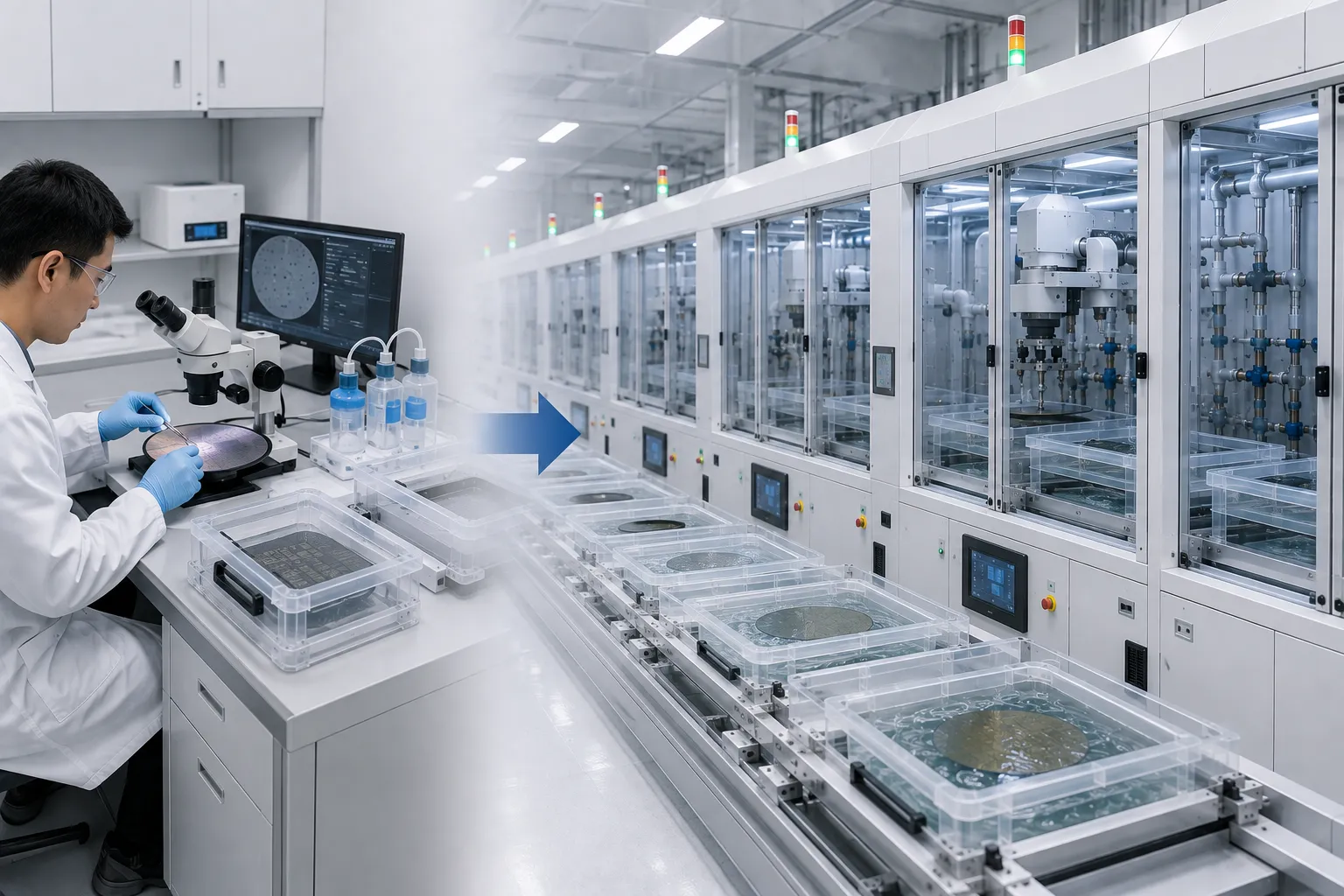
Seamless Migration from R&D to Automated Volume Production
Transitioning chemical cleaning, etching, or stripping processes from manual pilot lines to full wet process automation requires absolute process fidelity. KOSEN SEMI builds both manual and automated platforms on shared fluidic and thermal design principles, maintaining a primary focus on precision engineering to ensure that etch rates, chemical bath stability, and bath circulation profiles transfer accurately as your production scales.
Our engineering team works directly with fab managers and process engineers to evaluate cleanroom layout, chemical delivery configurations, robotic sequencing, and SEMI S2 safety compliance requirements. Contact KOSEN SEMI today to discuss custom system configurations and discover how our modular automatic wet bench systems drive yield, safety, and long-term capital productivity.
Frequently Asked Questions: Automated Wet Bench Systems
Discover how our automated chemical processing tools deliver strict regulatory alignment, process repeatability, and advanced risk mitigation across modern semiconductor fab automation environments.
Global Compliance and Safety Assurance
Every KOSEN SEMI automated wet bench meets strict SEMI S2 certified equipment standards and includes global technical field support, backed by our advanced Engineering Capability to ensure maximum operational safety and regulatory clearance.
Are KOSEN SEMI automated wet benches SEMI S2 and SEMI S8 compliant?
Yes. Every KOSEN SEMI automated wet bench is engineered from the ground up in strict accordance with SEMI S2 environmental, health, and safety guidelines as well as SEMI S8 ergonomic parameters for semiconductor manufacturing tools.
Our automated chemical processing systems undergo rigorous third-party evaluations to ensure comprehensive wet bench safety compliance. Key compliance highlights include:
- Redundant Safety Interlocks: Hardware and software interlocks tied directly to continuous toxic gas detectors, liquid level sensors, and exhaust flow monitors.
- Emergency Off (EMO) Architecture: Hardwired EMO buttons located at accessible control perimeters with fail-safe pneumatic shutdown valves.
- Ergonomic Operation: SEMI S8 compliant wafer loading heights and accessible service panels that eliminate physical strain during operator interaction and routine maintenance.
- Fire Suppression Integration: FM4910 certified anti-corrosive plastic cabinet construction coupled with CO2 or clean-agent fire suppression systems.
How does the system prevent chemical cross contamination between adjacent processing baths?
Elimination of chemical cross-contamination is critical for achieving optimal wafer yield optimization during silicon wafer fabrication and compound semiconductor processing across our advanced wafer-cleaning-systems.
KOSEN SEMI automated wet benches utilize an advanced multi-stage containment and fluidic management design:
- Automated Vapor Shutters: Every active chemical tank features pneumatic covers that open only during robotic wafer transfer cycles to prevent cross-bath chemical vapor migration.
- Dedicated Drip Collection: Integrated drip trays move synchronously under the robotic arm during transport, directing carryover droplets away from neighboring baths.
- Laminar Lip Exhaust Management: Continuous perimeter lip exhaust extracts chemical fumes locally before they reach the general cleanroom atmosphere.
- Quick Dump Rinse (QDR) Isolation: Ultra-pure water (UPW) QDR baths purge residual chemicals from wafer surfaces and carrier cassettes before entering subsequent process steps.
Does the controller interface with SECS GEM factory automation host systems?
Yes. KOSEN SEMI automated wet benches feature full industrial PLC/PC control architectures with native SECS/GEM software communications modules compliant with SEMI E30 (GEM) and SEMI E37 (HSMS) protocols.
This seamless software framework enables full integration into automated semiconductor fab production lines, providing:
- Remote Recipe Dispatching: Automated selection and validation of recipe parameters directly from the central Fab Manufacturing Execution System (MES).
- Real-Time Data Telemetry: Continuous tracking of bath temperatures, megasonic power outputs, chemical dosing cycles, and filter pressure differentials.
- Traceability and Lot Tracking: Full recording of individual wafer cassette process histories to support comprehensive yield analysis and quality auditing.
- Alarm and Event Reporting: Immediate reporting of equipment status, warning thresholds, and emergency stops to automated host control stations.
What are the standard preventative maintenance intervals for fluidic seals and robotics?
To guarantee maximum overall equipment effectiveness (OEE) and prevent unplanned downtime, KOSEN SEMI wet bench safety compliance protocols establish structured preventive maintenance (PM) schedules.
Recommended service intervals for high-wear subassemblies include:
- Fluidic Seals and Valves (PFA/PTFE/Kalrez): Visual inspection and pressure testing every 3 months; comprehensive seal and diaphragm replacement every 12 months or 50,000 process cycles.
- Robotic Wafer Transfer Arm: Belt tensioning, harmonic drive checks, and sub-millimeter position calibration every 6 months.
- Chemical Filters: In-line particulate filter replacement every 1 to 3 months depending on bath chemistry type and differential pressure sensor alerts.
- Global Field Service Support: KOSEN SEMI provides standardized PM kits, local field engineering coverage, and 24-hour technical support response to streamline maintenance routines.