High-Precision RCA Cleaning Systems & Wet Benches
Maximize semiconductor wafer yields with KOSEN SEMI high-precision RCA wet cleaning systems. Engineered for advanced IC manufacturing and wafer fabrication, our automated wet benches deliver high-precision contamination control, 200 nm standard particle removal optimized down to 100 nm, and sustainable UPW water savings.
100 nm
Optimized Particle Control Threshold
< 10¹⁰
Atoms/cm² Metallic Residue
30% UPW
Savings | 4" to 12" Wafer Support
RCA Bench Capabilities
Automated Wet BenchSC-1 Organic & Particle Cleaning
Removes organic residue and insoluble micro-particles via precise NH₄OH/H₂O₂ chemistry and megasonic energy.
DHF Oxide Removal & QDR Rinse
Dilute HF immersion strips oxide layers while Quick Dump Rinse prevents secondary surface contamination.
SC-2 Metallic Contamination Removal
Removes heavy metal ions and alkali trace impurities using heated HCl/H₂O₂ solutions to reach high-purity cleanliness.
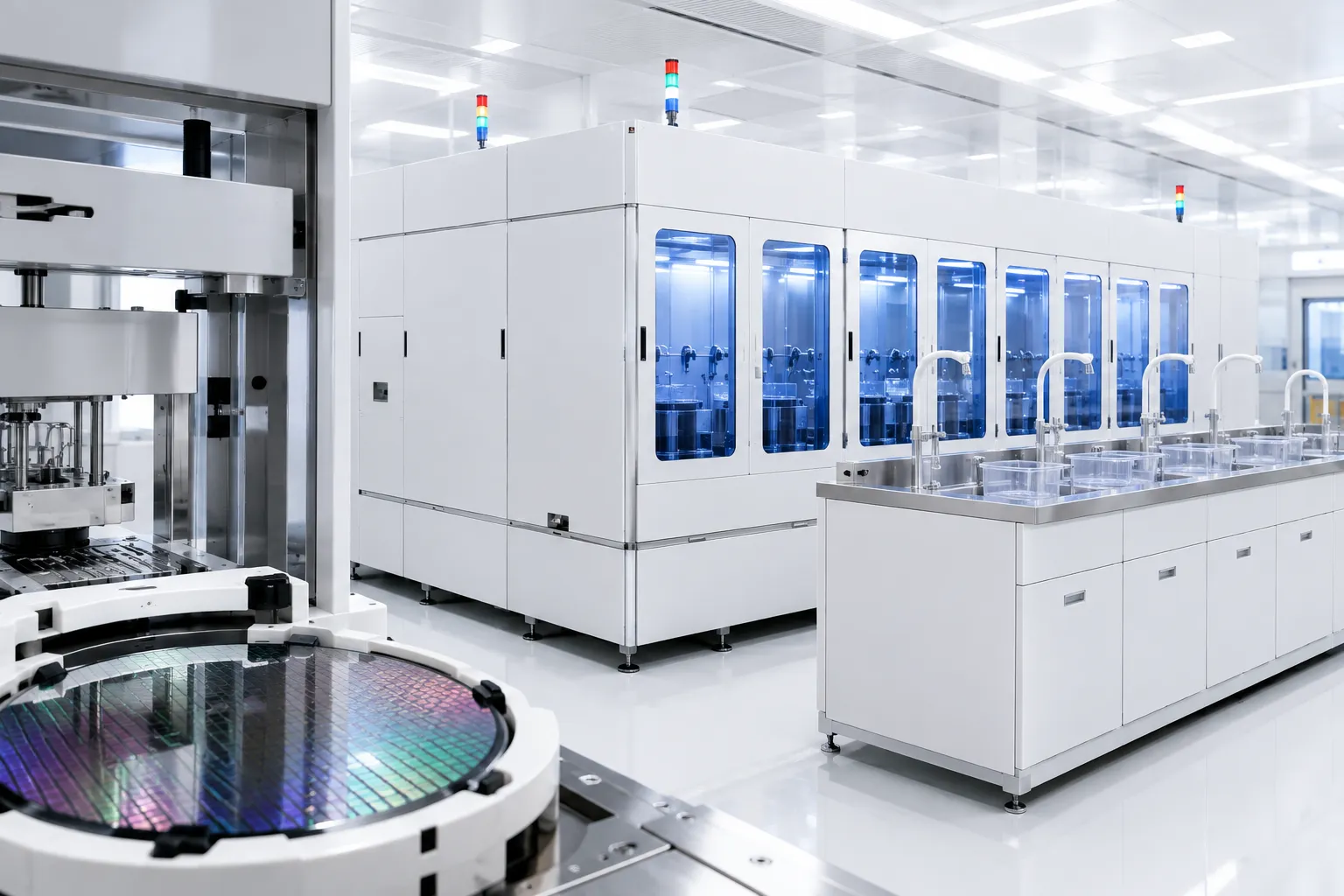
SC-1 & SC-2 Cleaning Process: Chemical Mechanisms & Contamination Control
The standard RCA cleaning sequence remains the benchmark in semiconductor wet chemical processing for both front-end-of-line (FEOL) and back-end-of-line (BEOL) substrate fabrication. Engineered to remove organic contamination, particles at 200 nm standard capability, optimized down to 100 nm, trace metallic impurities, and unwanted native oxides, KOSEN SEMI advanced wafer cleaning systems optimize chemical kinetics, fluid dynamics, and bath temperature control. Our automated wet benches maximize wafer particle removal efficiency and safeguard structures used in optimized 100 nm processes through precise multi-bath chemical synergy.
Precision Chemical Kinetics for Wafer Particle Removal & Metallic Decontamination
Achieving high-purity surface cleanliness requires strict control over oxidation rates, surface etching, and electrostatic surface potential. KOSEN SEMI RCA wet cleaning benches integrate real-time closed-loop monitoring over bath temperatures, chemical replenishment, and cycle times. This delivers exceptional wafer particle removal efficiency (PRE > 99.9%) while suppressing metallic re-adsorption across silicon, silicon carbide (SiC), and III-V compound semiconductor substrates.
SC-1 Organic Contamination Cleaning & Particle Detachment
Combines ammonium hydroxide and hydrogen peroxide (NH4OH : H2O2 : H2O) to execute organic contamination cleaning while micro-etching the oxide film underneath to lift particles at 200 nm standard capability, optimized down to 100 nm.
SC-2 Heavy & Trace Metal Solubilization
Utilizes hydrochloric acid and hydrogen peroxide (HCl : H2O2 : H2O) to form soluble metal-chloride complexes, preventing heavy transition metals and alkali ions from re-plating on the surface.
DHF Oxide Stripping & Cascading QDR Flushing
Integrates dilute hydrofluoric acid (DHF) steps to strip sacrificial chemical oxides alongside high-purity Quick Dump Rinse (QDR) cycles that reduce chemical drag-out in seconds.
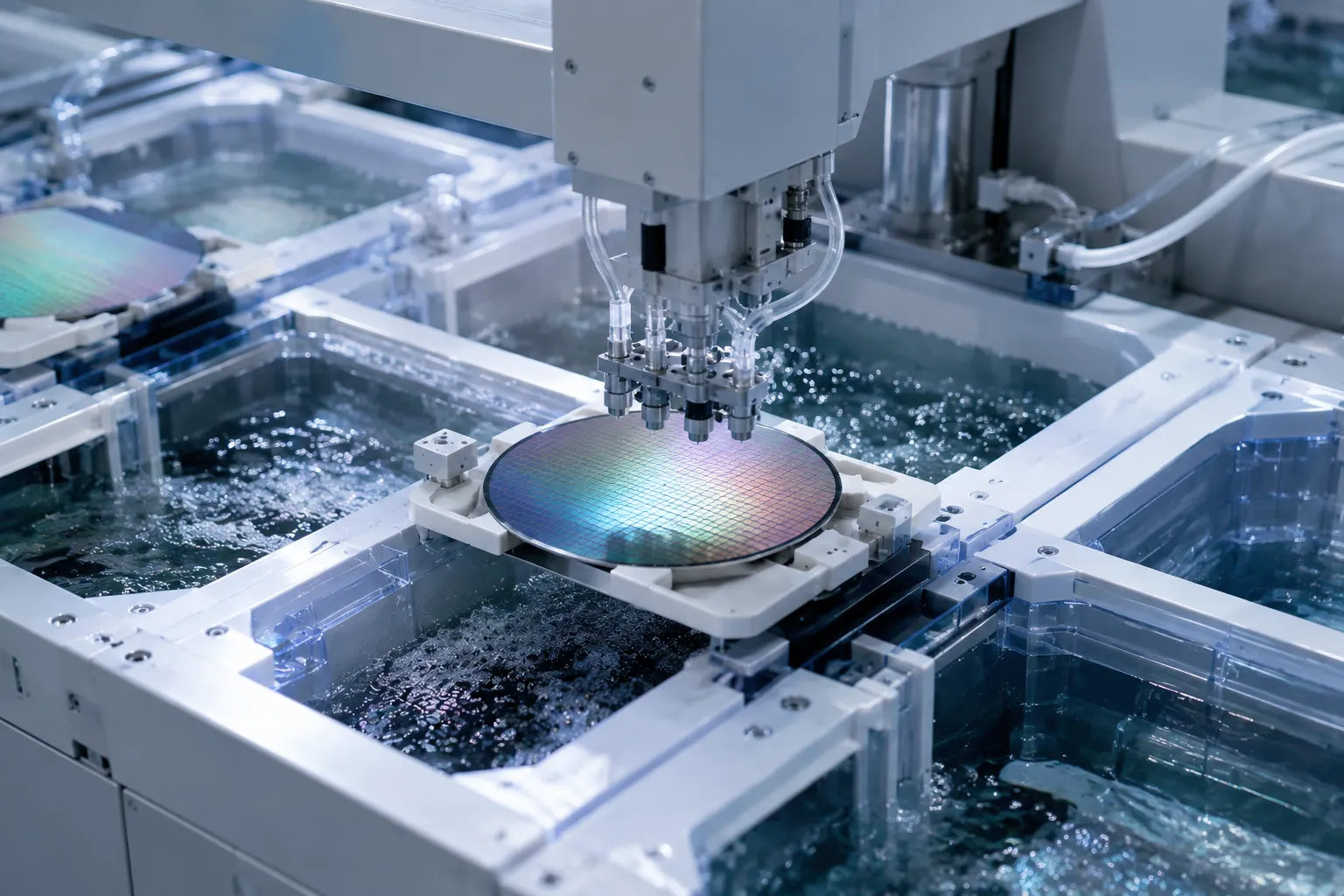
Standard Clean 1 Process Kinetics
The SC-1 solution (NH4OH : H2O2 : H2O formulated between 1:1:5 and 1:2:100) operates at 65°C to 80°C to target organic contamination cleaning and 200 nm standard particle removal, optimized down to 100 nm.
- • Oxidation & Micro-Etching Balance: H2O2 continuously oxidizes the silicon substrate while NH4OH performs controlled etching of the oxide layer, lifting embedded particles at 200 nm standard capability, optimized down to 100 nm.
- • Zeta Potential Optimization: Maintaining an alkaline pH above 9 shifts the surface potentials of both the silicon substrate and particles to negative, generating strong electrostatic repulsion.
- • Megasonic Energy Synergy: Uniform high-frequency megasonic acoustic waves diminish the fluid boundary layer, providing physical energy to dislodge particles at 200 nm standard capability, optimized down to 100 nm.
Standard Clean 2 Complexation Kinetics
The SC-2 mixture (HCl : H2O2 : H2O formulated from 1:1:6 to 1:1:50) operates at 70°C to 80°C to remove alkali metals, transition metals, and metallic hydroxides.
- • Ionic Metal Complexation: Hydrochloric acid converts insoluble metal impurities (Fe, Cu, Al, Mg) into highly soluble aqueous metal-chloride complexes (Mn+).
- • Redox Potential Control: H2O2 preserves high oxidation potential, preventing noble metal ions (Cu2+, Au3+) from plating back onto exposed silicon surfaces.
- • Ultra-Low Metallic Residue: Drives surface metallic concentrations down below 1 × 10¹⁰ atoms/cm2, safeguarding gate dielectric reliability and breakdown voltage.
Dilute HF Etching & Cascading QDR Rinse
Positioned dynamically within the SC-1 SC-2 cleaning process, Dilute Hydrofluoric acid (DHF, 1:50 to 1:500) strips native chemical oxides while Quick Dump Rinse (QDR) rapidly purges residual chemicals.
- • Controlled Oxide Stripping: Safely etches sacrificial chemical oxides to remove trapped trace metals and ionic impurities locked within the oxide lattice.
- • Surface Passivation: Formations of hydrogen-terminated surface bonds (Si–H) yield a clean hydrophobic state that inhibits immediate atmospheric re-oxidation.
- • High-Speed QDR Flushing: Nitrogen-sparged bottom delivery and rapid dump doors eliminate chemical boundary layers and prevent bath cross-contamination.
RCA Cleaning Process Parameter & Performance Matrix
Optimized chemical formulations, operating conditions, and surface targets engineered for KOSEN SEMI wet benches.
| Process Step | Chemical Ratio | Operating Temp | Primary Contamination Target | Surface Cleanliness Target |
|---|---|---|---|---|
| Standard Clean 1 (SC-1) | NH4OH : H2O2 : H2O (1:1:5 – 1:2:100) | 65°C – 80°C | Organic contamination & particles (>0.09 µm) | PRE > 99.9% |
| Standard Clean 2 (SC-2) | HCl : H2O2 : H2O (1:1:6 – 1:1:50) | 70°C – 80°C | Heavy metallic ions, alkali & ionic residues | < 1×10¹⁰ atoms/cm² |
| Dilute Hydrofluoric (DHF) | HF : H2O (1:50 – 1:500) | 20°C – 25°C | Sacrificial native oxide & trapped metals | Hydrophobic H-Terminated Surface |
| Quick Dump Rinse (QDR) | UPW (18.2 MΩ·cm resistivity) | 20°C – 25°C | Chemical drag-out & ionic residues | Resistivity Recovery >18 MΩ·cm |
Engineered for Cross-Contamination Control and High Wafer Yield
KOSEN SEMI RCA cleaning systems integrate high-purity fluoropolymer fluid handling (PFA/PTFE), automated inline chemical spiking, and dual-contained chemical delivery loops. By combining continuous sub-micron bath filtration with real-time concentration monitoring, our wet benches drastically reduce chemical consumption while maintaining pristine surface quality across high-volume production schedules.
Automated Wet Bench Architecture & High-Reliability Hardware Configuration
Engineered for high-yield semiconductor fabrication, KOSEN SEMI Automatic Wet Bench Systems integrate high-purity PFA chemical tanks, automated chemical dispense control, and robust isolation protocols for maximum uptime.
PFA Chemical Tanks
Ultra-pure PFA chemical tank modules and PTFE fluid loops eliminate ion leaching while delivering precise bath recirculation and heating.
Chemical Dispense Control
Real-time chemical dispense control with closed-loop concentration monitoring provides automated spiking for process consistency.
Automated Wet Bench Handler
Multi-axis servo robotics with friction-free grippers achieve ultra-precise wafer positioning without generating particle contamination.
Safety & Exhaust Isolation
Fully enclosed FM4910-compliant cabinets feature dual acid/solvent exhaust segregation and rapid fire suppression systems.
Built for Continuous Uptime & Ultra-Clean Wafer Fabrication
KOSEN SEMI automated wet benches physically isolate chemical delivery systems from electrical control enclosures. Backed by our advanced Engineering Capability, this modular design prevents corrosive vapor ingress, safeguards sensitive electronics, and streamlines routine preventative maintenance.
Corrosion-Resistant PFA & Fluoropolymer Construction
Built with high-purity PFA, PTFE, PVDF, and FM4910 materials to withstand aggressive SC-1, SC-2, and DHF chemicals.
Automated Chemical Dispense Control
Integrated inline dosing modules maintain chemical bath ratios and process temperature stability within tight margins.
Integrated Cleanroom Airflow Control
Ceiling-mounted ULPA filtration modules ensure laminar airflow across wet bench process zones to protect against ambient particles.
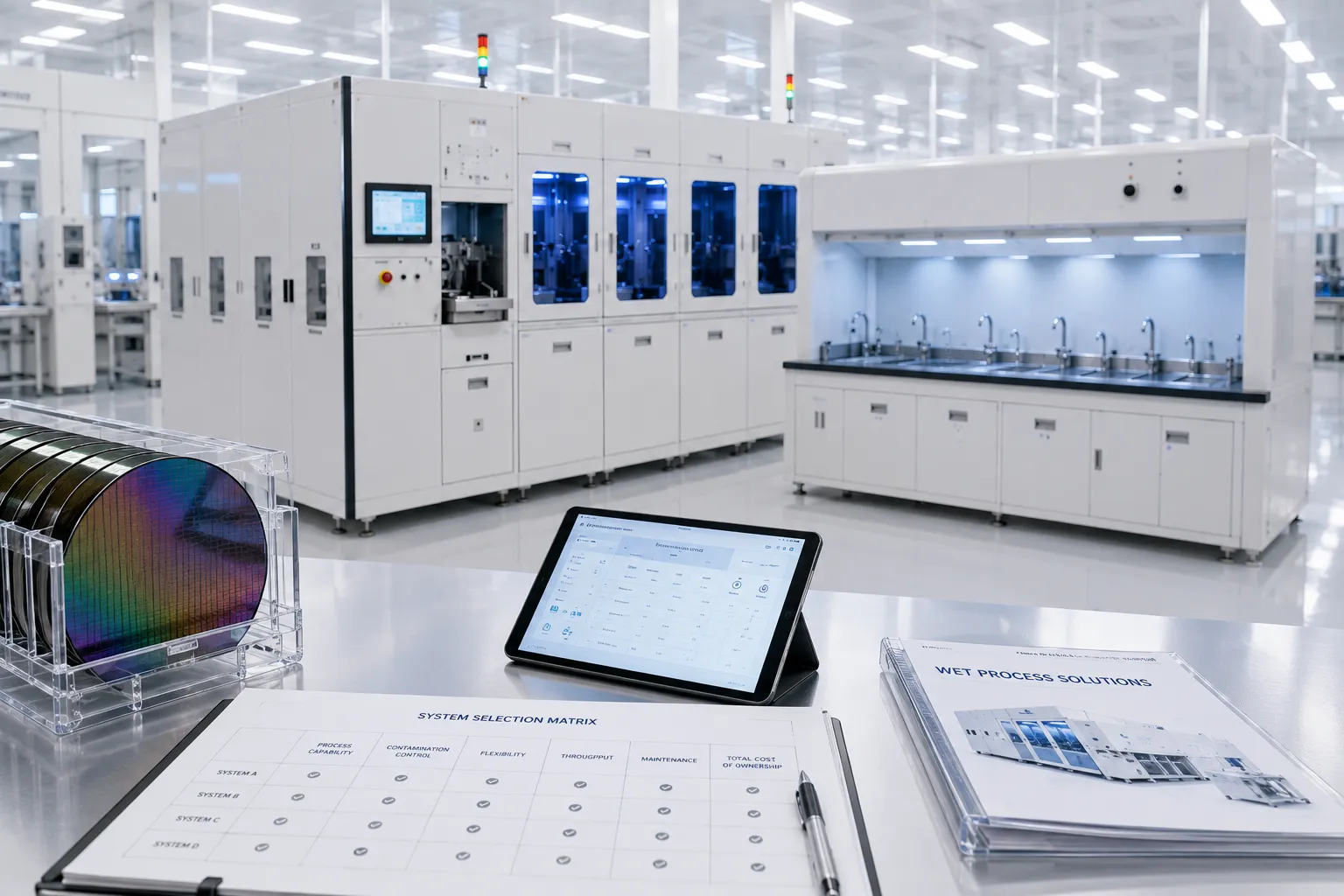
Hardware Subsystem Specifications
Standard technical specs and hardware configurations for KOSEN SEMI automated wet benches.
| Subsystem | Materials & Components | Performance Metric | Compliance Target |
|---|---|---|---|
| PFA Chemical Tanks | Ultra-Pure PFA, Quartz, PVDF, PTFE | Continuous bath recirculation & 0.05 µm filtration | Minimized metallic leaching risk |
| Robotic Handler | Multi-axis servo mechanism, PFA end-effectors | Positional repeatability to ±0.02 mm | SEMI E84 / ISO Class 5–7 Cleanroom |
| Chemical Dispense Control | PTFE valves, inline concentration monitors | Closed-loop chemical auto-spiking accuracy ±0.5% | Zero-leak double containment |
| Enclosure & Safety | FM4910 plastics, dual acid/solvent exhaust | Continuous exhaust static pressure sensing | SEMI S2, S8, CE Standards |
Upgrade Your Semiconductor Wet Processing Capabilities
Connect with KOSEN SEMI engineers to design a custom automated wet bench layout tailored to your cleanroom space and throughput targets.
Batch RCA Wet Bench vs. Single-Wafer Cleaning Performance
Selecting the optimal semiconductor wet cleaning architecture requires a rigorous trade-off evaluation balancing throughput, chemical consumption, particle removal efficiency, and long-term cost of ownership (CoO). While single-wafer tools serve specialized single-substrate processes, batch RCA cleaning systems deliver unparalleled high-volume manufacturing (HVM) economics, chemical bath longevity, and total surface immersion for advanced semiconductor fabrication.
High-Volume Throughput (WPH) Advantage
Batch RCA wet benches process 25 to 50 wafers concurrently per carrier or cassette-less flight, yielding throughput rates exceeding 250 to 500 wafers per hour (WPH). Single-wafer tools process substrates individually, making high-volume cleaning sequences inherently bottlenecked and capital-intensive.
- Batch RCA Performance: Up to 500 WPH in automated multi-tank wet benches.
- Single-Wafer Limits: Typically capped at 30–50 WPH per single process chamber.
Chemical Recirculation & CoO Optimization
Immersion batch benches leverage continuous chemical recirculation, online spiking, and sub-micron filtration to extend the bath life of SC-1 and SC-2 mixtures. Conversely, single-wafer systems rely heavily on single-use chemical dispense, significantly inflating overall wafer cleaning cost and hazardous chemical waste.
- Chemical Savings: Up to 60% lower chemical consumption per wafer.
- UPW Conservation: Integrated Quick Dump Rinse (QDR) minimizes ultrapure water consumption.
Full 3D Substrate Penetration & Hydrodynamics
Total immersion in heated SC-1 (NH4OH/H2O2) and SC-2 (HCl/H2O2) baths, combined with uniform megasonic agitation, guarantees complete chemical wetting across high-aspect-ratio trenches and complex 3D microstructures. Single-wafer spin spraying can suffer from dynamic spray shadowing on dense patterned wafers.
- Particle Removal Efficiency:Particle removal at 200 nm standard capability, optimized down to 100 nm.
- Boundary Layer Elimination: Uniform fluid dynamics control boundary-layer drag for consistent particle removal.
Batch RCA Wet Bench vs. Single-Wafer Cleaning Matrix
A comprehensive technical comparison highlighting process capabilities, operational throughput, and cost parameters for semiconductor wet processing.
| Evaluation Criteria | KOSEN SEMI Batch RCA Wet Bench | Single-Wafer Spin Cleaning Tool | Technical & Economic Impact |
|---|---|---|---|
| Throughput (WPH) | 250 – 500 WPH (25–50 Wafers / Batch) | 30 – 60 WPH (Per Single-Chamber Module) | Batch architecture provides 4x to 8x higher volume output for mass production lines. |
| Cost of Ownership (CoO) | Ultra-Low (Recirculated & Auto-Dosed Baths) | High (Single-use point-of-dispense chemistry) | Substantial reduction in raw chemical expenditure, chemical delivery infrastructure, and waste treatment. |
| Particle Removal Efficiency (PRE >0.09 µm) | 99.9% Efficiency (Megasonic-assisted bath) | 98.5% – 99.5% Efficiency (Dynamic spin spray) | Full immersion prevents particle re-attachment and ensures zero boundary layer shadow effects. |
| Trace Metal Contamination Control | <1010 atoms/cm² (SC-2 Chelation & Acid Clean) | <1010 atoms/cm² (Chemical spray clean) | Both methods achieve sub-ppb metal cleanliness; batch immersion offers extended reaction contact times. |
| 3D & High-Aspect Feature Wetting | Superior (Complete Hydrostatic Immersion) | Moderate (Risk of spin-spray shadow effects) | Batch immersion guarantees complete chemical contact inside deep trenches, TSVs, and 3D NAND features. |
| Cleanroom Footprint Efficiency | Optimized Footprint-to-WPH Ratio | Extensive Footprint for Equivalent WPH | Batch tools maximize cleanroom square footage yield, lowering fab building overhead. |
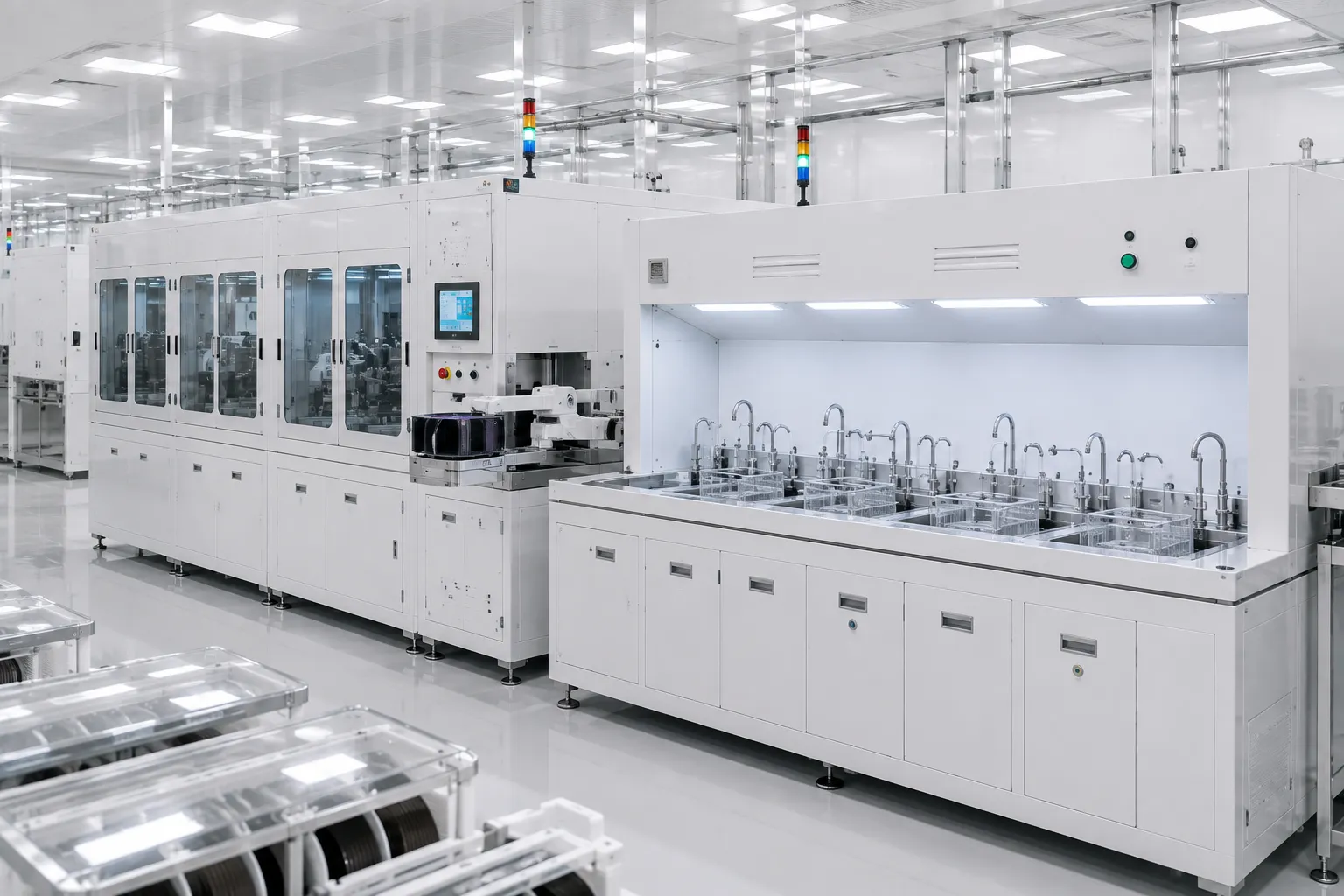
Strategic System Selection for Modern Semiconductor Fabs
When conducting an architectural comparison of RCA vs single wafer cleaning, process integration engineers must balance production capacity, wafer topography, and consumable economics. Single-wafer equipment excels at rapid recipe switching and fast cycle times for niche single-wafer processing steps. However, for core semiconductor wet cleaning sequences—such as pre-gate oxidation, pre-diffusion, pre-epitaxial deposition, and post-CMP processing—batch RCA systems remain the industry's premier workhorse.
KOSEN SEMI batch RCA wet benches feature advanced inline concentration monitoring, automated chemical spiking, and high-purity PFA fluidic networks. Explore our full range of high-throughput Batch Wafer Cleaning Systems designed to optimize total cost of ownership. By maintaining precise stoichiometric ratios for Ammonium Hydroxide (NH4OH), Hydrogen Peroxide (H2O2), and Hydrochloric Acid (HCl), our batch RCA cleaning performance achieves consistent, lot-to-lot micro-contamination control without incurring the high chemical consumable costs typical of single-wafer machinery.
When Should You Specify a Batch RCA Wet Bench?
While both equipment architectures serve vital roles in advanced wafer manufacturing, KOSEN SEMI batch RCA cleaning systems represent the ideal choice for fabs targeting high-volume throughput, rigorous chemical process control, and sustainable operational expenditure.
Semiconductor Applications and Process Node Integration
In modern IC manufacturing wet process environments, device yield depends on ultra-rigorous contamination control across critical manufacturing stages. KOSEN SEMI high-precision RCA cleaning systems deliver optimized chemical bath dynamics, uniform megasonic energy dissipation, and high-efficiency cascade rinsing tailored for advanced logic, memory, wide-bandgap power semiconductors, MEMS, and 3D packaging architectures. Discover how our overall semiconductor wet bench systems deliver exceptional reliability across all these critical operations.
Front-End & Back-End Logic & Memory (FEOL / BEOL)
Essential for leading-edge planar and multi-gate transistor architectures (FinFET, GAA) as well as high-density 3D NAND and DRAM nodes. Our Automatic Wet Bench Systems eradicate yield-limiting particles at 200 nm standard capability, optimized down to 100 nm, and heavy metal residues during key integration steps in advanced wafer fabrication.
- • Pre-Gate Oxide Preparation: Precise SC-1 and SC-2 sequences minimize microroughness and surface ionic trace metals prior to critical thermal gate dielectric growth.
- • Contact Hole & Trench Clean: High-penetration megasonic acoustic field distribution thoroughly clears high-aspect-ratio trenches without pattern collapse or feature erosion.
- • Post-Ion Implantation Stripping: Safely strips hardened photoresist residues and inorganic polymers while protecting underlying single-crystal silicon lattices.
Wide-Bandgap Compound Semiconductors (SiC / GaN)
Purpose-built chemical dispensing and bath control engineered for third-generation power electronics and RF devices. Specialized SiC wafer cleaning recipes protect ultra-hard substrate surfaces while minimizing metallic cross-contamination risk.
- • Native Oxide & Organic Removal: Optimized DHF etchants and temperature-controlled SC-1 baths effectively break down recalcitrant organic films on wide-bandgap substrates.
- • Pre-Epitaxial Substrate Preparation: SC-2 acidic chelation complexes transition-metal impurities into soluble ions to eliminate lattice defects prior to thermal epi growth.
- • Chemical Durability: Solid PFA and PTFE bath constructions resist continuous exposure to aggressive chemical ratios at elevated temperatures up to 85°C.
MEMS & Micro-Sensors Manufacturing
Ultra-gentle wet processing engineered for delicate 3D mechanical structures, optical arrays, and micro-actuators that require strict control over acoustic energy and liquid surface tension.
- • Stiction-Free Drying: Integrated Marangoni drying or isopropyl alcohol (IPA) vapor systems eliminate capillary force collapse on fragile micro-cantilevers.
- • Tunable Megasonic Power: Multi-frequency, variable-power acoustic transducers deliver uniform energy density without risking structural beam damage.
- • Sacrificial Layer Release Clean: Controlled chemical dispenses clear chemical residues within deep cavities and undercut structures without over-etching.
Advanced Packaging & Post-CMP Processing
Specialized cleaning systems for 2.5D/3D heterogeneous integration, Through-Silicon Vias (TSVs), micro-bumps, and chemical mechanical planarization (CMP) post-polishing cleanup.
- • Slurry Nanoparticle Detachment: Removes sticky silica and ceria CMP slurry particles from dielectric films and metallic interconnect layers.
- • Micro-Bump Surface Activation: Cleans copper pads and micro-bumps to maximize inter-metal bonding yield in flip-chip and chiplet packaging.
- • Quick Dump Rinse (QDR): High-flow cascade dump baths rapidly purge chemical loads to prevent re-deposition of organic contaminants.
Process Node & RCA Cleaning Technical Matrix
| Process Domain | Criticality & Target Step | RCA Sequence & Parameters | Yield Impact & Target Cleanliness |
|---|---|---|---|
| Silicon FEOL (200 nm Standard / 100 nm Optimized) | Pre-gate dielectric & channel formation | SC-1 (1:1:5, 70°C) + Megasonic → SC-2 (1:1:6, 80°C) → QDR → IPA Dry | Metallic impurities <1010 atoms/cm²; particle add count <10 pcs @ >0.09µm |
| SiC / GaN Power Substrates | Substrate defect removal & pre-epi prep | Dilute HF (1:100) oxide strip → Heated SC-1 → Acidic SC-2 chelation bath | Zero surface organic film; eliminates epitaxial stacking faults & breakdown spikes |
| MEMS Actuators & Sensors | Sacrificial layer etch & release clean | Low-power acoustic SC-1 → Ultra-pure water cascade → Marangoni IPA vapor dry | Stiction prevention >99.8%; zero mechanical beam breakage during processing |
| Post-CMP & 3D Packaging | Slurry residue removal & pad activation | Alkaline slurry dispersant bath → SC-1 scrub → Cascade QDR overflow | Complete nanoparticle detachment; maximizes inter-layer copper bonding adhesion |
Tailored RCA Wet Bench Architecture for Unique Application Nodes
Every semiconductor fabrication line operates under unique chemical compatibility requirements, thermal budgets, and cleanroom footprint limits. Backed by our robust Engineering Capability, KOSEN SEMI collaborates directly with process engineers to configure modular chemical tanks, inline chemical dosing systems, and robotic transport mechanisms—delivering seamless integration and boosted die yields across mature and advanced nodes.
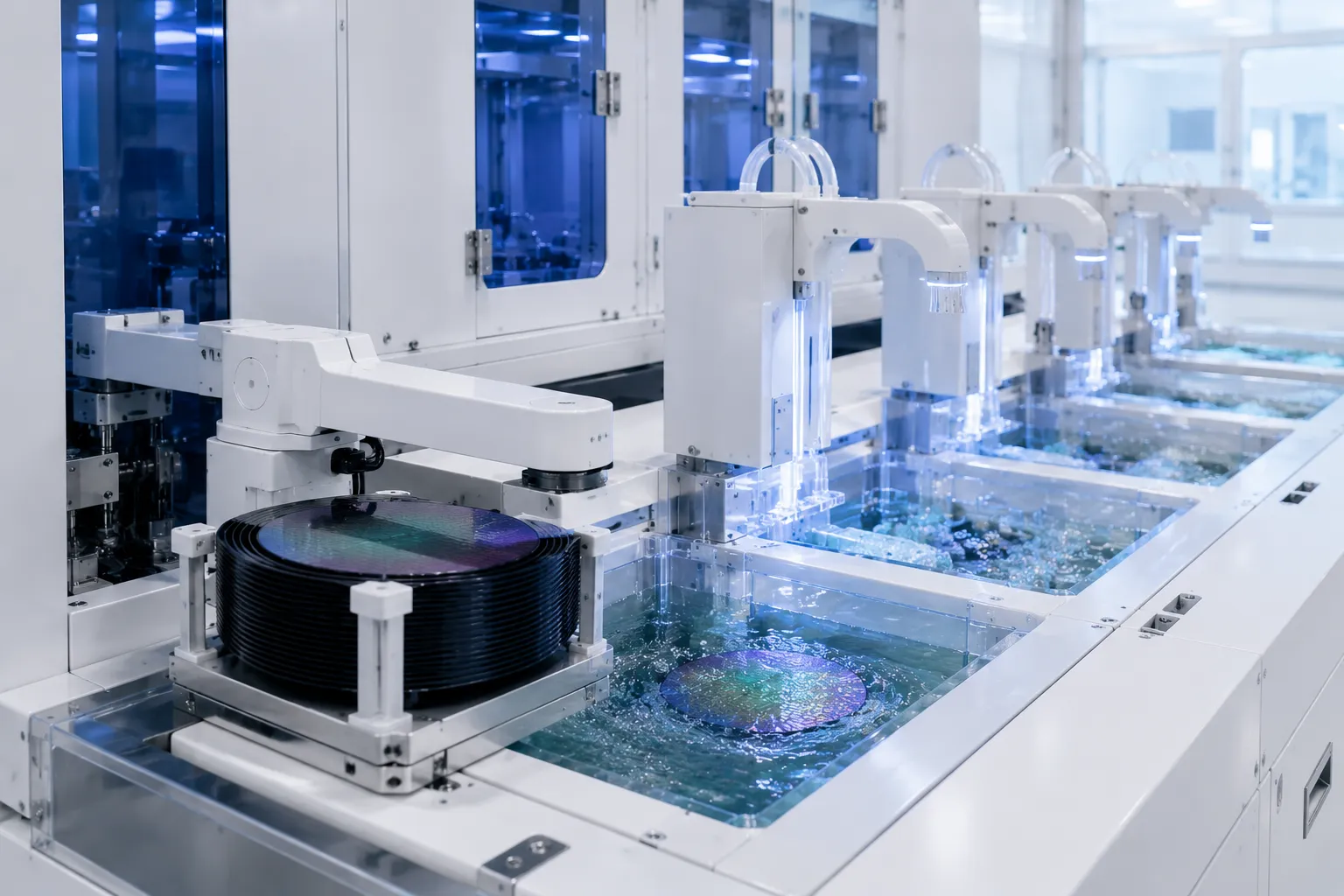
RCA Cleaning Equipment Specifications & Megasonic Integration
Modular wet bench architectures and high-precision megasonic transducers engineered for 200 nm standard wafer particle removal, optimized down to 100 nm. Explore our comprehensive range of wafer-cleaning-systems designed for high-throughput semiconductor fabrication.
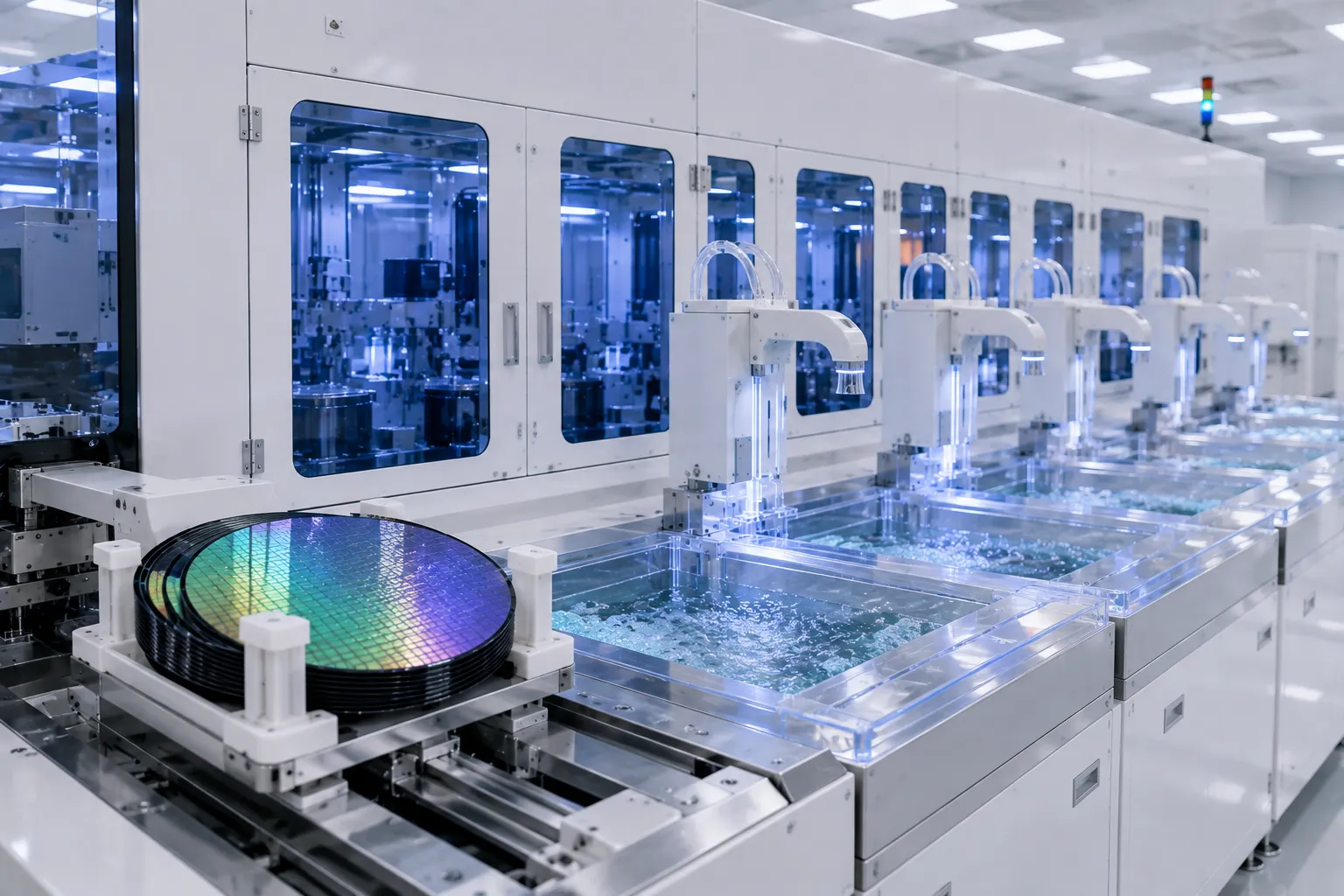
Sub-Micron Particle Removal & Chemical Precision
KOSEN SEMI RCA wet benches integrate closed-loop bath concentration control with multi-frequency megasonic acoustic energy to deliver high-purity surface cleanliness, complementing our advanced chemical-cleaning-equipment.
Uniform Megasonic Acoustic Fields
Direct-drive transducers deliver uniform acoustic energy across 150mm, 200mm, and 300mm wafer carriers without pattern damage.
Closed-Loop Chemical Injection
Automated inline concentration monitoring maintains exact chemical ratios for SC-1, SC-2, and dilute HF chemistries.
Technical Specification Matrix
Quantitative performance parameters across standard convective and megasonic-assisted RCA wet processing configurations, as well as specialized Batch Wafer Cleaning Systems.
| Parameter | Standard RCA Bench | Megasonic Integrated Bench | Engineering Tolerance |
|---|---|---|---|
| Wafer Substrate Diameter | 150mm / 200mm / 300mm | 150mm / 200mm / 300mm | SEMI Standard Compliant |
| Acoustic Megasonic Frequency | N/A (Convective Bath) | 750 kHz – 3.0 MHz (Swept-Frequency) | ±1 kHz Frequency Sweep |
| Chemical Bath Compatibility | SC-1, SC-2, DHF, SPM | SC-1, SC-2, DHF, O3/DIW, SPM | High-Purity PFA / Quartz / PTFE |
| Process Temperature Range | Ambient to 85°C | Ambient to 85°C (Active Direct Heating) | ±0.5°C Thermal Control |
| Recirculation & Filtration | 0.1 µm PTFE Filter | 0.05 µm High-Flow PTFE Filter | 99.999% Retention Efficiency |
| Particle Removal Efficiency | Validated at 200 nm standard threshold | Validated down to 100 nm optimized threshold | Verified via Laser Inspection |
Modular System Configurations
Configurable hardware options engineered to meet stringent semiconductor cleanroom process requirements.
Multiplex Megasonic Arrays
Uniform sound energy distribution minimizes cavitation erosion and pattern-collapse risk on delicate microstructures.
Real-Time Chemical Dosing
Automated spiked dosing and inline concentration sensors maintain continuous NH4OH, H2O2, and HF ratio integrity.
Inline Quartz Fluid Heating
Ultra-pure quartz heating elements deliver rapid thermal response times with minimized metallic ion contamination risk.
Advanced Surface Drying
Integrated IPA vapor or Marangoni drying modules support low-watermark wafer surfaces with heated N2 purging.
Configure Your Custom RCA Cleaning System
Consult with KOSEN SEMI process engineers to configure tank counts, megasonic frequencies, chemical dosing, and automation levels.
Frequently Asked Questions: Wafer Contamination Control & Wet Equipment
Gain authoritative technical insights into chemical isolation, megasonic particle removal, regulatory compliance, and operational efficiency for KOSEN SEMI automated RCA cleaning systems.
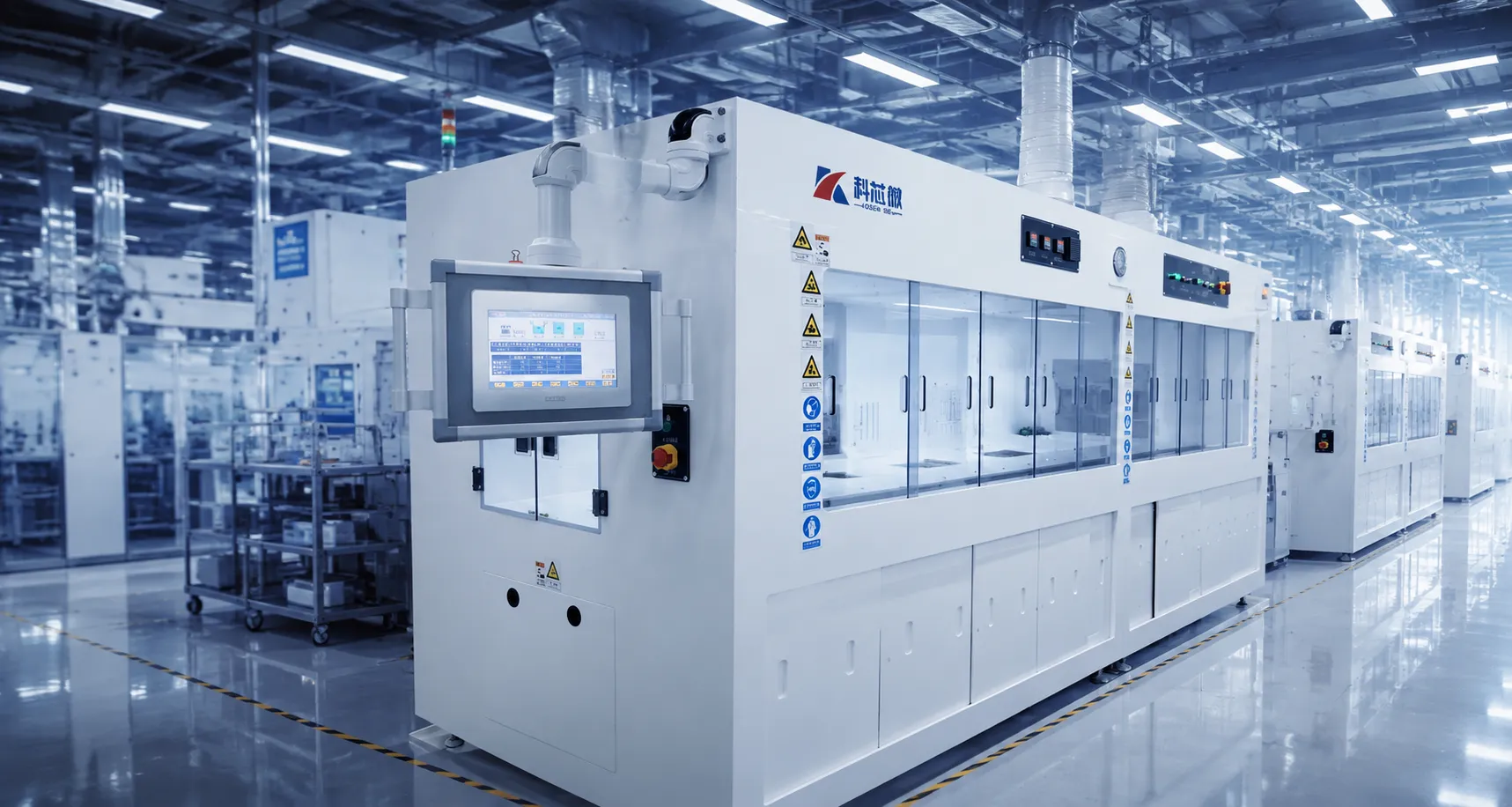
High-Yield Process Assurance
KOSEN SEMI designs advanced semiconductor wafer cleaning systems engineered to minimize cross-contamination risk, minimize chemical consumption, and maintain ultra-low defectivity across critical process nodes.
Custom Wet Process Audits
Consult with KOSEN SEMI Engineers
Need custom bath configurations or chemical dispensing specs? Our wet equipment engineering team conducts full process compatibility reviews to optimize your fab yield.
01 How do RCA cleaning systems prevent chemical cross-contamination between baths?
KOSEN SEMI automated wet benches enforce strict physical and chemical isolation across every module in the SC-1 / SC-2 cleaning process:
- Dedicated Fluidic Loops: SC-1 (alkaline) and SC-2 (acidic) stations feature independent PFA manifolds, seal-less pneumatic valves, and completely isolated chemical drain lines.
- Cascading Quick Dump Rinse (QDR): Intermediate high-speed QDR baths strip active chemistry from wafer surfaces between chemical steps to stop cross-tank chemical carryover.
- Exhaust Segregation: Dual-channel acid and solvent exhaust systems operate under continuous negative pressure, preventing volatile vapor mixing inside the enclosure.
- Micro-environment Control: Top-mounted HEPA/ULPA filtration units deliver ISO Class 5–7 vertical laminar airflow over open tanks to lock out ambient particulates.
02 How does megasonic energy support 200 nm standard and optimized 100 nm wafer particle removal?
Effective wafer particle removal at 200 nm standard capability, optimized down to 100 nm requires acoustic pressure tuning without destructive cavitation across high-capacity Batch Wafer Cleaning Systems:
- Multi-Frequency Transducers: Operating between 800 kHz and 2.0 MHz, transducers generate controlled acoustic micro-streaming that overcomes particle adhesion forces without fracturing fragile structures.
- Uniform Energy Distribution: Custom megasonic wet bench parameters ensure balanced energy fields across the entire wafer cassette, eliminating localized hot spots.
- Chemical Synergy: Acoustic energy combines with mild SC-1 chemical etching to lift nanoparticles while zeta-potential control prevents re-deposition.
03 What safety and compliance standards do KOSEN SEMI wet benches meet?
KOSEN SEMI manufactures fully compliant SEMI S2 certified wet bench systems, including high-efficiency Automatic Wet Bench Systems designed for Tier-1 wafer fabrication facilities globally:
- SEMI S2 & S8 Certification: Complete compliance covering environmental health, electrical safety, chemical containment, and ergonomic engineering.
- FM4910 Materials: Machine enclosures and chemical tanks are fabricated from certified flame-retardant thermoplastics (PVDF and specialized PP) to fulfill fire protection standards.
- Emergency Systems: Integrated EMO circuits, dual-contained chemical tubing, automated leak sensors, and N₂/CO₂ fire suppression protect technicians and facilities.
04 How does chemical dispense control reduce bath degradation and water consumption?
Consumable cost management is critical in high-throughput IC manufacturing wet process environments:
- Closed-Loop Spiking: Precision chemical dispense control monitors bath concentration via real-time optical sensors, auto-injecting exact chemical replenishment dosages only when needed.
- Extended Bath Lifetimes: Automated concentration management extends chemical bath utility by up to 40%, lowering chemical purchasing and hazardous effluent costs.
- Smart Rinse Saver: Counter-current cascade rinsing and variable UPW flow controls reduce ultra-pure water consumption by up to 30% compared to static overflow systems.
05 What is the standard manufacturing and field qualification schedule?
KOSEN SEMI streamlines system delivery through standardized modular assembly:
- Engineering Freeze (Weeks 1–4): ization of fluidic schematics, CAD cabinet design, process sequence validation, and client specification approval.
- Tool Build & FAT (Weeks 5–14): Frame assembly, PFA pipe welding, software configuration, and factory acceptance testing with full analytical trace reports.
- Site Installation & SAT (Weeks 15–18): Cleanroom positioning, utility hookup validation, site acceptance testing, particle qualification, and operator training.