Semiconductor Wet Scrubber Systems for Point-of-Use & Centralized Chemical Exhaust Abatement
Engineered for sub-fab and facility integration with Destruction and Removal Efficiency (DRE) exceeding 99.99% across critical wafer processing lines.
KOSEN SEMI provides global semiconductor manufacturing facilities with robust, application-driven wet scrubber systems designed for uninterrupted compliance and safety. Learn more about us and our commitment to advanced sub-fab abatement.
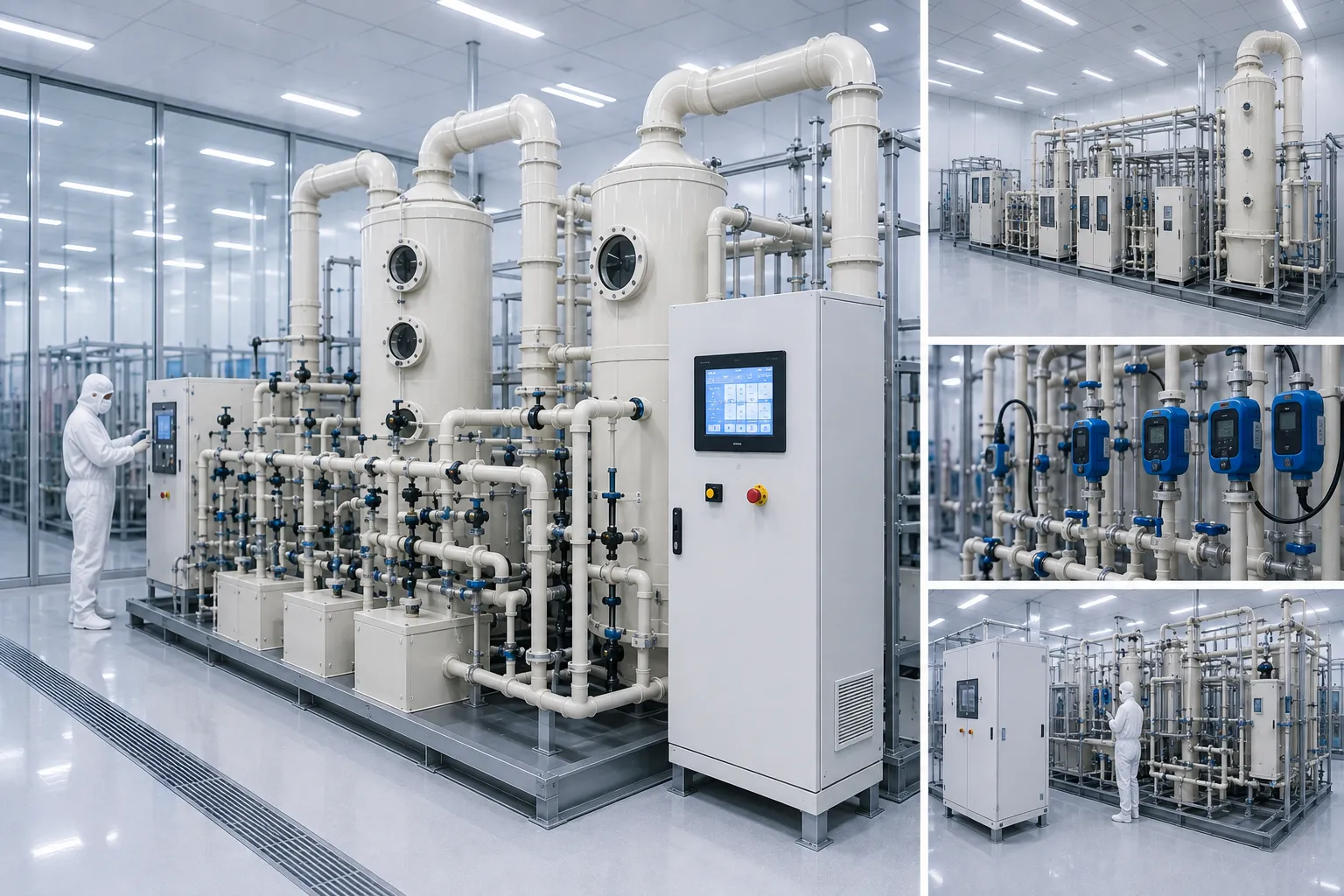
Advanced Wet Gas Scrubber Technology Core Engineering Advantages
Semiconductor manufacturing processes demand extreme precision in chemical exhaust abatement to protect sub-fab infrastructure, uphold environmental compliance, and secure continuous fab uptime. Backed by extensive Engineering Capability, KOSEN SEMI engineers state-of-the-art wet gas scrubber technology designed to efficiently capture and neutralize aggressive acid mists, alkaline vapors, and reactive process gases with maximum operational reliability and low total cost of ownership.
High-Efficiency Gas-Liquid Contact Architecture
Engineered packing column depth combined with micro-droplet nozzle placement maximizes mass transfer rates across high-volume, variable chemical exhaust loads.
- Optimized liquid-to-gas (L/G) ratio
- Uniform spray pattern coverage
Corrosion-Resistant Polymer Construction
Fabricated in our modern manufacturing facility using ultra-pure PP-H, PVDF, and PFA materials that resist aggressive acids, caustic compounds, and harsh thermal cycling without structural degradation.
- Zero metallic ion leachables
- High thermal & chemical endurance
Automated pH & ORP Closed-Loop Control
Intelligent sensor networks continuously monitor process chemistry, dynamically adjusting reagent dosing to cut operating expenses while maintaining peak neutralization kinetics.
- Real-time automated reagent metering
- Optimized chemical consumption rates
Low-Pressure Drop Demister Assemblies
High-efficiency mist eliminator profiles capture fine liquid droplets down to 5 µm, eliminating stack carryover while significantly reducing exhaust fan static pressure requirements.
- Fine-droplet retention down to 5 µm
- Minimized exhaust fan power draw
Physical Mechanics of Chemical Exhaust Abatement
Modern semiconductor fabrication processes—including wet etching, wafer cleaning, and CMP—generate complex chemical exhaust streams containing concentrated hydrochloric acid (HCl), hydrofluoric acid (HF), nitric acid (HNO3), and ammonium hydroxide (NH4OH). In high-volume production lines, these abatement systems integrate seamlessly alongside Automatic Wet Bench Systems to maintain clean and controlled environments.
KOSEN SEMI's proprietary wet gas scrubbing technology incorporates high-sensitivity closed-loop automation, delivering reliable chemical exhaust abatement. By dynamically balancing gas velocity with multi-stage liquid distribution inside the packing column, our systems achieve superior gas absorption kinetics. High-density packing media maximizes interfacial contact area, ensuring thorough chemical neutralization while maintaining exceptionally low system pressure drop.
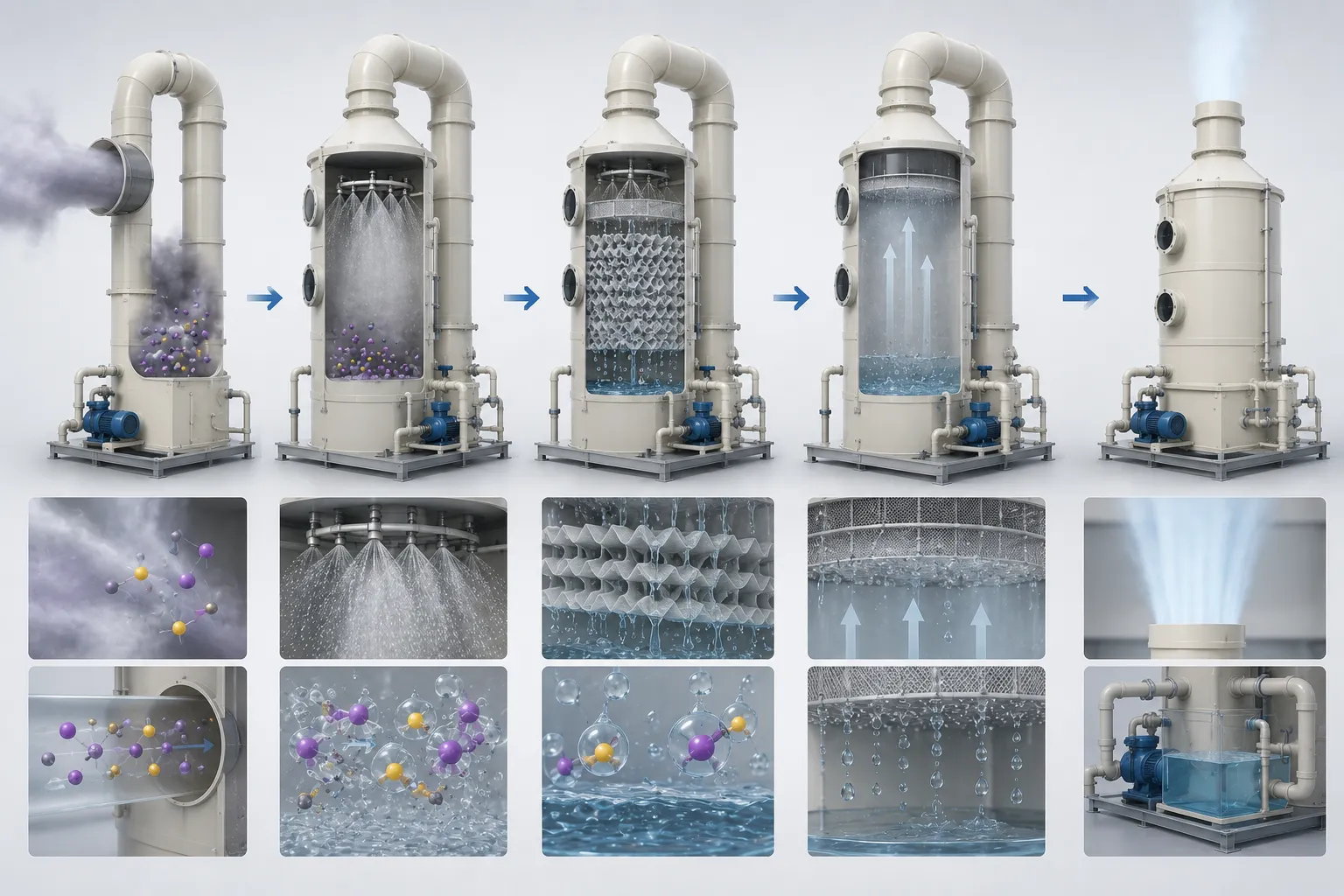
High-precision packing column geometry engineered for semiconductor sub-fab abatement
Material Performance in Harsh Chemical Environments
Metal housings and commercial plastics degrade rapidly when subjected to continuous acid vapors and thermal fluctuations. KOSEN SEMI utilizes thermo-welded PP-H and fluoropolymer components engineered specifically for cleanroom and sub-fab conditions.
- High Thermal Resistance: Maintains structural integrity under continuous operating temperatures up to 90°C.
- Reduced Contamination Risk: Non-leaching polymer construction prevents trace metallic impurities in sub-fab ducting.
Automated Process Control & Operational Cost Savings
Manual chemical dosing frequently results in over-consumption of sodium hydroxide (NaOH) and freshwater, increasing overall cost of ownership. Integrated automation aligns chemical supply directly with real-time exhaust load.
- Closed-Loop Metering: Dual-redundant pH and ORP probes communicate directly with the central PLC to adjust dosing pumps in milliseconds.
- Water Conservation Logic: Automated total dissolved solids (TDS) monitoring reduces fresh makeup water usage by up to 30%.
Point-of-Use & Sub-Fab Scrubber Systems
Engineered to meet stringent semiconductor fab emission standards. Discover our comprehensive range of industrial wet scrubbers designed for targeted abatement of corrosive gases, acid mist, and hazardous fumes, or explore our full suite of products tailored for cleanroom processing.
POU Acid Gas Scrubber
Compact single-tool abatement solution built specifically for wet bench acid exhaust integration.
- Target Species: HCl, HF, H2SO4, HNO3
- Airflow Scale: 50–150 m³/min
- DRE Rating: 99.99%
Central Acid Gas Scrubber
High-capacity packed tower scrubber for multi-tool acid exhaust streams.
- Target Species: HCl, HF, Cl2, HNO3
- Airflow Scale: 150–500 m³/min
- DRE Rating: 99.99%
Dual-Stage Acid Wet Scrubber
Multi-stage system designed for ultra-low emission targets and high loading.
- Target Species: Concentrated HNO3, HF
- Airflow Scale: Up to 500 m³/min
- DRE Rating: 99.999%
Compare System Specifications
Cross-reference configurations to match fab wafer cleaning systems and wet bench requirements.
| Feature / Metric | Acid Gas Scrubber | Caustic Exhaust Treatment | Solvent Wet Scrubber |
|---|---|---|---|
| Primary Target Exhaust Chemistry | HCl, HF, Cl2, HNO3 vapors | NH3, KOH, NaOH caustic fumes | Water-soluble VOCs, IPA, NMP |
| Standard Airflow Capacity Scale | 50–500 m³/min | 50–500 m³/min | Customized airflow scale |
| Destruction & Removal Efficiency (DRE) | Up to 99.99% | Up to 99.95% | 99.0% – 99.9% |
| Scrubbing Media Mechanism | Counter-current packed tower with alkaline dosing | Multi-stage packed bed with automated acid dosing | High-surface absorption packing with water recirculation |
| Housing Construction Material | FRP / PVDF / PP Lining | Polypropylene (PP) / Stainless Steel | 316L Stainless Steel / ATEX FRP |
| Automated Chemistry Control | Integrated pH & ORP Control | Integrated pH & Scaling Control | LEL Sensors & Level Switch |
| Technical Consultation | Request Technical Details | Request Technical Details | Request Technical Details |
Multi-Stage Semiconductor Exhaust Treatment Process
Managing chemical exhaust from advanced wafer fab tools requires systematic liquid-gas mass transfer, rapid thermal quenching, and fine mist separation down to 5 µm. KOSEN SEMI optimizes gas-liquid neutralization pathways to deliver high destruction efficiency and leak-resistant operation throughout the entire exhaust treatment process.
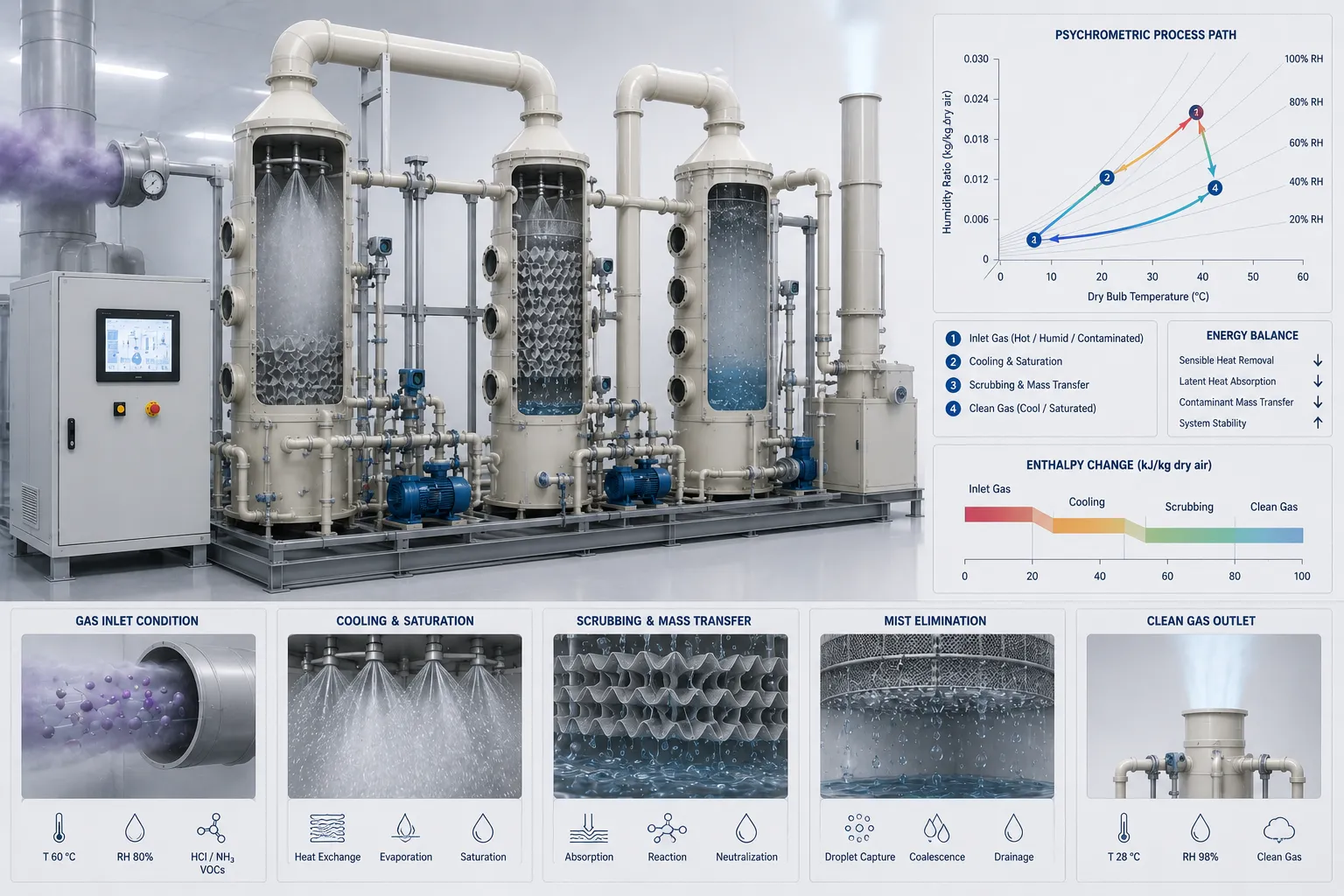
Thermodynamic Gas Conditioning Engineering
Hot chemical vapors entering from sub-fab wet etching, CMP, or cleaning tools are directed into the initial quenching chamber. High-pressure atomizing nozzles inject saturated fluid, rapidly reducing stream temperatures and stabilizing volatile mists before they interact with internal column packing structures.
Gas-Liquid Contact Optimization
The foundation of effective multi-stage gas scrubbing lies in maximizing liquid surface contact relative to volatile vapor volume. By combining structured packing media beds with precise spray patterns, KOSEN SEMI wet scrubber systems prevent gas channeling and maintain uniform mass transfer coefficients even during rapid sub-fab surge events.
- ✓ Micro-droplet atomization increases dynamic surface contact ratios.
- ✓ Uniform liquid distribution eliminates unreacted gas bypass paths.
Acid-Base Neutralization Chemistry
Semiconductor wet process equipment generates complex chemical exhaust streams including hydrofluoric acid (HF), hydrochloric acid (HCl), chlorine (Cl₂), and ammonia (NH₃). Continuous closed-loop metering maintains precise reagent stoichiometry, fully neutralizing reactive exhaust components while minimizing chemical consumption and total cost of ownership (COO).
- ✓ Real-time chemical sensors drive automated pH and ORP reagent dosing.
- ✓ Optimized stoichiometric balance prevents excess chemical reagent waste.
Mechanical Aerosol Separation
Downstream ductwork and exhaust fans must remain protected from liquid acid carryover to safeguard fab infrastructure and satisfy regulatory requirements. High-efficiency cyclonic demisters and vane-type mist eliminators strip liquid droplets down to 5 µm, ensuring dry gas discharge into facility exhaust stacks.
- ✓ Multi-tier demisting assemblies eliminate fine liquid mist carryover.
- ✓ Low dynamic pressure drop preserves blower and fan operational life.
Automated Water Quality Management
Integrated blowdown management balances water conservation with dissolved solids management in recirculation sumps. Intelligent water recycling controls reduce continuous makeup water intake while preventing salt crystallization and nozzle scaling during continuous 24/7 semiconductor fab operations. Learn more about our operations by exploring our about-us page or visiting our manufacturing-facility.
- ✓ Automated conductivity tracking reduces overall freshwater intake.
- ✓ Continuous analytical telemetry ensures fully compliant sewer discharge.
Process Stage Technical Performance Parameters
| Stage Identifier | Primary Function | Target Contaminants | Removal Target |
|---|---|---|---|
| Stage 01 Thermal Quenching | Gas conditioning and cooling | Hot acidic vapors, continuous thermal exhaust | Temperature reduced to < 45°C |
| Stage 02 Mass Neutralization | Counter-current chemical absorption | HCl, HF, Cl₂, NH₃, nitric vapors | ≥ 99.99% Destruction Efficiency (DRE) |
| Stage 03 Demisting Phase | Centrifugal liquid mist removal | Aqueous aerosol droplets and entrained moisture | Droplet capture down to < 5 µm |
| Stage 04 Effluent Control | Analytical monitoring and blowdown | Sump salts, dissolved ions, chemical wastewater | Full environmental effluent compliance |
Wafer Fabrication Exhaust Scenarios and Integration
Modern semiconductor manufacturing demands specialized point-of-use and centralized wet scrubber systems engineered for cleanroom bay integration. Deployed in high-volume 8-inch (200mm) and 12-inch (300mm) wafer fabs globally, KOSEN SEMI semiconductor wet process equipment satisfies stringent cleanroom environmental standards while delivering uninterrupted chemical exhaust abatement across rapidly shifting production cycles.
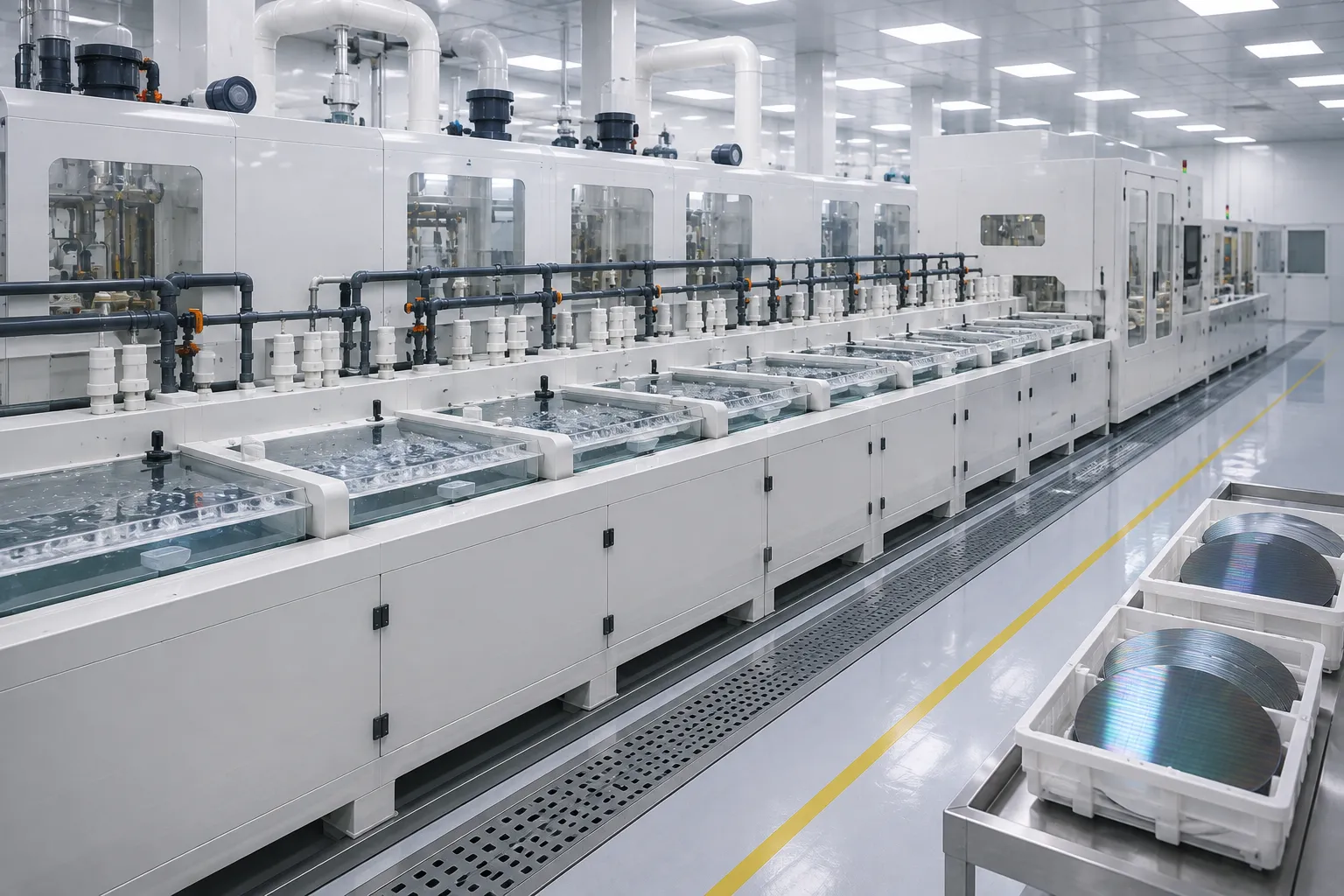
Wet Etching and Chemical Cleaning Lines
Automated wet benches and chemical cleaning stations continuously generate corrosive acid mist streams rich in hydrofluoric acid (HF), hydrochloric acid (HCl), and nitric acid. Rapid variations in processing recipes create dynamic volumetric surges and variable acid concentrations that overwhelm conventional pollution control units.
KOSEN SEMI wet gas scrubber technology resolves these dynamic wafer fabrication exhaust challenges using multi-stage mass transfer packing sections paired with micro-droplet liquid distribution geometry. The system dynamically scales chemical neutralization rates to guarantee continuous 99.99% Destruction and Removal Efficiency (DRE) during peak wafer cleaning runs using advanced Single Wafer Cleaning Systems.
- Acid Mist Neutralization: Multi-tier packing columns provide optimized mass transfer zones for rapid absorption of volatile HF, HCl, and nitric vapors.
- Automated Flow Scaling: Closed-loop liquid-to-gas ratio control automatically scales recirculation pump output to eliminate chemical carryover.
- Sub-Fab Structural Integrity: Fabricated from high-purity PP-H and PVDF polymers to resist aggressive chemical condensate and stress cracking.
Need an assessment of your facility airflow requirements? Speak with an application engineer.
Chemical Mechanical Planarization Exhaust
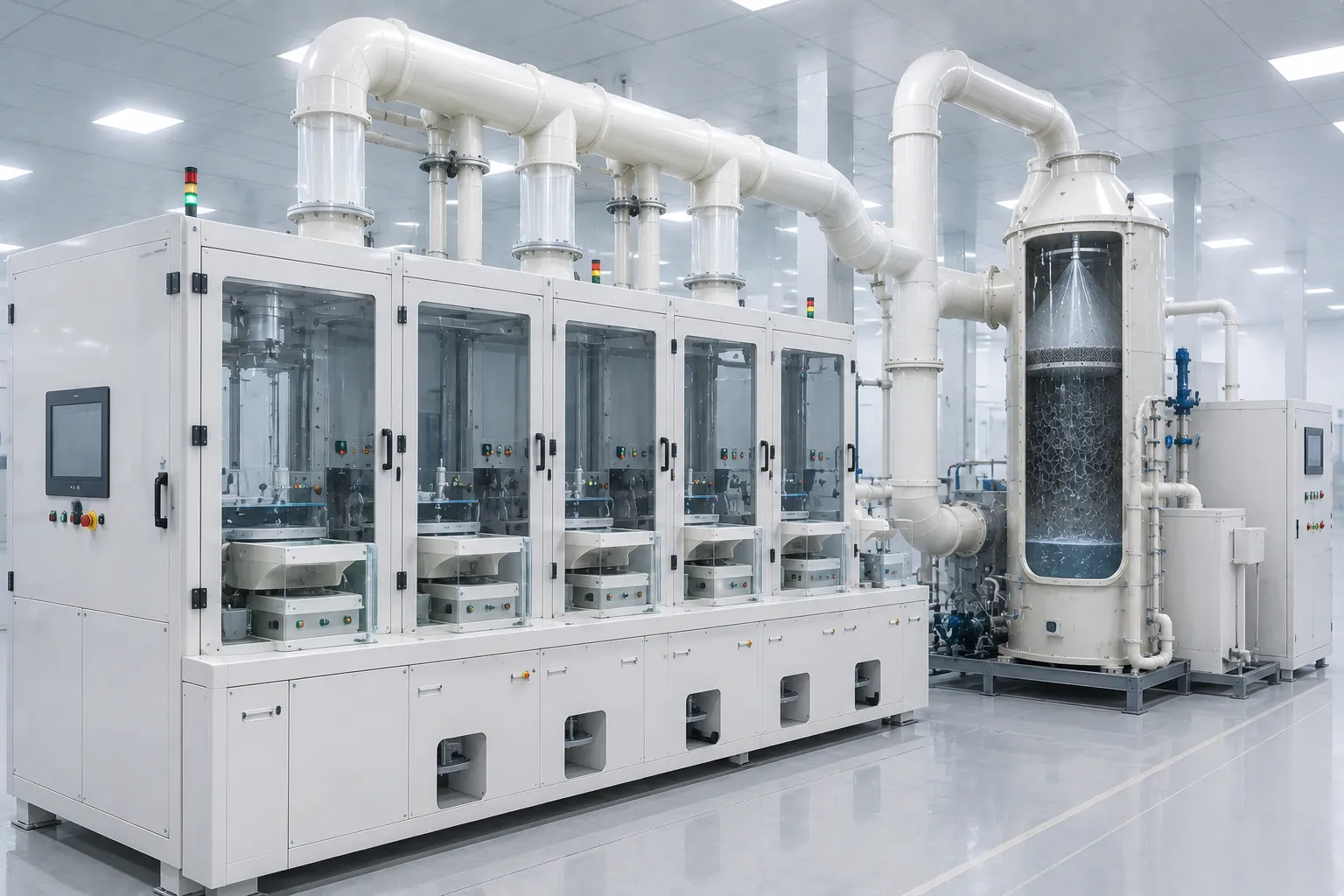
Chemical Mechanical Planarization (CMP) modules discharge high-moisture exhaust laden with abrasive slurry particles, silica aerosols, and alkaline vapors such as ammonium hydroxide. Standard scrubbers often suffer from rapid packing media scaling, salt crystallization, and duct blockage.
Engineered specifically for abrasive semiconductor wet process equipment environments, our caustic exhaust treatment architecture incorporates open-structure packing, non-clogging spray nozzles, and automated self-flushing demister assemblies that keep sub-fab exhaust systems operating without unexpected maintenance stops. Learn more about-us and our tailored solution capabilities for the semiconductor industry.
- Anti-Fouling Mass Transfer: High-void packing media prevents slurry particle entrapment, salt buildup, and pressure drop escalation.
- Precision Alkaline Absorption: Automated pH and ORP dosing loops maintain optimal reagent chemistry for complete ammonia vapor scrubbing.
- Automated Blowdown & Purge: Continuous particulate removal cycles flush settled solids from recirculation tanks before slurry agglomeration occurs.
Need an assessment of your facility airflow requirements? Speak with an application engineer.
Epitaxy and Diffusion Process Support
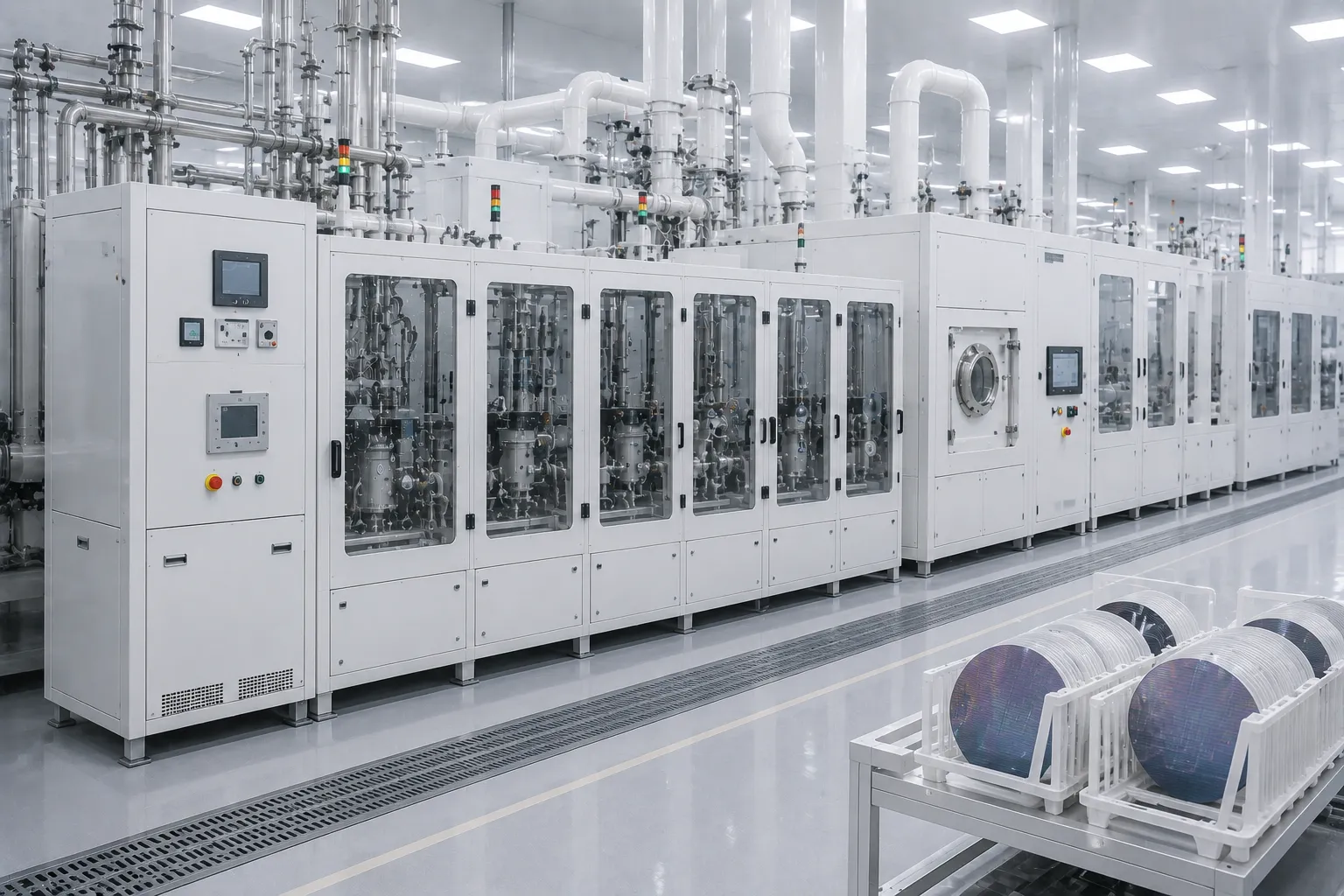
High-temperature processing bays for epitaxy, oxidation, and furnace diffusion release high-heat exhaust gas streams along with corrosive purge gases and pre-treated bypass vapors. Extreme temperature fluctuations combined with acidic halogens place severe thermal and chemical stress on abatement infrastructure.
KOSEN SEMI equips these systems with dedicated upstream quench pre-cooling modules. By rapidly lowering incoming gas temperatures prior to entering the main scrubber tower, the system protects structural polymer materials and optimizes mass transfer equilibrium for maximum chemical absorption.
- Integrated Thermal Quenching: Direct-spray evaporative cooling drops high-temperature exhaust to ambient levels in seconds.
- Fluoropolymer Components: Internal spray headers, packing grids, and demisters lined with PFA and PVDF prevent thermal degradation.
- Purge Stream Scrubbing: Neutralizes residual halide and acid gases during furnace venting, chamber cleaning, and N2 purge cycles.
Need an assessment of your facility airflow requirements? Speak with an application engineer.
Surge Handling and Transient Gas Spike Solutions
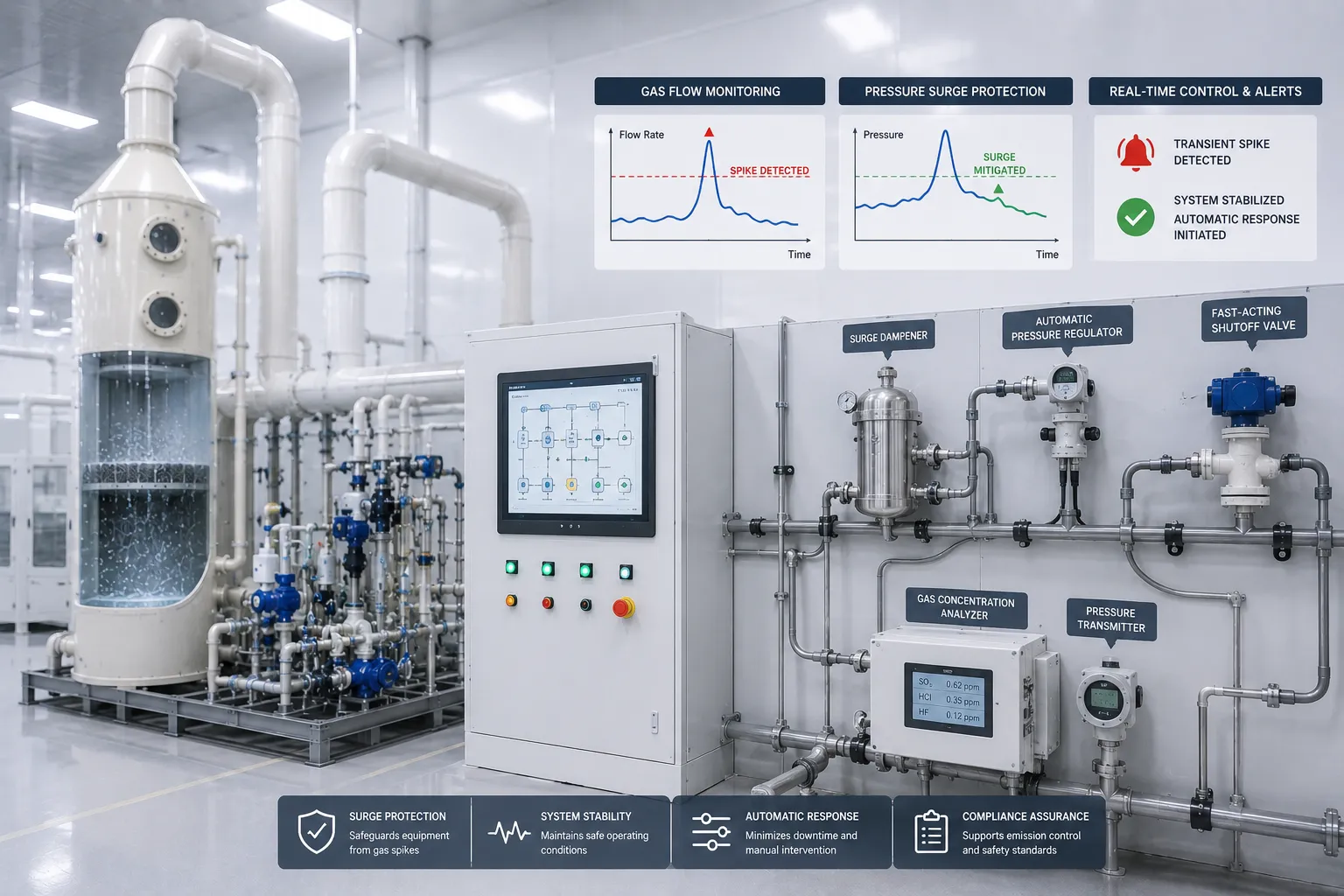
Concurrent tool exhaust purges across multiple cleanroom bays can trigger intense transient concentration spikes and volume surges. Static, fixed-dosing scrubbing systems frequently experience breakthrough during these peak events, leading to environmental non-compliance and cleanroom downtime.
Our advanced semiconductor wet process equipment integrates intelligent closed-loop monitoring networks utilizing ultra-responsive pH and Oxidation-Reduction Potential (ORP) sensors. The system instantly modulates variable-speed chemical dosing pumps to buffer instantaneous load increases without sacrificing removal efficiency.
- Millisecond Reagent Response: Automated high-speed dosing loops inject liquid neutralizers instantly upon detecting chemical surges.
- High-Capacity Sump Design: Expanded recirculation sumps maintain chemical buffer reserves during simultaneous multi-bench vents.
- Redundant System Architecture: Dual recirculation pumps and backup dosing loops ensure uninterrupted 99.5%+ uptime for fab operations.
Need an assessment of your facility airflow requirements? Speak with an application engineer.
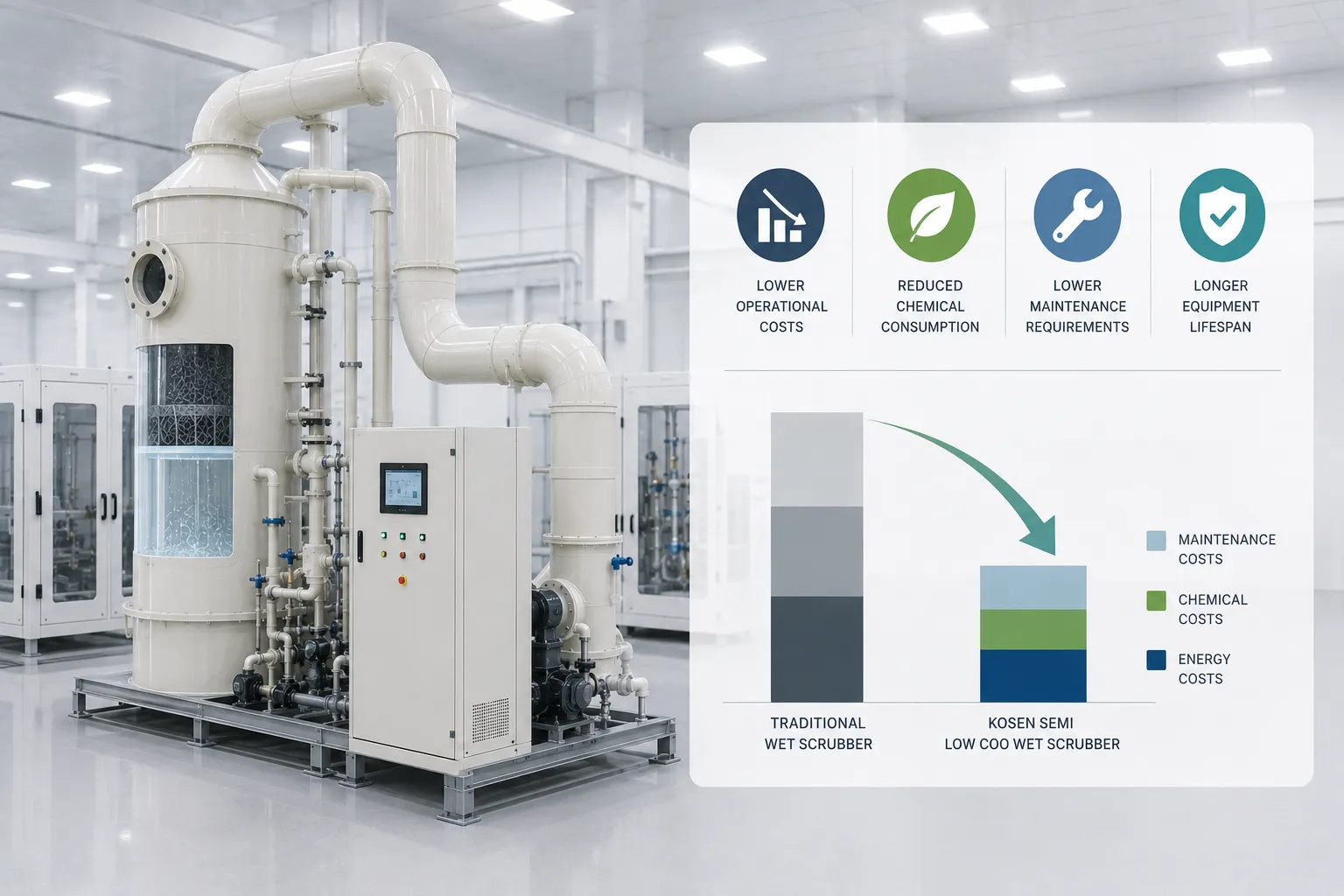
SEMATECH Compliant Scrubber Systems for Low COO
KOSEN SEMI delivers SEMATECH compliant scrubber solutions engineered to minimize total Cost of Ownership (COO) while ensuring continuous, zero-downtime fab abatement.
10,000 hrs
Verified MTBF
Mean Time Between Failures exceeding 10,000 hours with intelligent VFD fan control yielding a 15% reduction in baseline power draw.
100%
Global Fab Compliance
Fully aligned with SEMI S2/S8 safety standards, backed by our world-class manufacturing facility, CE directives, and ISO 14001 frameworks.
Low COO
Commercial Payback
Closed-loop recirculation and automated dosing reduce chemical reagent waste by up to 25%, drastically lowering total COO.
Verified Industry Compliance & Fab Safety Standards
Lower Total Cost of Ownership with Low COO Wet Scrubber Technology
KOSEN SEMI designs each low COO wet scrubber to streamline semiconductor fab qualification. By integrating SEMATECH compliant scrubber protocols and ultra-efficient fluid recirculation—much like our advanced wafer-cleaning-systems—we help facility leaders eliminate downtime risks and minimize recurring operational expenditures.
Engineering and Maintenance Technical FAQ
Managing semiconductor wet scrubber systems requires a thorough understanding of fluid dynamics, chemical neutralization kinetics, and preventive maintenance protocols. KOSEN SEMI leverages its advanced Engineering Capability to help fab facility managers optimize gas removal efficiency, eliminate unscheduled downtime, and ensure regulatory compliance across sub-fab wafer manufacturing lines.
Transient Acid Mist Surge Handling for HF and HCl Systems
Chemical Stabilization and Surge Management
Semiconductor wet etching and chamber cleaning tools frequently generate sudden spikes of concentrated hydrofluoric acid (HF) and hydrochloric acid (HCl) vapors. KOSEN SEMI wet scrubber systems incorporate dynamic hydraulic and chemical buffer capacity to absorb peak chemical loads without suffering breakthrough or performance degradation.
To manage transient concentration surges, the system utilizes high-speed closed-loop oxidation-reduction potential (ORP) and pH sensor arrays embedded directly into the primary liquid sump. When a surge is detected, automated metering pumps respond within milliseconds to adjust neutralizing chemistry dosing rates.
- Multi-stage Spray Headers: Dual independent spray banks activate automatically during surge events to increase liquid-to-gas contact surface area and accelerate mass transfer.
- Extended Retention Packing: High-void packing media creates extended residence time, maintaining a baseline gas removal efficiency exceeding 99.99% even during 300% concentration spikes.
- Recirculation Sump Buffering: Generous chemical reservoir volumes prevent rapid pH drops and guard against reagent depletion before automated dosing catches up.
Optimizing Liquid to Gas Ratios and System Pressure Drop
Fluid Dynamic Efficiency and Pressure Control
Achieving high target pollutant removal while maintaining low utility energy consumption requires a precise balance between liquid-to-gas (L/G) flow rates and differential pressure drop across the packed bed column.
KOSEN SEMI engineers configure the L/G ratio dynamically based on incoming volumetric exhaust rates and gas species density. Standard operational L/G ratios range from 2.5 to 4.5 liters per cubic meter of air volume.
- Low Resistance Packing Geometry: Custom Tellerette structural packing minimizes system pressure drop to under 250 Pa per meter of packing bed depth.
- Variable Frequency Blower Drive Integration: Differential pressure transmitters monitor column pressure continuously, signaling sub-fab exhaust blowers to auto-adjust motor speeds.
- Energy Reduction: Precise hydraulic matching cuts annual exhaust fan electrical consumption by up to 15%, substantially lowering overall operational costs for cleanroom facilities.
Cleanroom Corrosion Protection and Fire Safety Compliance
Material Durability and Safety Standard Adherence
Semiconductor fab environments demand strict compliance with chemical compatibility and flammability guidelines. Corrosive acid vapors and volatile chemical bypass streams can rapidly degrade standard metallic or low-grade plastic abatement hardware.
KOSEN SEMI constructs all acid gas scrubber vessels using high-purity, flame-retardant polypropylene (PP-H), polyvinylidene fluoride (PVDF), and perfluoroalkoxy alkanes (PFA). These materials resist continuous exposure to concentrated sulfuric, nitric, hydrofluoric, and hydrochloric acids without structural embrittlement.
- SEMI S2 and SEMI S8 Compliance: Structural design adheres strictly to semiconductor equipment safety standards, including ergonomic maintenance access and seismic restraint validation.
- FM 4910 Flammability Certification: Materials satisfy Factory Mutual fire safety standards for cleanroom materials, preventing toxic smoke generation or flame propagation.
- Secondary Containment and Leak Detection: Integrated optical liquid sensors and double-walled sump basins provide real-time alerts and trigger automated containment dump protocols in the event of primary casing rupture.
Scheduled Maintenance Intervals for Packing Media and Spray Nozzles
Preventive Servicing and Operational Lifecycle
Comprehensive wet scrubber system maintenance is essential for preventing chemical fouling, scaling on packing media, and liquid carryover into cleanroom exhaust ducting. These protocols work in tandem with upstream fab equipment, including high-precision wafer-cleaning-systems, to maintain stable process conditions.
With proper maintenance, KOSEN SEMI wet scrubber systems routinely achieve a Mean Time Between Failures (MTBF) exceeding 10,000 hours. The system features tool-free quick-release inspection ports and self-cleaning spiral spray nozzles to minimize technician downtime during scheduled servicing.
- Monthly Inspections: Calibrate pH/ORP sensors, verify liquid recirculation flow rates, and inspect demister pad pressure differential indicators.
- Quarterly Servicing: Flush spray headers and inspect wide-orifice spiral nozzles for particulate buildup or chemical crystal growth.
- Annual Overhaul: Conduct chemical descaling of packing media, check pump mechanical seal integrity, and evaluate demister pad droplet separation efficiency.
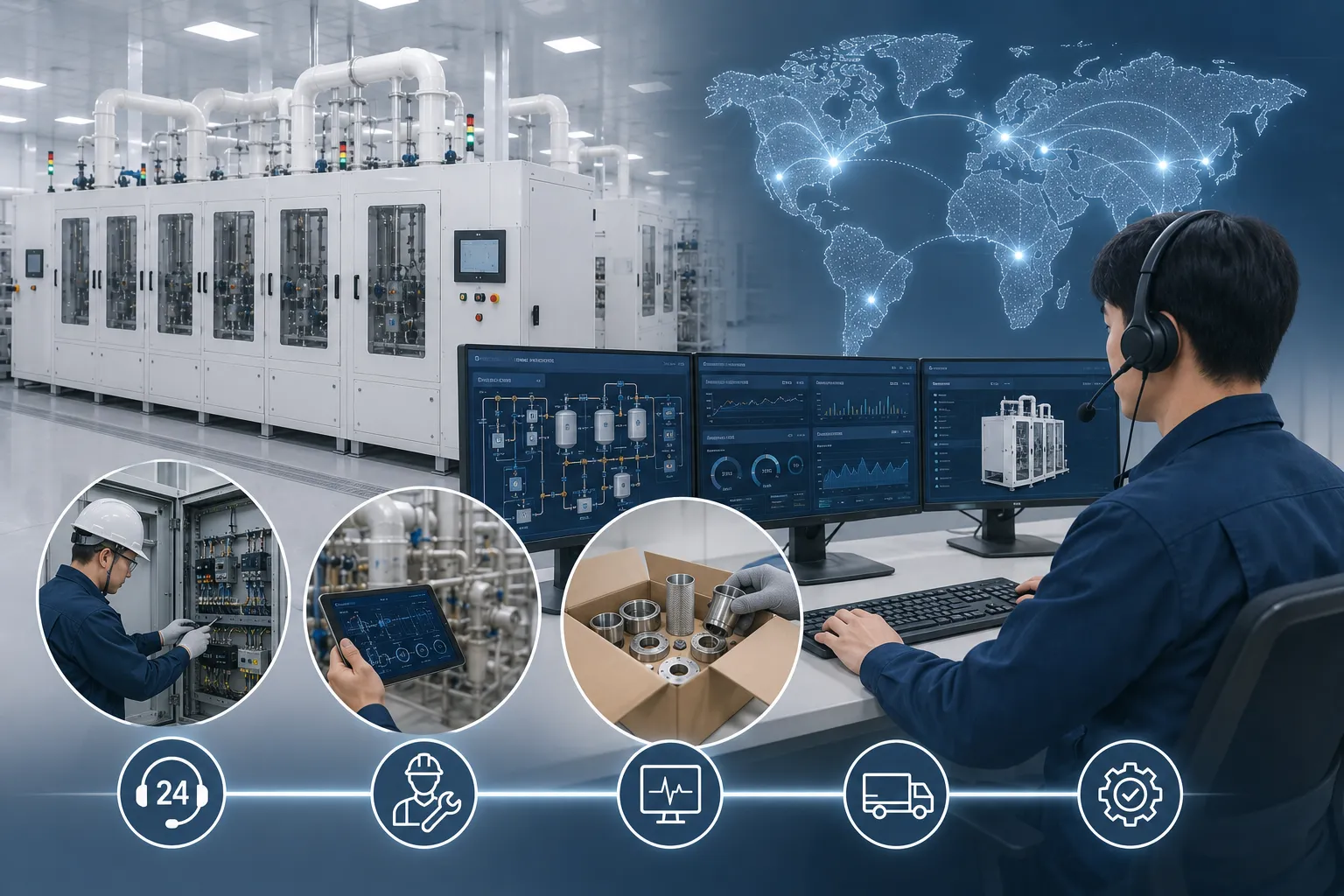
Technical Support and Lifecycle Management
Backed by KOSEN SEMI's 24/7 global technical support network, maintenance teams receive full lifecycle guidance, predictive diagnostic monitoring, and rapid spare parts dispatch for system optimization.
System Maintenance Schedule and Inspection Matrix
| Component | Frequency | Action Item |
|---|---|---|
| pH / ORP Sensors | Monthly | 2-Point Calibration |
| Spray Nozzles | Quarterly | Pattern Inspection |
| Packing Media | Semi-Annually | Chemical Descaling |
| Demister Assemblies | Annually | Aerosol Cleanout |
Need Engineering Consultation?
Connect directly with KOSEN SEMI process engineers to audit your wet scrubber gas removal efficiency or configure a customized sub-fab maintenance program.
Contact Application EngineersReady to Engineer the Right Wet Scrubber System for Your Fab?
Share your exhaust chemistry, airflow requirements, facility layout, and compliance targets with KOSEN SEMI. Our application engineering team will evaluate your process conditions and develop a tailored semiconductor exhaust abatement solution for your facility.
Start Your Project
Send us your process requirements and our engineering team will review the application with you.
Process data and project information are handled confidentially.