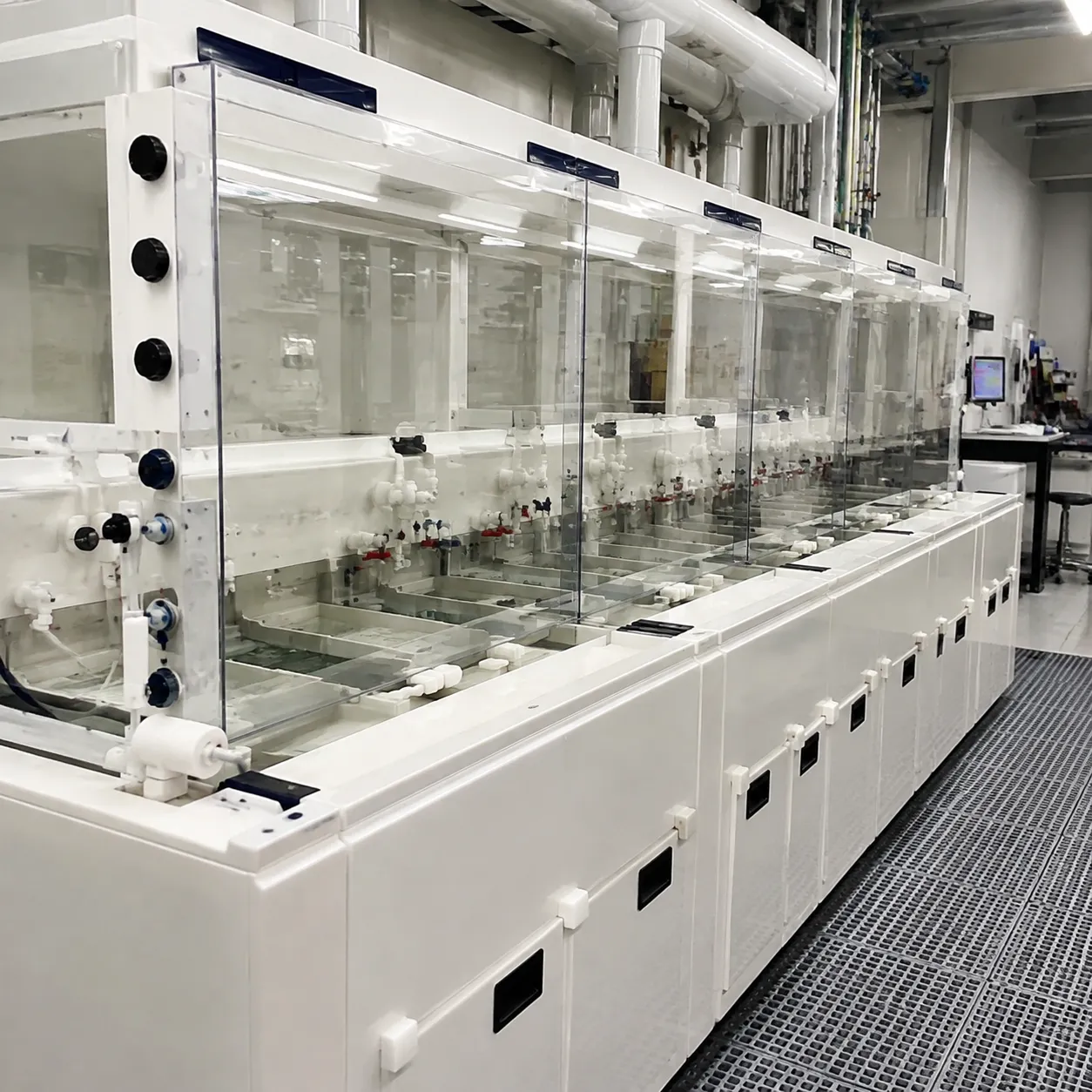
Process Requirements & System Architecture
Substrate & Wafer Handling Parameters
Matching substrate specifications and processing configurations to your facility targets is essential during initial tool design:
| Parameter | Options & Specifications | Targeted Application Scope |
|---|---|---|
| Wafer Dimensions | 4-inch, 6-inch, 8-inch, and 12-inch compatibility | Standard wafer cassette processing across all fab scales |
| Substrate Materials | Silicon (Si), SiC, GaN, Quartz, Glass | Advanced compound semiconductors, power devices, and MEMS |
| Configuration | Batch Cassette vs. Single-Wafer Processing | High-throughput batch runs vs. high-precision single-wafer cleaning |
Automation Level Selection
Selecting the proper automation level balances initial capital expenditure with process repeatability, defect reduction, and throughput needs.
-
- Manual Wet Benches: Built for R&D labs, academic research, and low-volume pilot lines requiring maximum operational flexibility.
- Semi-Automated Systems: Combine operator-assisted carrier loading with automated process timers and motorized lifters to eliminate operator timing variability.
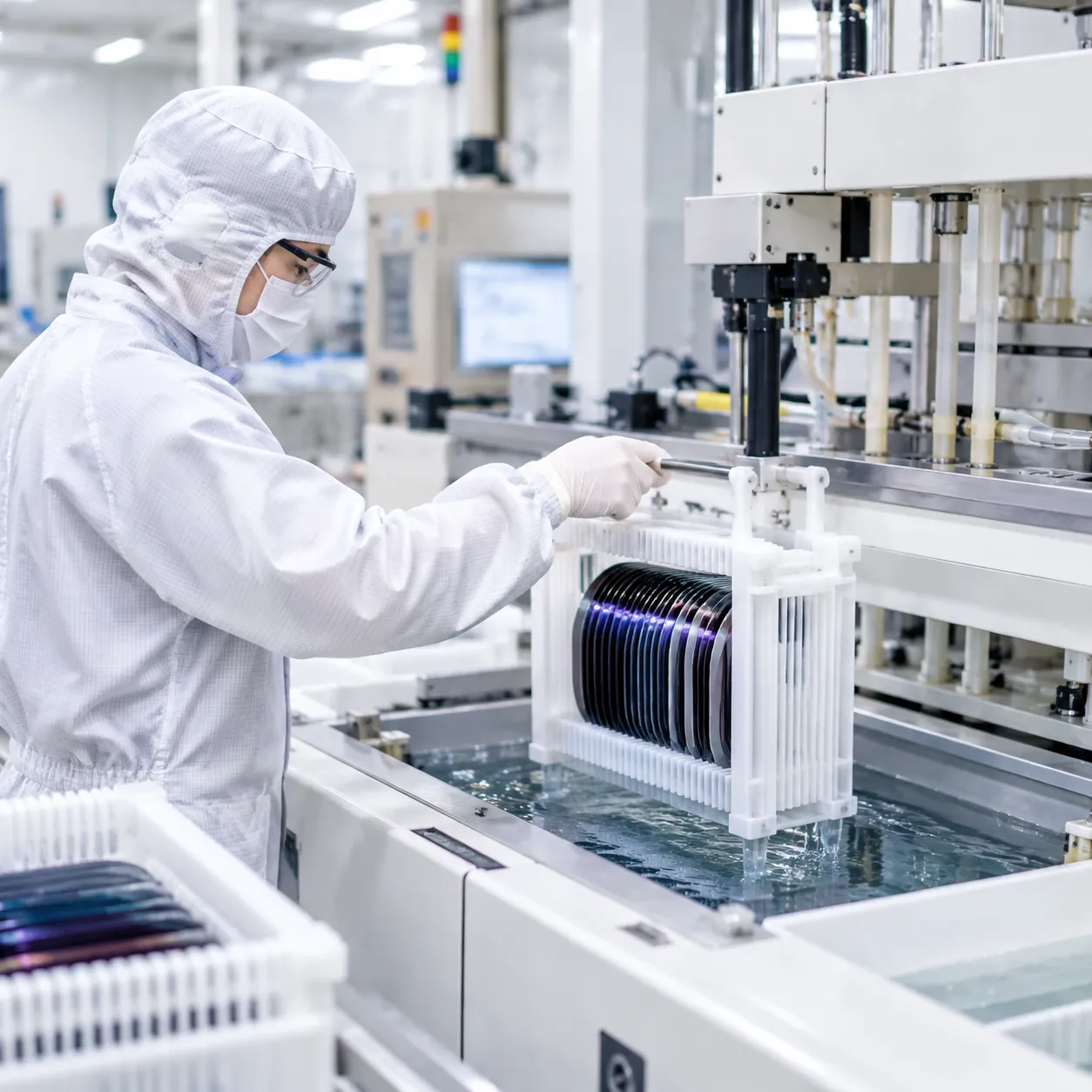
- Fully Automated Wet Benches: Feature integrated linear transfer robots, enclosed environmental hoods, and programmable recipe controllers engineered for continuous high-volume manufacturing (HVM).
Application-Specific Wet Station Configurations
Customizing bath modules, chemical delivery interfaces, and tank materials prevents cross-contamination and optimizes target chemical reactions:
-
- RCA Clean (SC-1 / SC-2) Stations: Dedicated sequential bath modules for surface particle removal, organic stripping, and metallic trace decontamination.
- Silicon / Oxide / Nitride Etching Benches: High-precision wafer etching stations with constant-temperature quartz or PTFE tanks for controlled oxide (BOE/HF) and nitride etching.
- Post-Etch Residue & Organic Solvent Stations: Solvent processing units configured for post-etch residue removal (EKC cleans), polymer removal, and photoresist stripping.
- Metal Lift-Off & Plating Preparation: Specialized bath modules for surface activation, metal stripping, and electroplating pretreatment.
Chemical Compatibility & Material Selection Matrix
Getting material selection right is the most critical step in any wet bench design checklist. We carefully match every wetted component to its specific chemical matrix and thermal operating window to prevent particle contamination, premature wear, or chemical leaching during semiconductor wet processing.
Wetted Material Selection Criteria
| Material | Chemical Compatibility | Common Wet Bench Applications |
|---|---|---|
| Polypropylene (PP / Natural PP) | General acids, bases, non-solvent environments | Standard ambient cleaning stations, general chemical baths |
| Polyvinylidene Fluoride (PVDF) | High-temperature acids, high-purity fluids | Hot phosphoric acid etching, hot DI water loops |
| PTFE & Perfluoroalkoxy (PFA) | Concentrated chemicals, aggressive solvents, strong oxidizers | Perfluoroalkoxy (PFA) & PVDF fluidics, high-purity valves, tubing, fluid manifolds |
| Quartz & Titanium | High-temperature Piranha cleans (H2SO4 / H2O2), specialty chemicals | Heating baths, quartz immersion tanks, thermal processing units |
Fire-Retardant Material Compliance
Cleanroom safety demands fire-safe materials. We construct our polypropylene wet station enclosures and structural cabinets using FM4910-listed plastics, such as CPVC and FRPP.
-
- Flame Spread Control: Stops flame propagation inside the tool cabinet.
- Smoke & Byproduct Reduction: Minimizes smoke density and suppresses corrosive combustion gases.
- Industry Safety: Fully aligns with semiconductor facility compliance and safety standards.
Chemical Segregation Rules
Cross-contamination of reactive chemicals is a severe hazard in wafer etching station environments. We build strict physical isolation into every wetbench architecture:
-
- Drain Line Separation: Separate, dedicated fluid lines for concentrated acids, dilute waste, and organic solvents prevent exothermic reactions or dangerous crystallization.
- Exhaust Stream Isolation: Dedicated exhaust ducts keep acid fumes separate from solvent vapors to prevent explosive gas build-up.
- Integrated Management: Applying sound chemical process management protocols protects both operators and facility infrastructure.
Safety, Exhaust & Regulatory Compliance Checklist
Safety engineering dictates every aspect of our wetbench designs. When specifying a high-performance semiconductor wet bench system, strict compliance with cleanroom wet bench safety standards and protecting operators from chemical hazards are key priorities.
Global Semiconductor Safety Standards
| Standard / Certification | Focus & Compliance Requirement |
|---|---|
| SEMI S2 / S8 | Full EHS (Environmental, Health, Safety) and ergonomic design compliance. |
| NFPA 318 & OSHA | Cleanroom fire protection standards and occupational health guidelines. |
| CE / UL Certification | Strict electrical cabinet isolation, grounding, and power compliance. |
Exhaust & Ventilation Mechanics
Proper airflow mechanics keep corrosive vapors out of your cleanroom environment:
-
- Exhaust Design: Select cabinet lip exhaust for immediate surface vapor capture or back-draft exhaust for deep process tanks.
- Target Capture Velocity: Maintain a steady face velocity of 80–120 LFM (0.4–0.6 m/s) to guarantee zero vapor escape.
- Real-Time Monitoring: Differential pressure sensors track exhaust performance and trigger safety interlocks if flow drops.
- Facility Integration: Seamless chemical exhaust scrubber connections separate acid fumes from solvent VOC exhaust lines.
Hazard Containment & Emergency Systems
Our custom wet process stations feature built-in hardware protection to mitigate chemical spills and thermal incidents:
-
- Secondary Containment Sumps: Welded lower sumps equipped with fast-response optical leak sensors to catch fluid breaches.
- Emergency Off (EMO) Circuits: Dual-channel EMO loops instantly drop electrical power and shut off pneumatic chemical delivery valves.
- Automated Fire Suppression: Integrated optical flame sensors and automated CO2 or N2 fire suppression systems built directly into solvent processing compartments.
Bath Construction & Chemical Circulation
Following a strict wet bench design checklist or specification guidelines for semiconductor tools requires precise control over bath fluid mechanics and fluid chemistry. We construct process baths to deliver uniform chemical flow and continuous contamination control.
-
- Circulation & Filtration: Continuous recirculating baths utilize in-line PTFE sub-micron filter cartridges to capture particles down to target thresholds continuously.
- Chemical Dosing: We integrate fully automated Chemical Delivery Systems (CDS) for real-time volumetric dosing, eliminating chemical concentration drifts caused by manual spike additions.
- Bath Architecture: Optimized chemical baths are configured for both high-throughput batch wafer cleaning systems and static process tanks.
High-Efficiency Rinsing Modules
Effective rinsing rapidly strips process chemicals while conserving Ultra-Pure Water (UPW). We implement advanced valve and weir mechanics to shorten cycle times and eliminate cross-contamination.
| Rinsing Technology | Mechanism & Flow Dynamics | Core Operational Features |
|---|---|---|
| Quick Dump Rinse (QDR) | Rapid bottom-dump valves (3–10 second drain times) with top overflow weir design. | Multi-channel spray nozzles, high-velocity drainage, and N2 bubbling for rapid dilution. |
| Cascading Overflow Rinse | Counter-current fluid mechanics sending pure water upstream against wafer movement. | Drastically cuts total UPW usage while keeping clean water at the process exit. |
Every rinsing compartment features inline DI water resistivity monitoring, triggering next-step processing only when water purity recovers to 18.2 MΩ·cm.
Surface Agitation & Particle Removal
To meet demanding defectivity targets on a modern wetbench, relying solely on fluid motion is insufficient. We apply physical energy solutions to clear micro-particles without damaging delicate wafer structures.
-
- Megasonic & Ultrasonic Transducers: Integrated directly into processing tanks to project controlled acoustic energy, loosening sub-micron particles from substrate surfaces.
- PVA Sponge Brush Modules: Specialized brush cleaning stations built into single-wafer cleaning systems for direct mechanical post-etch or post-CMP surface conditioning.
Facility Utility Hookups for Semiconductor Wet Bench Integration
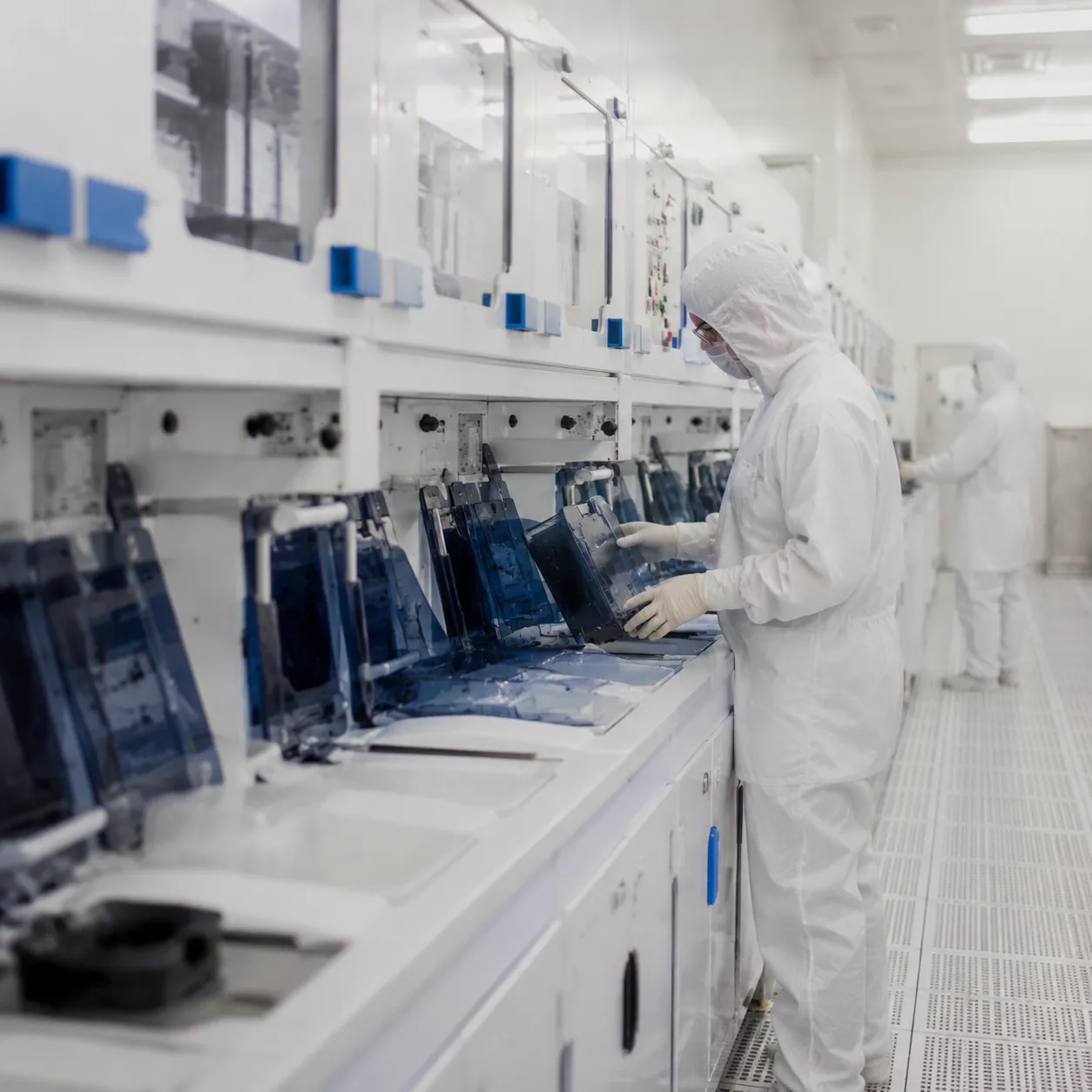
We design our wetbench architecture to simplify cleanroom equipment integration, ensuring direct alignment between tool supply interfaces and facility utility hookups. Proper utility planning prevents contamination, maintains pressure stability, and ensures chemical safety.
Utility Connection Specifications
| Utility Line | Interface & Material Specs | Operational Function |
|---|---|---|
| Ultra-Pure Water (UPW / DI) | High-purity PVDF/PFA fluidics, regulated pressure, continuous loop flow | Chemical bath makeup and high-resistivity wafer rinsing |
| Process N2 & Clean Dry Air (CDA) | Dedicated purge lines, inert N2 drying guns, pneumatic valve actuation | Pneumatic valve control, bath sparging, and wafer drying |
| Drainage & Waste Routing | Triply segregated containment: concentrated acids, dilute drains, solvent waste | Safe routing to neutralization systems and specialized waste collection |
Cleanroom Environment Compatibility
A complete semiconductor wet bench design checklist must address cleanroom footprint and airflow management:
-
- Vertical Laminar Flow (VLF): Integrated HEPA/ULPA fan filter units maintain ISO Class 4 to 5 (Class 10 to 100) air cleanliness directly over open chemical baths.
- Bulkhead Mounting: Compact tool footprints allow flush bulkhead installation, isolating maintenance activities to the utility chase while keeping process areas pristine.
- Service Access Clearance: Quick-release panels on the front, rear, and sides give service technicians direct access to pumps, manifolds, and electrical cabinets.
Wet Bench Design Checklist: Process Control & HMI Architecture
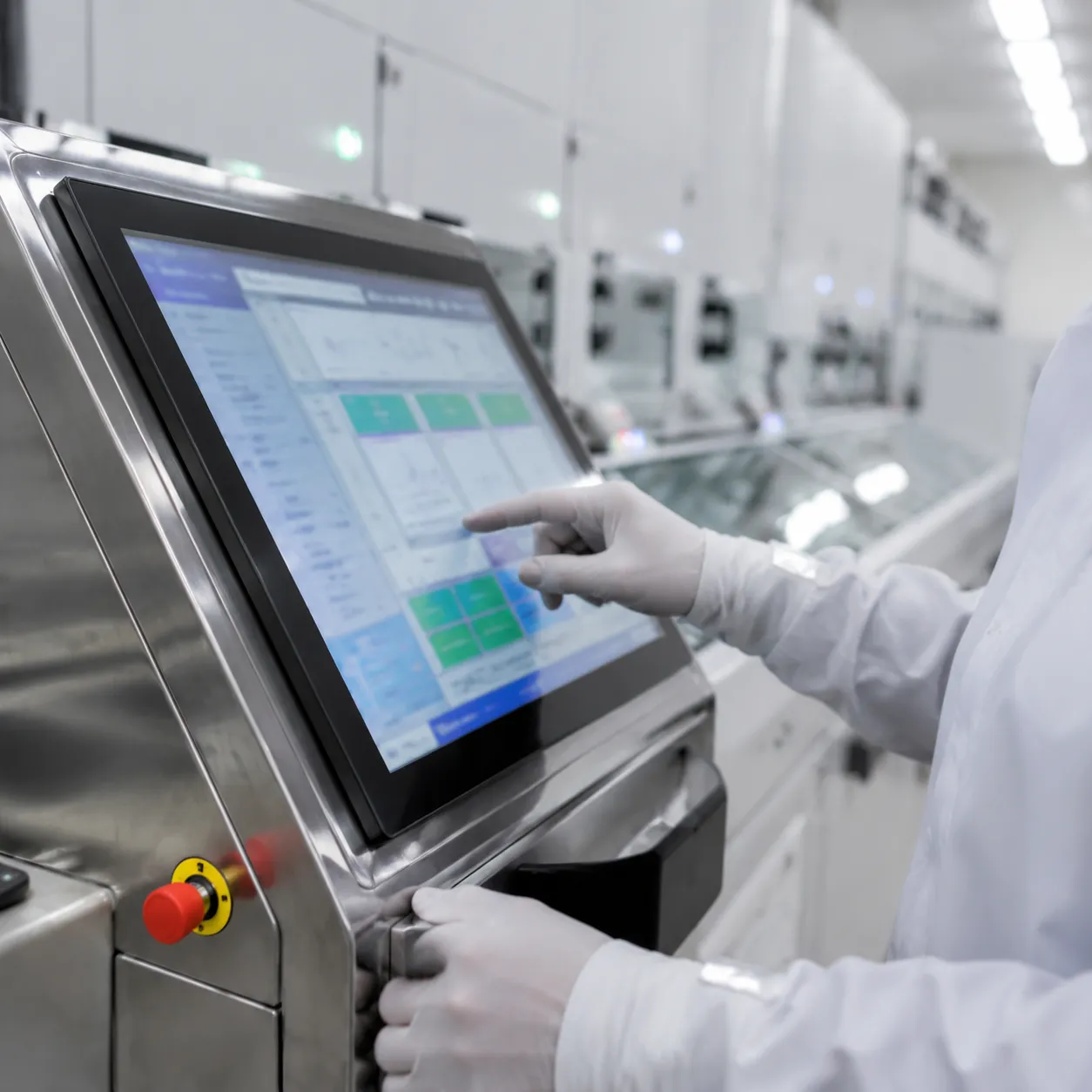
Control System Infrastructure
We build our wet benches with industrial PLCs and intuitive touch-screen HMIs for complete system visibility and simple operation:
-
- Multi-Level User Access: Tiered permissions (Operator, Process Engineer, Maintenance, Admin) protect critical process parameters from accidental changes.
- SECS/GEM Interface: Direct fab-wide host communication enables automated MES data logging, recipe downloading, and real-time tool tracking.
- Integrated Process Control: Seamless coordination of lifters, valves, and timers using our automation and control architecture.
Real-Time Parameter Monitoring
Continuous sensing ensures every chemical bath stays within target specifications throughout batch execution.
| Parameter | Sensor & Control Method | Operational Benefit |
|---|---|---|
| Temperature | Closed-loop inline quartz/PTFE heaters or chillers | Delivers accurate thermal control without chemical degradation |
| Fluid Level | Non-contact capacitive or ultrasonic sensors | Ensures safe liquid levels and prevents heater dry-burns |
| Concentration | Continuous fluid monitoring with automated re-dosing | Triggers chemical spike additions to maintain active bath strength |
Automating parameter tracking removes manual chemical handling risks, maximizes bath life, and guarantees consistent wafer-to-wafer yields.
Tool Lifecycle, Maintenance & Wet Process Tool Retrofitting
Design for Maintainability
We engineer every semiconductor wet processing tool with service accessibility in mind to minimize mean time to repair (MTTR):
-
- Modular Bath Architecture: Quick-swap bath replacements allow isolated tank servicing without disrupting adjacent chemical stations.
- Accessible Fluidics: Servicing compartments placed behind ergonomic access panels give engineers clear access to bellows pumps and chemical lines.
- Quick-Disconnect Fittings: High-purity PFA and PVDF fluidic fittings simplify component changeouts during scheduled maintenance.
Wet Bench Retrofitting and System Upgrades
Upgrading legacy equipment is often the most cost-effective strategy to boost yield and update safety compliance. Review our real-world execution in this wafer cleaning upgrade case study to see how targeted overhauls extend asset lifespans.
| Upgrade Focus | Technical Actions | Key Operational Benefits |
|---|---|---|
| Control Systems | Industrial PLC modernizations & SECS/GEM HMI integration | Better process control & MES data logging |
| Piping & Fluidics | Replacing aged fluid lines with high-purity PFA tubing | Lowered particle counts & leak prevention |
| Safety Interlocks | Retrofitting EMO circuits, leak sensors & SEMI S2 compliance | Full alignment with current EHS standards |
Lifecycle Assurance & Field Support
Sustaining continuous production requires dependable spare parts availability and fast field support:
-
- 24/7 Critical Spares: Dedicated stocking of high-wear components, including chemical pumps, inline heaters, and level sensors.
- Certified Field Service: Expert on-site troubleshooting, routine preventive maintenance, and system re-commissioning.
Partnering with KOSEN SEMI for Custom Wet Processing Solutions
We engineer high-performance cleanroom wet bench systems tailored to your exact fab layout, chemical safety rules, and throughput targets. Whether you need a manual station for R&D or a fully automated tool for high-volume manufacturing, we deliver reliable, custom-built wet processing equipment.
Core Engineering Capabilities
| Engineering Focus | Capability Highlights |
|---|---|
| System Architecture | Custom modular wet bench design built for 4-inch to 12-inch wafer processing. |
| Cleaning Systems | Precise integration of advanced RCA cleaning systems, megasonics, and temperature-controlled etch baths. |
| Facility Integration | Seamless exhaust connection to facility-wide semiconductor scrubber systems and automated Chemical Delivery Systems (CDS). |
Full-Lifecycle Support Services
-
- Tool Design & Build: Precision cleanroom construction meeting SEMI S2/S8 safety standards and FM4910 flammability compliance.
- Installation & Commissioning: Complete turn-key setup, utility hookup validation, and site acceptance testing (SAT).
- Wet Process Tool Retrofitting: Extending legacy wetbench lifespan with upgraded PLCs, fluidic lines, linear transfer robots, and enhanced safety interlocks.
Schedule an Engineering Review
Contact our engineering team to review your wet bench design checklist, discuss specific chemical compatibility requirements, or request a custom quote for your cleanroom facility.