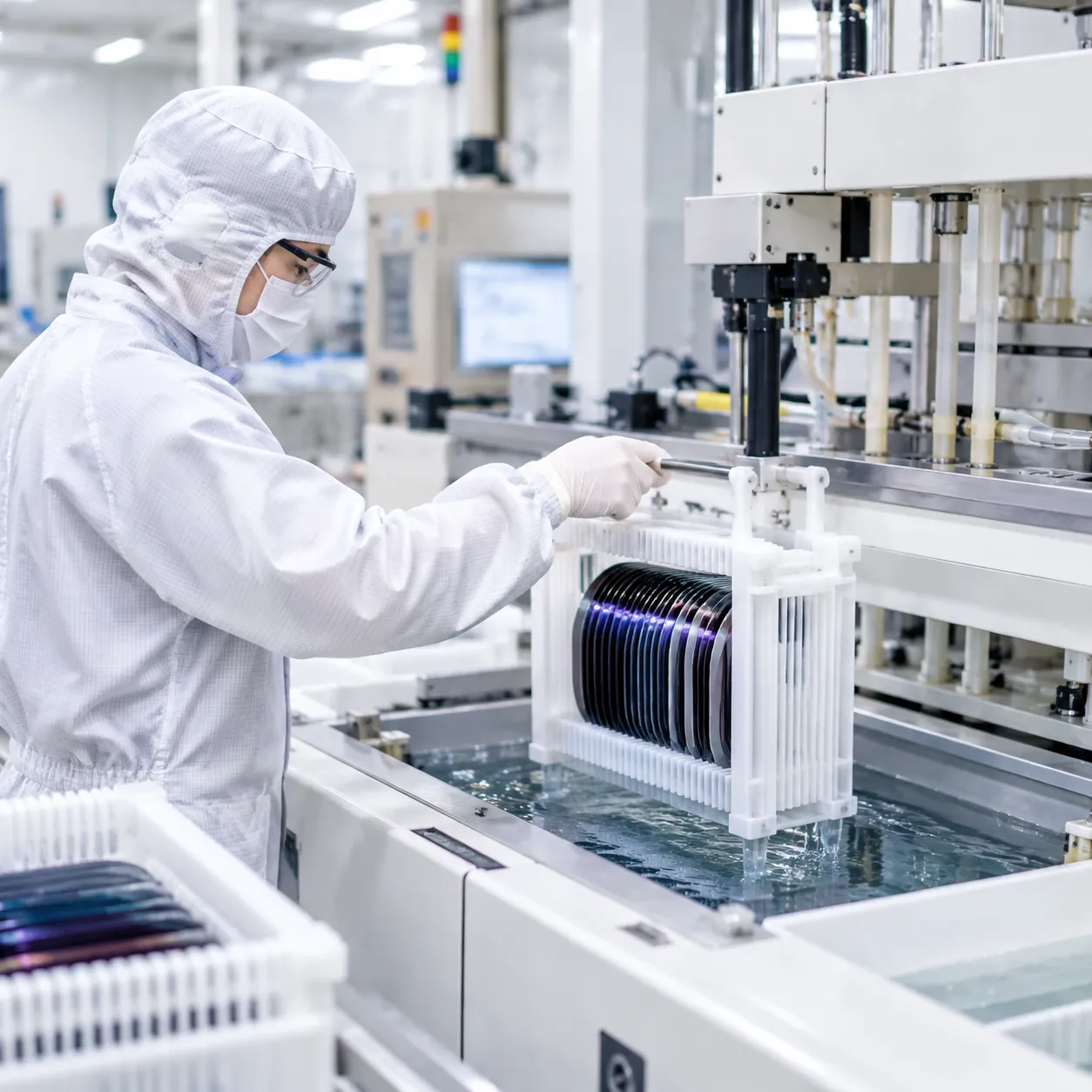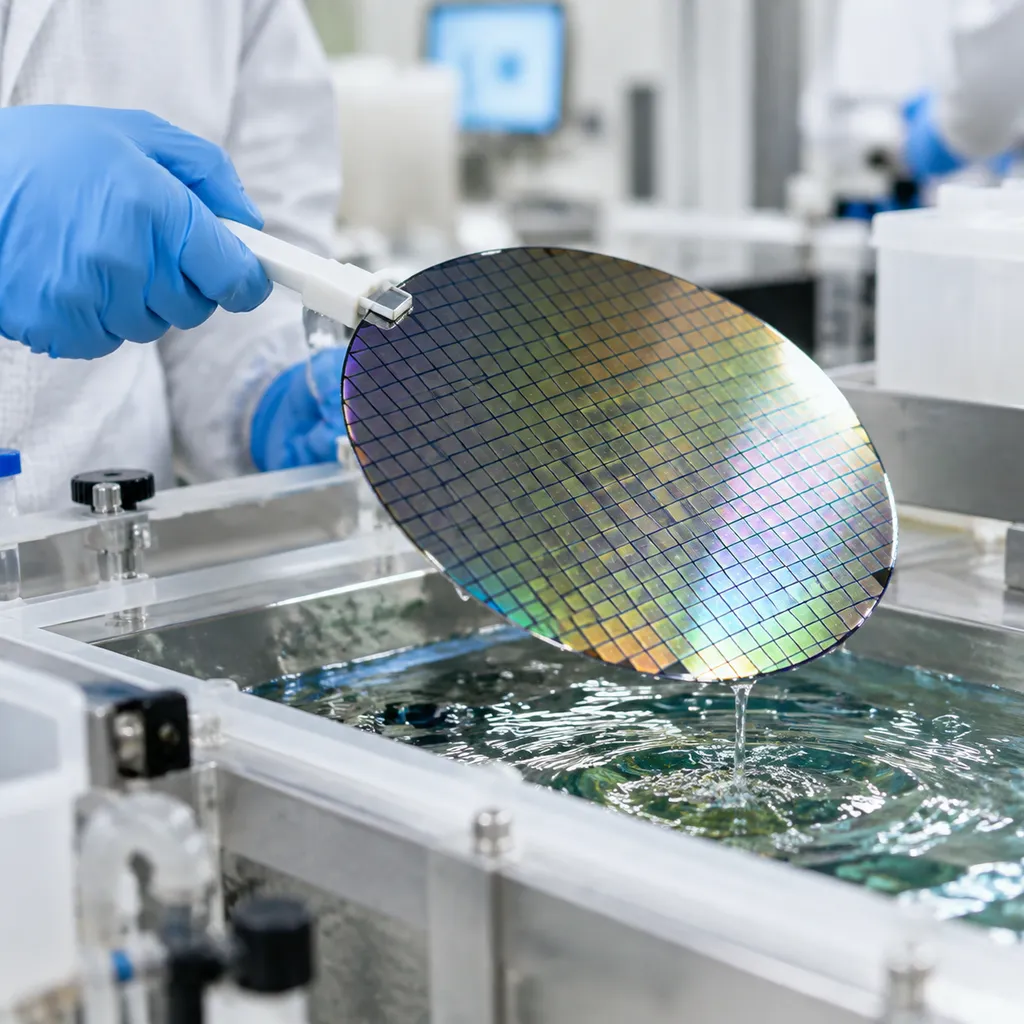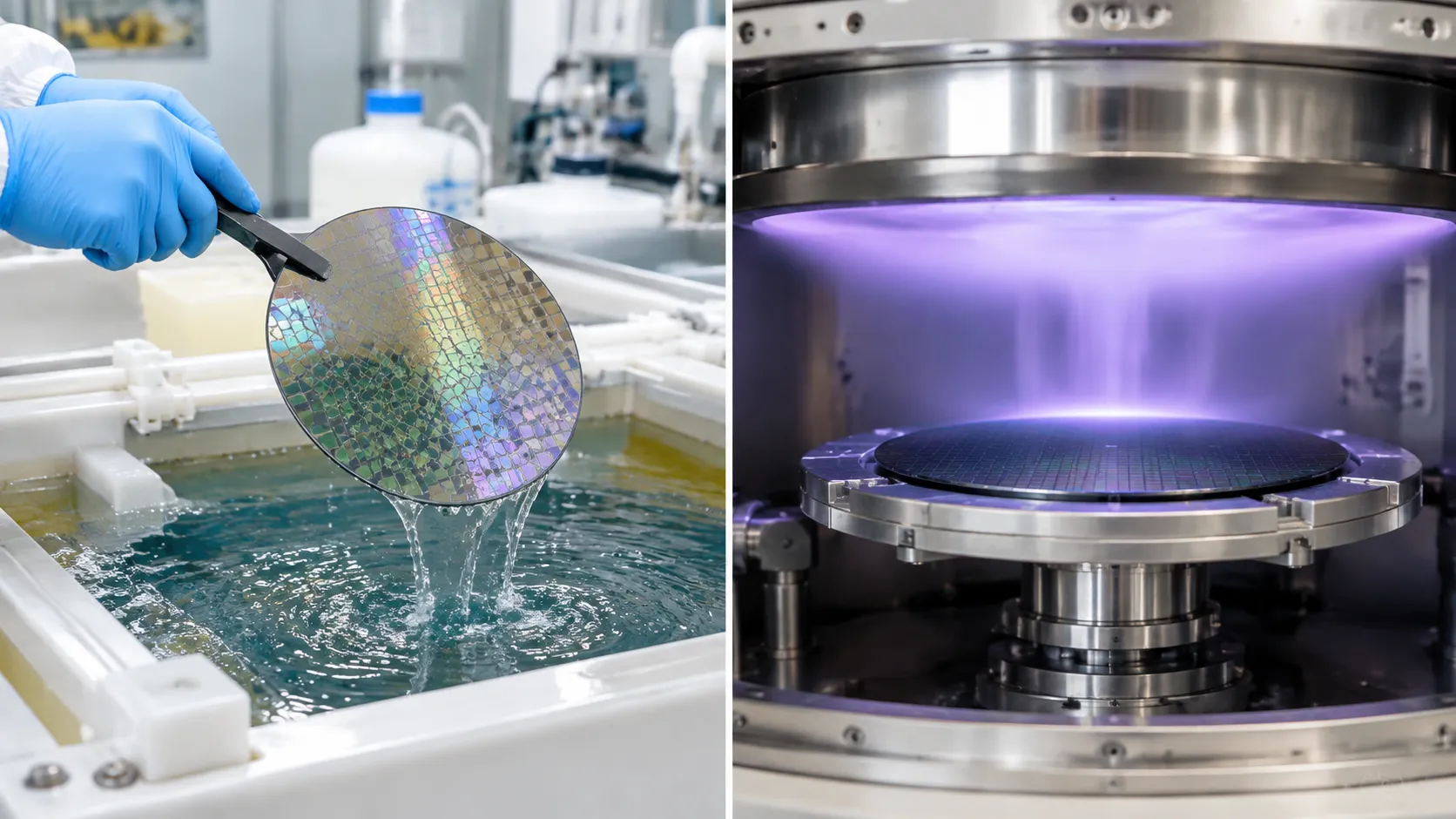
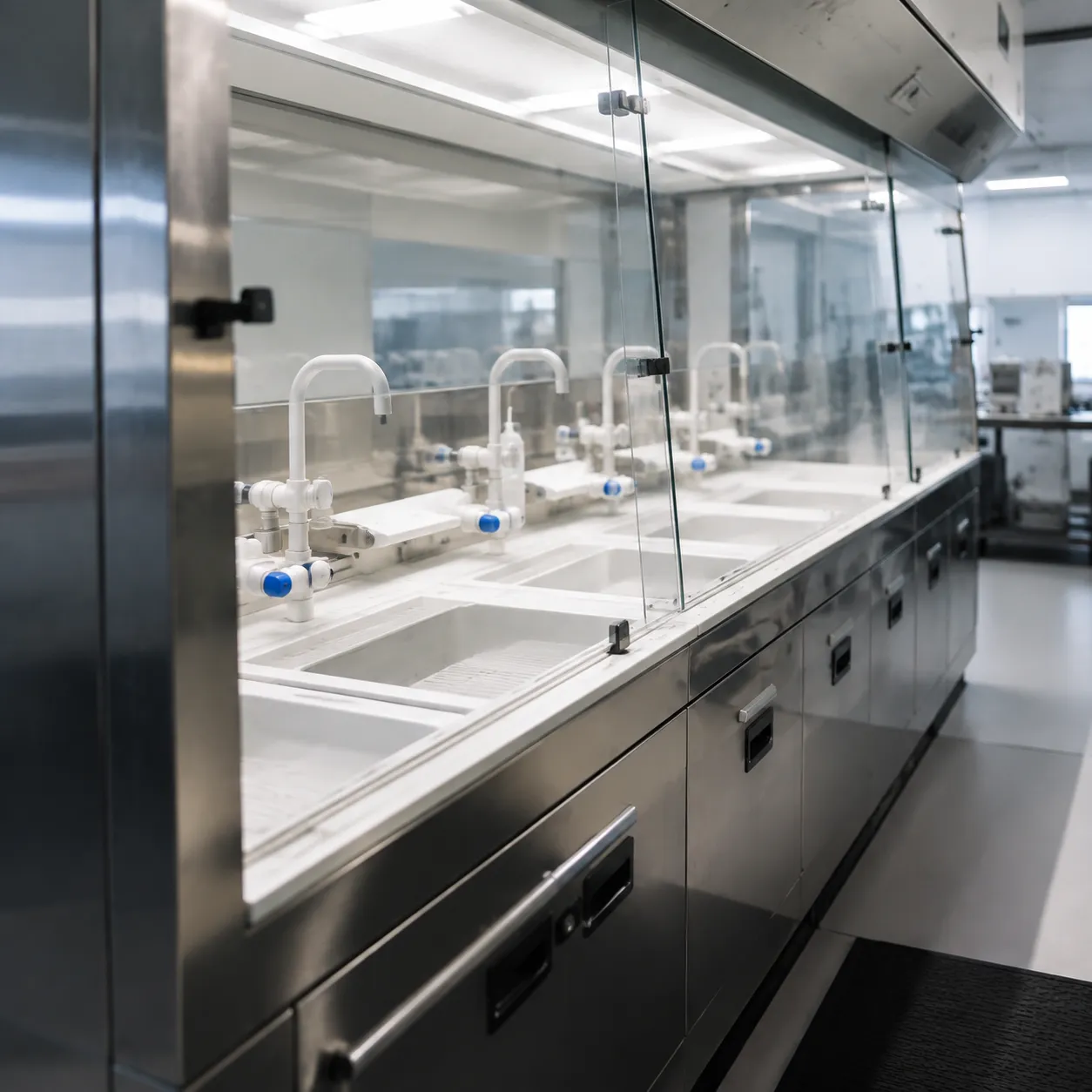
Are you struggling to find the perfect wet bench chemistry setup for your facility? Picking the wrong station can lead to costly contamination, safety risks, and compromised wafer yields.
Whether you need high-purity acid etching stations, custom solvent processing hoods, or automated wafer cleaning equipment, choosing the right hardware is critical for cleanroom performance.
In this guide, you'll learn how to select the ideal wet processing bench tailored to your facility's exact chemical handling, material compatibility, and cleanroom compliance needs.
Let's dive right in.
Core Wet Processing Chemistries & Chemical Dynamics
Controlling reaction kinetics at the sub-nanometer scale requires strict bath thermal stability, accurate volumetric dosing, and dynamic fluid replenishment. In modern wet bench chemistry, achieving repeatable surface preparation demands exact chemical ratios and agitation mechanics to remove surface layers without inducing structural damage.
Oxide Etching & Surface Passivation
Substrate oxide removal relies on controlled hydrofluoric acid interactions to deliver uniform oxide stripping and hydrogen-passivated silicon surfaces.
-
- Diluted Hydrofluoric Acid (DHF): Formulated at ratios between 10:1 and 500:1 (H2O:HF), diluted hydrofluoric acid (DHF) targets thin oxide stripping and surface termination. Controlled concentration prevents surface roughening while maintaining oxide-to-silicon selectivity (>1000:1).
- Buffered Oxide Etch (BOE): Blended with ammonium fluoride (NH4F) and HF in 6:1 or 20:1 ratios to buffer HF ions. This equilibrium stabilizes etching rates (typically 100 to 500 Å/min at 25°C) and prevents batch-to-batch rate drift during prolonged thermal exposure.
- Stoichiometry Control: Precise pH and chemical concentration monitoring maintain selective SiO2 removal without eroding underlying silicon or silicon nitride (Si3N4) layers.
Organic Contamination & Piranha Etch (SPM)
Removing heavy photoresist residues and organic contaminants relies on the aggressive oxidation power of a Sulfuric peroxide mixture (SPM).
-
- Reaction Mechanics: Combining concentrated H2SO4 (98%) and H2O2 (30%) in 3:1 to 5:1 ratios generates peroxymonosulfuric acid (Caro's acid, H2SO5). This powerful oxidant rapidly converts organic carbon matrices into gaseous CO2 and water.
- Thermal & Gas Management: Exothermic mixing rapidly elevates bath temperatures to 120°C–140°C. Closed-loop heating arrays maintain target temperatures, while dedicated chemical exhaust systems handle continuous H2O2 degassing to prevent concentration degradation and bubble entrapment on wafer surfaces.
Particle Extraction & Metallic Impurity Cleaning
The classic RCA wafer cleaning process relies on sequence-specific chemical mechanics to clear surface particles and ionic contaminants.
| Process Stage | Chemical Composition | Operating Temp (°C) | Primary Mechanism |
|---|---|---|---|
| Standard Clean 1 (SC1) | NH4OH / H2O2 / H2O (1:1:5 to 1:2:80) | 65°C – 75°C | Micro-etching + Zeta potential manipulation |
| Standard Clean 2 (SC2) | HCl / H2O2 / H2O (1:1:6 to 1:2:20) | 70°C – 80°C | Soluble metal complexation (desorption) |
-
- SC1 Particle Detachment: The alkaline Standard Clean 1 (SC1) bath slightly etches the substrate surface while imparting a negative zeta potential on both the silicon wafer and particulates, preventing re-attachment. Paired with high-frequency megasonic agitation (0.8 to 1.0 MHz), controlled acoustic cavitation detachment energy removes sub-micron particles down to 28 nm without damaging fragile device features.
- SC2 Metal Desorption: Dissolved HCl forms soluble, highly stable metal-chloride complexes with alkali and heavy metals (Fe3+, Cu2+, Ni2+), preventing metallic re-deposition onto the active die area.
Solvent Processing & Photoresist Stripping
For moisture-sensitive substrates or post-etch polymer residue removal, organic solvent chemistry provides damage-free surface clearance.
-
- High-Flashpoint Solvents: Formulations using N-Methyl-2-pyrrolidone (NMP), Dimethyl Sulfoxide (DMSO), or proprietary amine blends operate safely between 70°C and 100°C to dissolve cross-linked photoresist and tough sidewall polymers.
- Moisture Control & Nitrogen Blanketing: Solvents run under continuous dry nitrogen (N2) blanketing to prevent ambient moisture absorption and chemical oxidation, keeping bath chemistry stable over extended production cycles.
Critical Bench Architecture for Chemical Precision
Volumetric Chemical Dosing & Blending
Maintaining exact bath ratios over extended chemical lifespans requires continuous monitoring and micro-dosing. Our integrated chemical process management system uses real-time refractive index sensing and closed-loop feedback control to ensure process stability.
-
- ±0.1% Dosing Precision: Automated inline chemical replenishment replaces spent reagents without disturbing thermal or concentration equilibrium.
- Dynamic Blending Manifolds: High-precision flow meters prevent chemical stratification, eliminating localized etch rate variances across the wafer tank.
Contamination Prevention & Material Selection
Preventing trace metal leaching demands strict isolation of all wetted surfaces. We follow a comprehensive semiconductor wet bench design and specification guide to select materials guaranteed to withstand aggressive cleanroom acid bench chemistries.
| System Component | Material Selection | Primary Engineering Benefit |
|---|---|---|
| Fluid Pathways | Enclosed PFA & PTFE | Eliminates metallic leaching and organic outgassing in fluoropolymer fluid pathways. |
| Cabinet Enclosure | FM4910 Polypropylene / PVDF | Meets strict cleanroom fire safety standards with complete corrosion resistance. |
| High-Temp Baths | Virgin Quartz / Ultra-Pure PVDF | Thermal shock resistance for elevated acid baths without ionic contamination. |
Recirculation and High-Purity Filtration
Sub-micron particles drive line-item yield loss on active die areas. To keep particulate counts near zero, we run closed-loop chemical recirculation loops with continuous weir overflow dynamics.
-
- 0.005 µm PTFE Filtration: High-flow point-of-use filter housings trap sub-micron fallout before particulates can re-deposit on substrate surfaces.
- Laminar Bath Flow: Bottom-up fluid displacement sweeps chemical boundary layer debris directly into continuous weir drains for immediate capture.
Substrate Specificity: Silicon vs. Compound Semiconductors
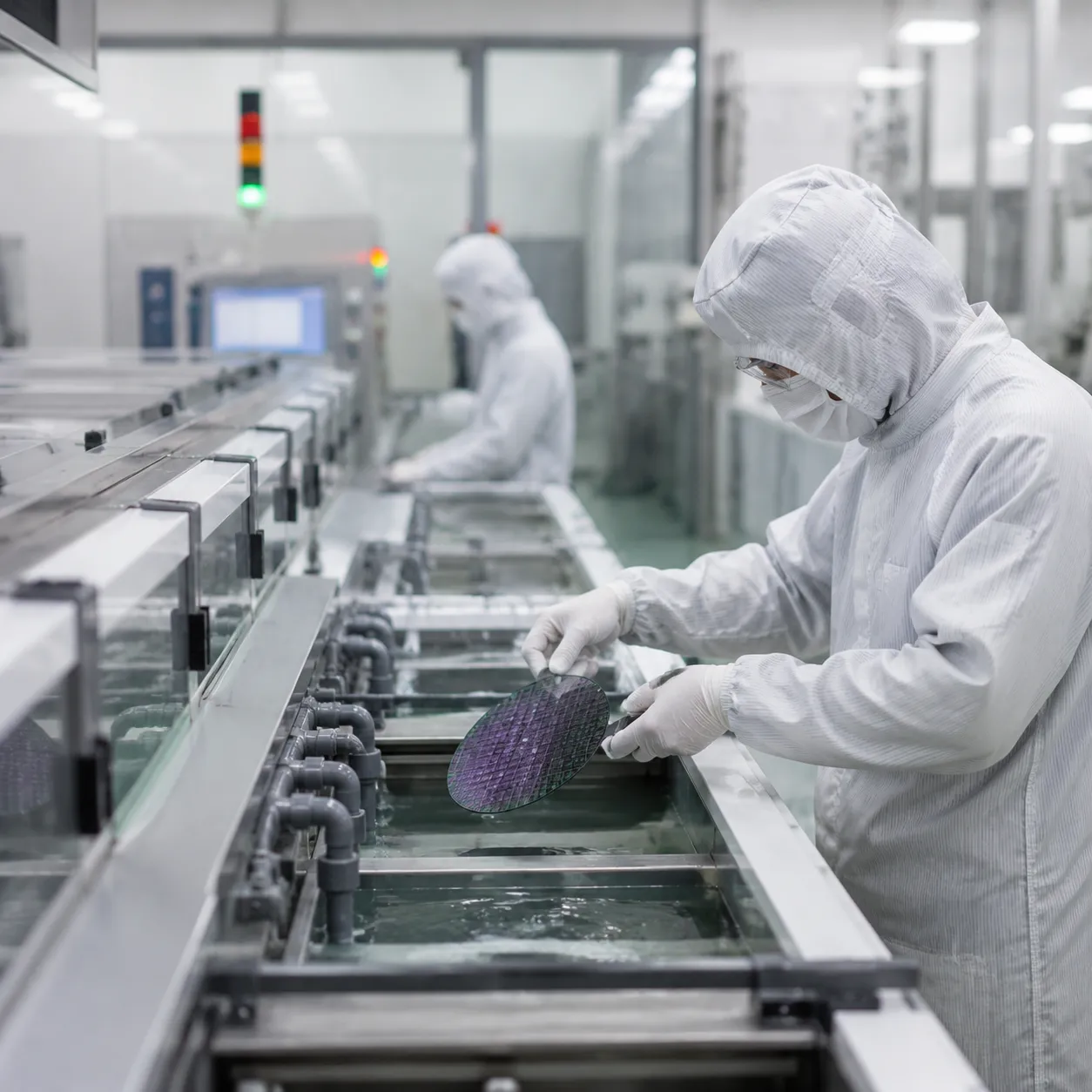
Standard silicon and wide-bandgap substrates require completely different chemical dynamics, mechanical energy inputs, and bath temperatures. We optimize wet bench chemistry to handle both high-volume silicon manufacturing and chemical-resistant compound materials without causing sub-surface crystal damage.
Standard Silicon Substrate Processing
Selecting between batch immersion and single-wafer processing depends on wafer diameter and defect density targets. When deploying advanced 300mm wet processing systems, process parameters must adjust for chemical boundary layer thickness and surface tension.
| Wafer Format | Processing Setup | Wet Chemistry Parameters | Target Application |
|---|---|---|---|
| 150mm / 200mm | Multi-cassette Batch (25–50 wafers) | Chemical bath recirculation, ±0.5°C thermal stability, 0.05 µm filtration | Legacy power devices, MEMS batch cleans |
| 300mm Silicon | Single-wafer cleaning systems / Single-cassette Batch | High-rpm spin dispense (1000–2500 RPM), point-of-use chemical injection, megasonic assist | Advanced node silicon wafer etching, fine pitch defect removal |
Wide-Bandgap Materials (SiC & GaN)
Wide-bandgap substrates feature high bond energies and extreme chemical inertness, making standard silicon cleans ineffective for Silicon carbide (SiC) processing and GaN surface preparation.
-
- Defect Revealing & Lattice Etching: High-temperature molten KOH (450°C–500°C) or hot H3PO4 (150°C–180°C) selectively etches micropipes, threading dislocations, and stacking faults along crystal planes.
- Post-CMP Surface Stripping: Aggressive SPM (H2SO4:H2O2 at 4:1 ratio, >120°C) removes bound organic polishes, while targeted megasonic SC1 cleans remove tough CMP slurry nanoparticles.
- Layer-by-Layer Oxidation & Etch: Controlled surface oxidation via piranha chemistry followed by a DHF dip strips damaged surface layers without degrading the underlying crystal lattice.
Safety Infrastructure & Cleanroom Environmental Integration
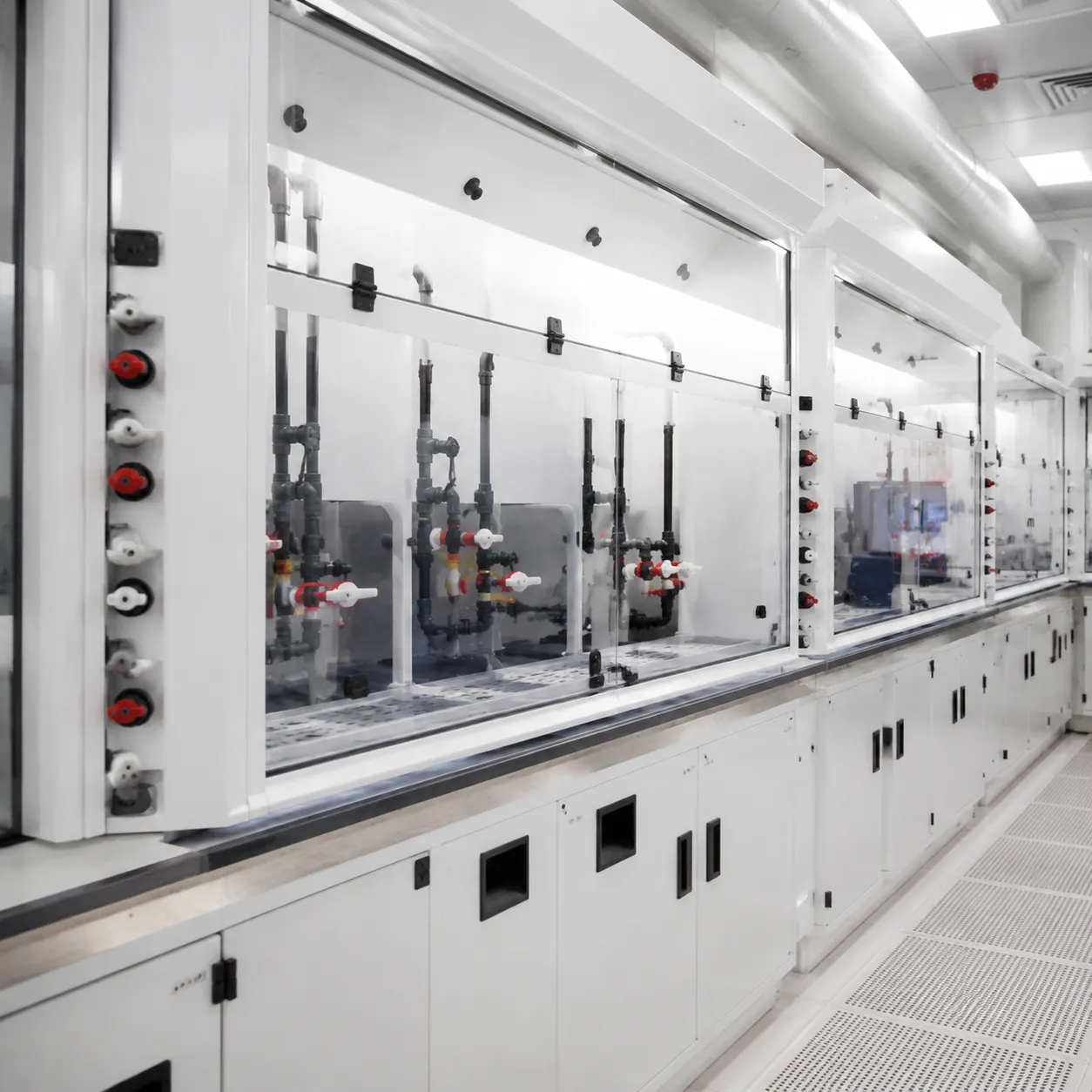
Hazardous Chemical Containment
Executing aggressive wet bench chemistry requires absolute isolation of corrosive and toxic reagents. We engineer fail-safe containment protocols directly into the cabinet architecture:
-
- Dual-Containment Lines: Co-axial PFA/PVDF fluid delivery piping isolates primary lines within an outer protective sleeve to catch trace leaks.
- Interlocked Optical Leak Sensors: High-sensitivity optical sensors located in drip trays and containment jackets detect liquid instantly, triggering localized isolation.
- Automated Shut-off Valves: Fail-closed pneumatic valves cut off chemical supply within 500 ms of leak signal activation, preserving tool and operator safety.
Point-of-Use Exhaust Mitigation
Controlling acid mists and solvent vapors at the generation source prevents chemical cross-contamination and cleanroom ambient degradation. Integrating automated acid gas scrubbers directly into point-of-use exhaust manifolds ensures efficient fume neutralization.
| Parameter | Specification & Operational Functionality |
|---|---|
| Exhaust Capacity | Dynamic volume control from 50 to 500 m³/min tuned to chemical bath surface area and bath temperature. |
| Process Analytics | Continuous inline pH and oxidation-reduction potential (ORP) tracking for precision chemical neutralization dosing. |
| Safety Interlocks | Differential pressure switches shut down bath heating and agitation if exhaust airflow drops below baseline safety thresholds. |
Global Compliance Standards
Achieving low-risk wet bench safety protocols requires strict alignment with global cleanroom operational frameworks:
-
- SEMI S2 & SEMI S8 Compliance: Comprehensive equipment design meeting strict environmental, electrical, chemical safety, and ergonomic standards for tool maintenance.
- CE Certification: Verification of mechanical, electrical, and chemical compatibility for international manufacturing facilities.
- Cleanroom Compatibility: Full operational integration within ISO Class 5 to Class 7 cleanrooms, utilizing non-outgassing, FM4910-compliant structural materials to prevent particle generation.
Custom Engineering & Scalability: The KOSEN SEMI Approach
Flexible Automation Configurations
Whether you are scaling up from low-volume pilot lines using manual wet bench systems or optimizing fully automated fab operations, our hardware architecture adapts to your target throughput:
-
- Batch Processing: High-capacity robotic transfer systems supporting up to 300 WPH for standard cassette-based cleaning and etching.
- Single-Wafer Processing: Precision single-substrate fluid delivery modules yielding up to 120 WPH with zero cross-contamination between chemical steps.
Smart Fab Integration & SECS/GEM Protocols
Modern wet chemical processing requires full visibility into tool performance and fluid dynamics. We integrate standard SECS/GEM interface protocols directly into the tool's control architecture:
-
- Real-Time Monitoring: Continuous tracking of chemical concentration, bath temperature, recirculation flow rates, and filter differential pressures.
- Chemical Consumption Logging: Precise tracking of volumetric usage per wafer to optimize process costs and raw chemical replenishment cycles.
- Predictive Maintenance: Automated alerts driven by component lifecycle tracking, valve actuation counters, and pump performance metrics to minimize unscheduled downtime.
Rapid Turnaround Custom Engineering
Standard equipment footprints rarely align perfectly with proprietary wet chemistry sequences or tight cleanroom layouts. Leveraging our modular engineering framework, we build custom wet process stations tailored to your specific wafer cleaning process, substrate geometry, and footprint requirements—delivering complete custom tool designs with an engineering turnaround of under four weeks.
Frequently Asked Questions (FAQs) About Wet Bench Chemistry
What is the difference between automated and manual wet benches?
Automated wet benches utilize robotic transfer arms, closed-loop dosing systems, and pre-programmed chemical bath sequences to deliver high throughput with zero operator intervention. Manual stations rely on cleanroom personnel for cassette handling and chemical replenishment—making them ideal for low-volume R&D or prototyping. Choosing between them depends on your yield targets, chemical safety constraints, and overall production scale. Review our detailed wet bench selection guide to evaluate operational trade-offs for your fab lines.
| Feature | Automated Wet Bench | Manual Wet Station |
|---|---|---|
| Throughput Capacity | Up to 300 WPH (Batch) / 120 WPH (Single-Wafer) | 10 to 30 WPH |
| Process Consistency | Closed-loop precision (±0.1% chemical dosing) | Dependent on operator timing & manual bath prep |
| Operator Safety | Fully enclosed design with automated interlocks | Direct operator exposure to open chemical baths |
| Best Application | High-volume 200mm/300mm manufacturing | R&D labs, failure analysis, low-volume pilot lines |
How does megasonic agitation improve sub-micron particle removal in wet bench processing?
Megasonic transducers generate high-frequency acoustic waves (700 kHz to 3 MHz) directly within chemical baths like Standard Clean 1 (SC1). This process drives two primary mechanical actions:
-
- Controlled Micro-Streaming: Generates high-velocity liquid boundary layer movement that dislodges particles smaller than 0.1 µm from high-aspect-ratio wafer trenches.
- Transient Cavitation Energy: Creates micro-bubbles that collapse controlled energy onto the substrate surface, overcoming surface adhesion forces without damaging fragile gate structures or pattern lines.
Which fluoropolymer materials best prevent metallic leaching in cleanroom acid benches?
High-purity chemical fluid pathways require ultra-inert materials to eliminate trace element contamination in aggressive acid environments like Piranha (SPM) or Diluted Hydrofluoric (DHF) etching:
-
- PFA (Perfluoroalkoxy): Used for tubing, fittings, and valves due to its ultra-low extractables, keeping metallic contamination below single-digit ppt (parts-per-trillion) levels.
- PTFE (Polytetrafluoroethylene): Ideal for chemical bath linings, pump diaphragms, and filter housings handling concentrated, high-temperature acids up to 180°C.
- PVDF (Polyvinylidene Fluoride) & High-Purity Quartz: Applied in secondary containment, structural cabinetry, and ambient solvent baths where mechanical rigidity and fire resistance (FM4910 standard) are required.
How do SEMI S2 and SEMI S8 standards impact wet bench equipment design?
SEMI compliance dictates the baseline safety and ergonomic architecture of every modern cleanroom acid bench:
-
- SEMI S2 (Environmental, Health, and Safety): Demands complete fail-safe isolation. Key requirements include dual-containment fluid delivery lines, optical leak detection sensors tied to automatic shut-off valves, exhaust airflow interlocks, and emergency off (EMO) integration.
- SEMI S8 (Ergonomics): Specifies physical dimensions and interaction zones. It mandates optimized chemical loading heights, comfortable reach distances for wafer cassette placement, clear touch-screen HMI positioning, and reduced physical strain for cleanroom operators.