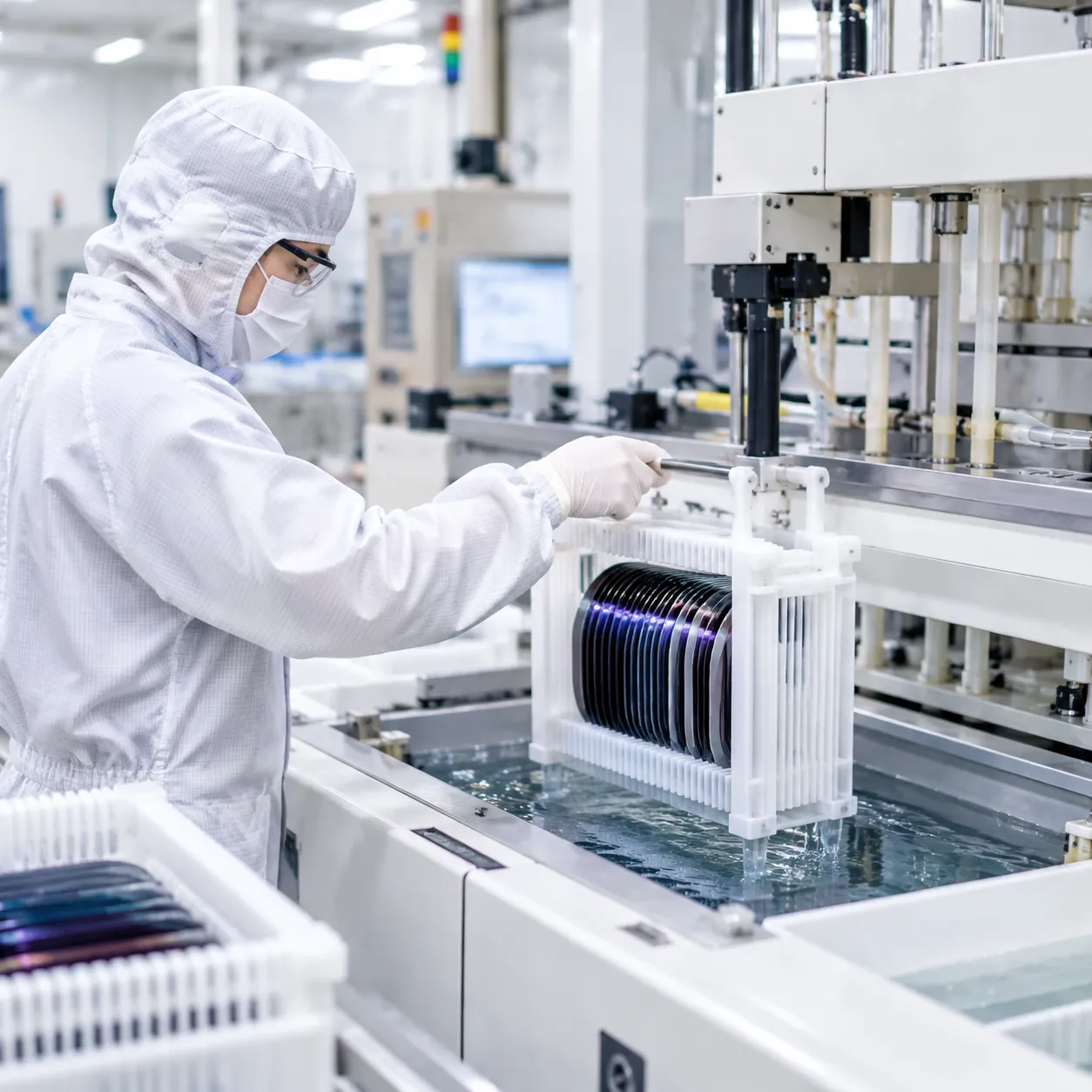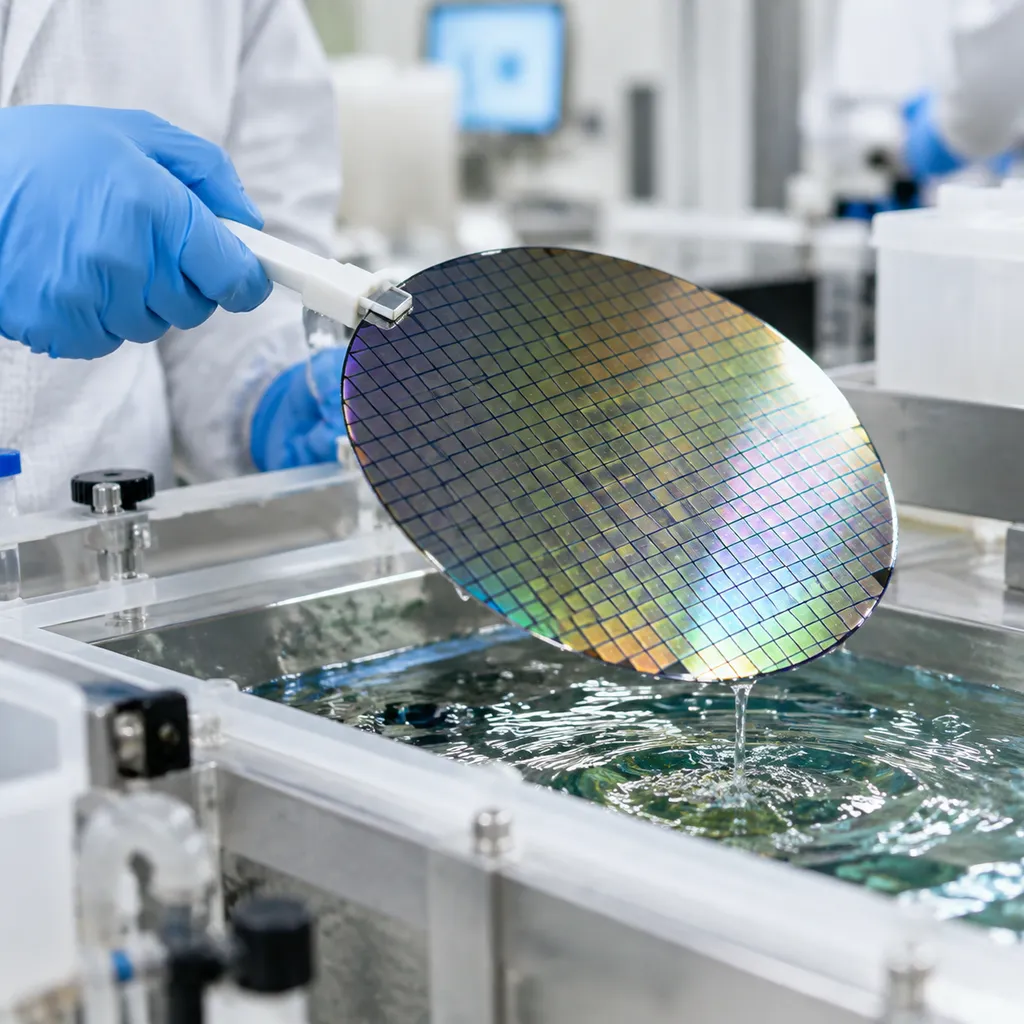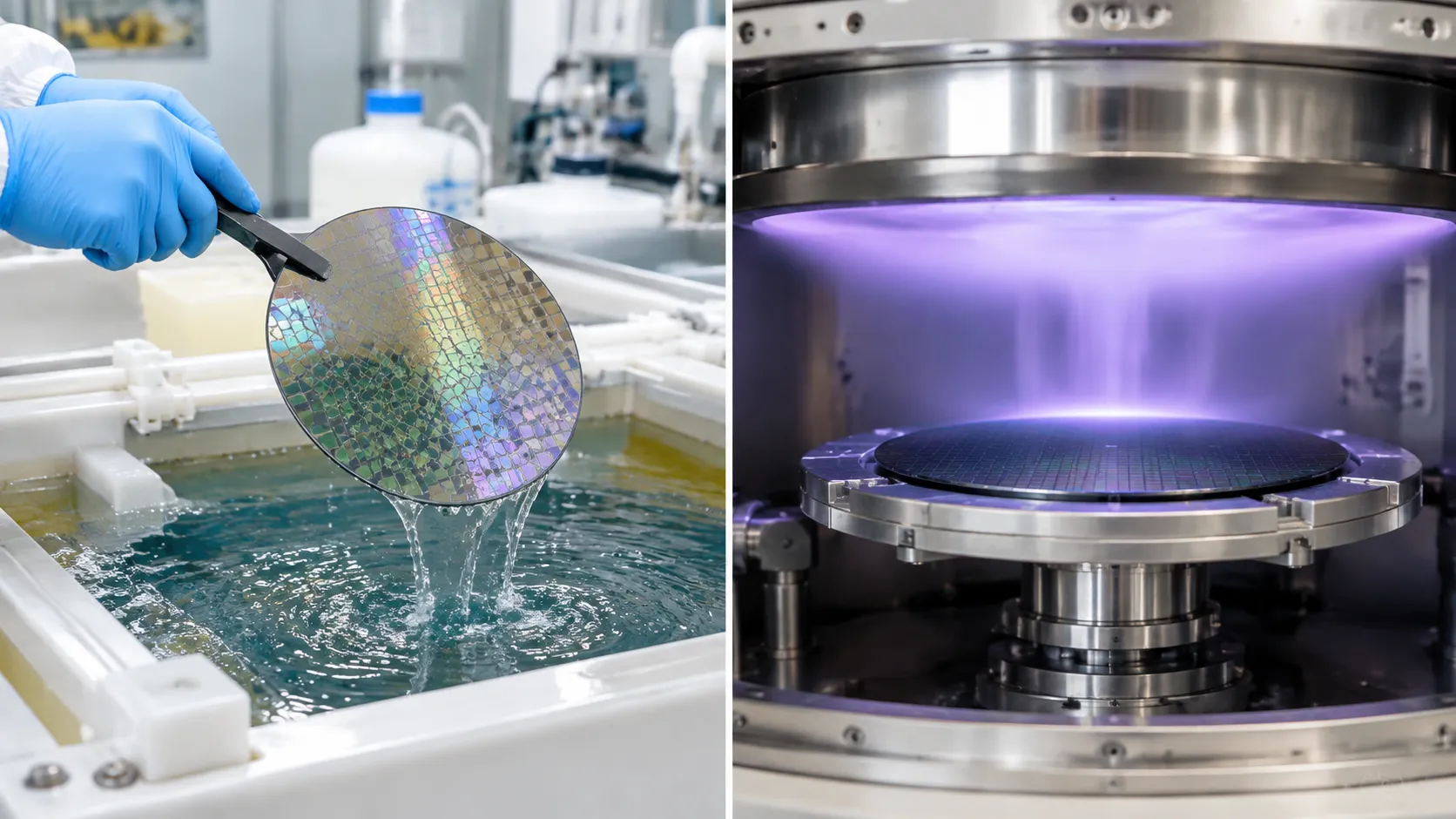
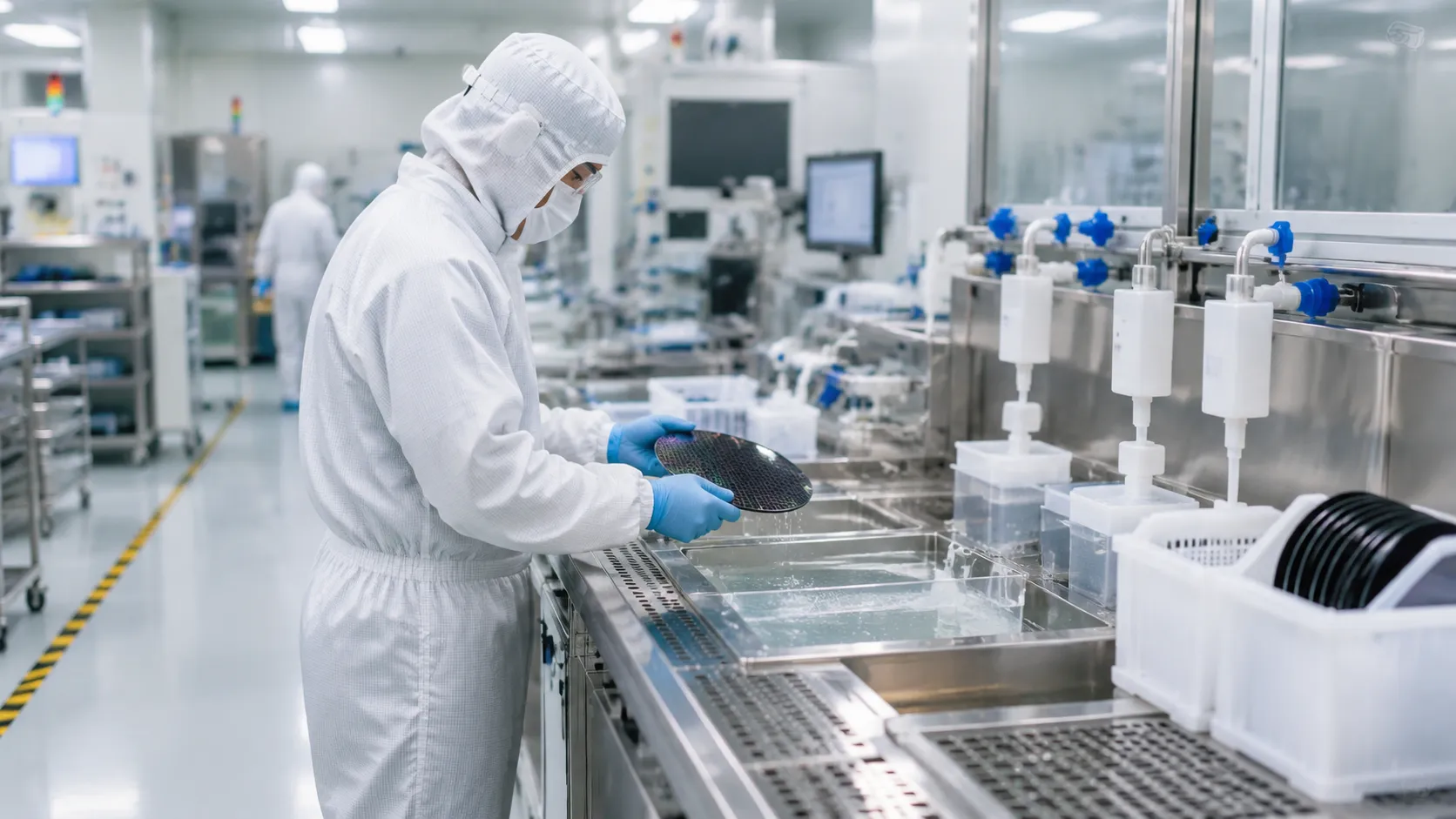
Contamination control can make or break your wafer yield.
And choosing the right semiconductor wet bench cleanroom equipment is where most fab managers hit a wall.
From precision chemical etching to ultra-pure wafer rinsing, your wet processing setup directly dictates your defect rates and operational uptime.
In this comprehensive guide, you’ll discover the exact criteria for selecting, configuring, and optimizing a semiconductor wet bench cleanroom to ensure maximum throughput and pristine purity.
Let's dive right in.
Semiconductor Wet Bench Cleanroom Solutions
Cleanroom Aerodynamics and Structural Architecture
Achieving zero-defect processing in a semiconductor wet bench cleanroom starts with mastering the physical environment.
Laminar Airflow and Fan Filter Unit (FFU) Integration
Controlling airborne micro-contamination requires stable airflow directly over the processing baths. Our cleanroom wet processing stations integrate high-efficiency Fan Filter Units (FFU) to maintain true laminar flow.
-
- Uniform Downward Velocity: FFU modules deliver filtered laminar air downward at consistent velocities across the working zone.
- Elimination of Dead Zones: Strategic airflow paths sweep contaminants away from open chemical baths directly into the exhaust plenum.
- ISO Class Compliance: Engineered specifically to meet and exceed ISO Class 3 to ISO Class 5 (Class 1 to Class 100) fab requirements.
Exhaust and Toxic Chemical Vapor Management
Protecting the cleanroom envelope and operating personnel from hazardous fumes is non-negotiable. Our chemical benches utilize segregated, balanced exhaust plenums designed for aggressive chemical environments.
-
- Segmented Exhaust Channels: Acid, base, and solvent vapors are captured through independent exhaust pathways to prevent hazardous cross-reactions.
- Lip and Rear Exhaust Ports: Engineered draw-points pull vapors directly at the bath surface level, preventing chemical fumes from breaching the operator interface.
- Constant Pressure Monitoring: Integrated sensors track exhaust differential pressure in real time to guarantee fail-safe vapor extraction.
High-Purity Material Selection
Every structural component and fluid pathway is matched precisely to the chemical aggressiveness and thermal demands of semiconductor manufacturing.
| Material Type | Application Area | Key Engineering Advantage |
|---|---|---|
| FM4910 Plastics (NPP / FRPP) | Outer bench enclosure, deck surfaces | Fire-retardant, low outgassing, high chemical resistance |
| PVDF & PTFE | Acid baths, process piping, valves | Exceptional resistance to harsh acids (HF, BOE, Piranha) |
| PFA | High-purity fluid lines, chemical manifolds | Ultra-low metallic extractables, high-temperature tolerance |
| Electropolished SUS316L | Solvent process modules, structural frames | Zero static accumulation, corrosion resistance, solvent safety |
| High-Purity Quartz | Heated acid baths, SC-2/RCA stations | Extreme thermal stability and zero ionic contamination |
Critical Wet Chemical Processes and Bath Configurations
In any high-yield semiconductor wet bench cleanroom, the bath configuration dictates process repeatability and wafer surface purity.
Surface Cleaning and Decontamination
Front-end wafer preparation relies on aggressive chemical sequences to eliminate organic residues and ionic contaminants:
RCA Cleans (SC-1 and SC-2): Our standard RCA clean wet bench setups utilize heated SC-1 (ammonium hydroxide/hydrogen peroxide) baths for organic particle removal and SC-2 (hydrochloric acid/hydrogen peroxide) baths for trace metal desorption.
Piranha (SPM) Solutions: For heavy organic stripping and post-implant photoresist removal, we integrate high-temperature quartz baths running sulfuric acid and hydrogen peroxide mixtures with precision temperature control up to 130°C.
Precision Chemical Etching and Stripping
Controlled material removal requires uniform bath dynamics and chemical concentration stability:
Buffered Oxide Etch (BOE) & DHF: Tailored PVDF and PTFE tanks deliver steady-state etch rates for silicon dioxide layers, maintaining uniform boundary layer thickness across entire wafer boats.
Heated Acid Baths: Dedicated quartz and PVDF baths handle hot phosphoric acid for silicon nitride stripping and specialty acid blends for compound semiconductor etching.
Sub-Micron Particle Removal via Megasonics
To protect delicate sub-micron features while removing nano-scale particulate contamination, we incorporate multi-frequency megasonic wafer cleaning arrays into our chemical and overflow baths. Uniform acoustic power distribution detaches particles without generating damaging cavitation shockwaves on sensitive gate structures.
High-Purity Rinsing and Watermark-Free Drying
A chemical process is only as good as the subsequent rinse and dry sequence:
Quick Dump Rinse (QDR): Multi-cycle bottom-dump valves combined with top-spray DI water nozzles rapidly purge residual acids and minimize boundary-layer exposure times.
Marangoni Wafer Drying: Utilizing an isopropyl alcohol (IPA) vapor gradient over a slow DI water pull, our Marangoni drying systems eliminate surface tension variations to achieve completely watermark-free, residue-free surfaces across both hydrophilic and hydrophobic substrates.
Automation Hierarchy for Yield Optimization and Throughput
Manual Wet Benches for R&D Labs and Failure Analysis
For academic research, small-scale prototyping, and failure analysis, manual wet stations offer process flexibility with minimal capital investment:
Direct Operator Control: Ideal for non-standard chemical testing, small piece parts, and variable immersion sequences.
Ergonomic Safety Shields: Clear, chemical-resistant sash designs protect technicians during manual dipping and inspection.
Dedicated Module Segregation: Individual baths for acid, solvent, and caustic chemistries prevent cross-contamination in shared laboratory environments.
Semi-Automated Transfer Systems with Recipe-Driven Timers
Semi-automated configurations bridge the gap between pure research and full-scale manufacturing:
Pneumatic / Motorized Lifters: Automate immersion and extraction speeds to ensure consistent boundary layer fluid dynamics.
Recipe-Driven Dwell Times: Eliminate operator timing errors during critical etch and rinse steps using integrated PLC timers.
Process Consistency: Standardize chemical contact across batches, ensuring reliable surface treatment for pilot runs.
Fully Automated Robotic Systems with Multi-Axis Handling
For high-volume production fabs, our automated wet bench semiconductor systems deliver continuous, hands-off substrate processing:
Multi-Axis Robotic Transfer: Precision robotic arms handle single cassettes or high-capacity batches across multiple chemical, rinse, and dry baths without mechanical vibration.
Dynamic Recipe Execution: Fully programmable sequences manage tank sequencing, Megasonic dosing, and automated dry cycles on demand.
Minimized Human Contamination: Removing cleanroom operators from chemical wet zones significantly reduces particulate counts and eliminates manual handling damage.
Cleanroom MES Integration via SECS/GEM Communication Protocols
Modern fab management requires real-time traceability and end-to-end data integration:
SECS/GEM Compliance: Native host communication protocols enable seamless data exchange with the fab Manufacturing Execution System (MES).
Real-Time Data Logging: Continuous tracking of bath temperatures, chemical dosing volumes, bath life cycles, and cassette lot numbers.
Predictive Maintenance Alerts: Automated warnings for filter pressure drops, fluid flow rates, and preventive maintenance intervals maximize tool uptime.
| Feature / Metric | Manual Wet Benches | Semi-Automated Systems | Fully Automated Robotic Benches |
|---|---|---|---|
| Primary Use Case | R&D, Failure Analysis, Prototyping | Pilot Lines, Specialized Packaging | High-Volume Fabs (HVM), Foundry |
| Wafer Handling | Manual Cassette / Basket Transfer | Linear Lifters with Manual Indexing | Multi-Axis Enclosed Robotics |
| Throughput | Low (Lot-by-lot manual control) | Medium (Timed recipe execution) | High (Continuous multi-lot batching) |
| MES Integration | Offline / Standalone | Optional PLC Network Logging | Native SECS/GEM Host Interface |
| Process Repeatability | Variable (Operator dependent) | Moderate to High | Ultra-High (Sub-second recipe control) |
For advanced facility workflows, combining these automated platforms with high-precision wet benches ensures consistent chemical processing, tightly controlled etch rates, and predictable wafer yields across all production tiers.
Substrate Adaptability for Silicon and Wide Bandgap Materials
Modern fabrication demands maximum substrate flexibility. We design our semiconductor wet bench cleanroom platforms to handle a broad range of wafer sizes and delicate crystal structures without sacrificing throughput or structural integrity.
| Substrate Family | Typical Wafer Dimensions | Core Cleanroom Wet Bench Process |
|---|---|---|
| Standard Silicon | 2" to 12" (300 mm) | High-throughput RCA & BOE etching |
| Wide Bandgap | SiC (100–200 mm), GaN on Si | High-temp acid etch & surface prep |
| Compound / Optics | GaAs, InP, Sapphire, Quartz | Lift-off, metal etch & strip |
Standard Silicon Wafer Processing
Our batch wafer cleaning systems support standard silicon wafers ranging from 2-inch research samples up to 300mm fab cassettes. Custom-machined PTFE and PVDF carriers ensure zero edge-chipping, ultra-low particle counts, and uniform fluid dynamics across every slot during immersion, cascade rinsing, and drying sequences.
Wide Bandgap (WBG) Power Substrates
Processing wide bandgap materials like Silicon Carbide (SiC) and Gallium Nitride (GaN) requires specialized thermal and chemical resilience.
Aggressive Acid Handling: Reinforced heated quartz and PVDF tanks withstand the harsh acid formulations needed for Silicon carbide (SiC) wafer etching and surface passivation.
Mechanical Protection: Customized cassette transfer mechanisms minimize mechanical stress on brittle WBG substrates, preventing micro-fractures during high-speed chemical transfers.
Specialty and Compound Semiconductors
We engineer dedicated chemical paths for specialized materials including Glass, Quartz, Sapphire, and Gallium Arsenide (GaAs). By segregating solvent, acid, and alkaline chemistries within our wet bench chemistry equipment for semiconductor cleanroom environments, we eliminate cross-contamination risks while maintaining complete process control over specialized lift-off and metal etching routines.
Cleanroom Environmental, Health, and Safety (EHS) Compliance
SEMI S2 and SEMI S8 Alignment
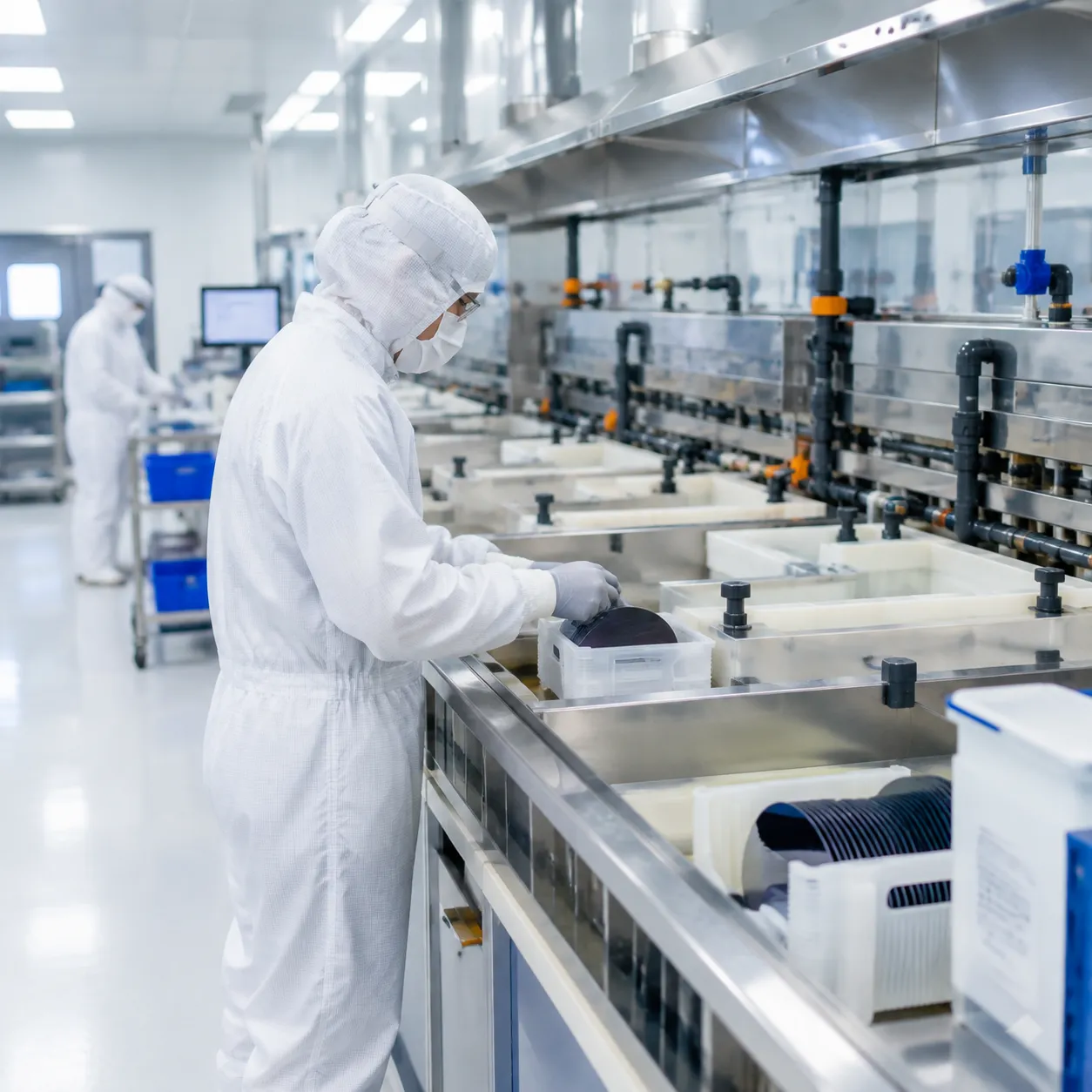
Operator safety and ergonomics drive our hardware architecture. Our semiconductor wet bench systems are designed to meet SEMI S2 (environmental, health, and safety) and SEMI S8 (ergonomics) compliance standards:
Ergonomic Access: Optimized deck heights, clear-view splash shields, and balanced reach envelopes minimize operator strain during manual loading.
Physical Isolation: Continuous exhaust airflow prevents toxic vapor migration into the cleanroom ambient environment.
Emergency Interlocks: EMO (Emergency Off) circuitry cuts chemical dispensing, heating loops, and robotics instantaneously upon activation.
Secondary Fluid Containment & Optical Leak Detection
Uncontrolled chemical leaks compromise both yield and cleanroom structural safety. We employ layered fluidics protection across all wet stations:
Dual-Containment Piping: Chemical supply and return lines feature secondary outer containment sleeving to isolate potential line breaches.
Optical & Capacitive Leak Sensors: Positioned at all low-point sump basins and valve manifolds to trigger immediate drain shutoff and process aborts.
Automated Drain Interlocks: Segregated acid, base, and solvent collection routing prevents accidental mixing of incompatible waste streams.
| Safety Layer | Implementation | Protection Scope |
|---|---|---|
| Primary Enclosure | White Polypropylene / FM4910 / SUS316L | Chemical corrosion & vapor isolation |
| Secondary Basin | Full-length welded drip pans with optical sensors | Fluid containment & immediate spill alerts |
| Exhaust Interlocks | Differential pressure switches & airflow monitors | Fume buildup prevention & automated abort |
Automated Fire Suppression Integration
For stations running solvent processes, thermal management and fire risk mitigation are non-negotiable:
Novec 1230 & CO2 Systems: Rapid-discharge, clean-agent fire suppression systems extinguish flames without leaving residue on sensitive substrates.
Thermal & Optical Flame Detectors: High-speed UV/IR sensors detect combustion signatures instantly, closing exhaust dampers and isolating power.
Closed-Loop Chemical Delivery (CDS) Coupling
Manual chemical handling introduces contamination and safety hazards. Our wet benches interface directly with facility Central Chemical Delivery Systems (CDS) for closed-loop chemical replenishment:
Automated Precision Dosing: Recipe-controlled spiking maintains tight bath concentration tolerances for RCA cleans, BOE, and solvent strips.
Spill-Free Auto-Refill: Vacuum-assisted and pressurized chemical feed loops ensure zero operator exposure during bath turnarounds.
Key Engineering Criteria for Cleanroom Wet Bench Selection
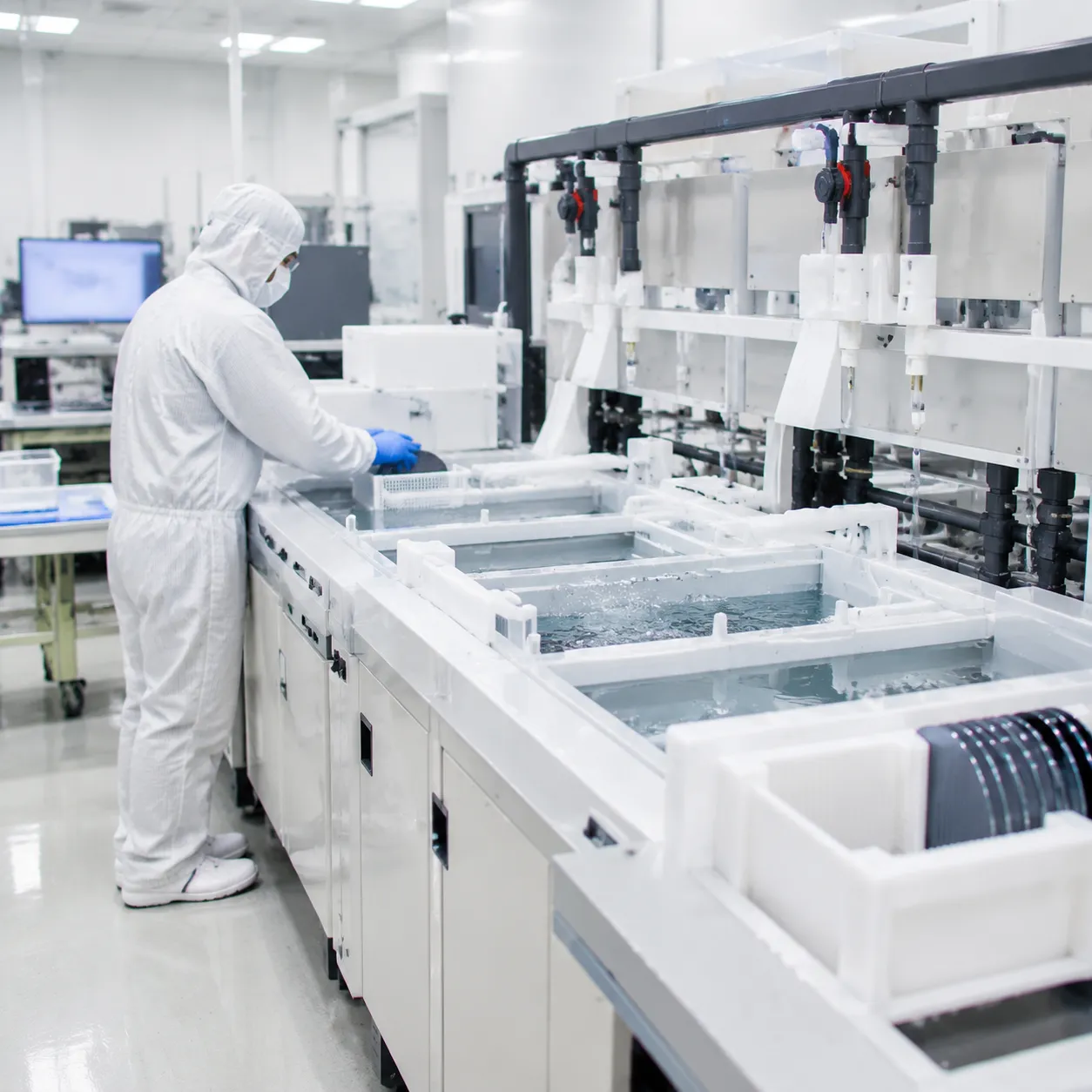
Selecting the right semiconductor wet bench cleanroom system requires balancing chemistry demands, facility constraints, and long-term production scaling. We engineer each unit to match exact process parameters while preserving cleanroom real estate and reducing operating costs. For an in-depth breakdown of evaluation steps, review our wet bench selection guide.
Evaluating Chemical Compatibility, Duty Cycles, and Bath Thermal Limits
Process chemistry dictates material selection and thermal stability requirements across every processing bath:
-
- Material Compatibility: We pair aggressive acids (like Piranha and BOE) with high-purity PVDF, PTFE, PFA, or quartz, while solvent stations utilize electropolished 316L stainless steel to prevent leaching and degradation.
- Thermal Management: High-temperature etching and stripping demand precise bath heating elements with tight PID controls and integrated liquid-level sensors to prevent dry-burn conditions.
- Continuous Duty Cycles: Automated dosing, inline filtration loops, and continuous chemical circulation keep baths within target concentration and temperature tolerances during continuous manufacturing runs.
| Engineering Parameter | Technical Requirement | Design Implementation |
|---|---|---|
| Wetted Materials | High chemical resistance & ultra-low trace metals | PVDF / PTFE / PFA / Quartz / 316L SS |
| Bath Temperature Control | Uniform heat transfer across full volume | Multi-zone external heating with PID control |
| Fluid Recirculation | Continuous sub-micron filtration | High-purity magnetic-drive chemical pumps |
| Exhaust Balancing | Complete vapor capture without turbulence | Segmented plenum exhaust with damper control |
Footprint Optimization for Cleanroom Ballroom vs. Chase Layouts
Cleanroom floor space comes at a premium. We tailor wet bench geometries to fit your specific facility layout:
-
- Ballroom Configuration: Self-contained wet processing stations featuring integrated FFU hoods, front-facing maintenance panels, and built-in secondary containment for open fab environments.
- Bulkhead / Chase-Mounted Layouts: Stations installed flush against the cleanroom wall, moving maintenance access, chemical replenishment cabinets, and pump modules into the service chase. This layout drastically cuts ISO Class 3–5 floor space consumption while keeping service technicians out of critical process bays.
Modular Architecture for Flexible Fab Upgrades and Node Scaling
Fab needs evolve quickly as new wafer geometries and substrate recipes come online. We build our equipment on a modular, standardized frame architecture that simplifies future upgrades. Whether you need to swap an overflow rinse bath for a Megasonic quick-dump unit, expand cassette batch capacities, or adapt lines for new substrate types, our custom wet process stations scale alongside your technology roadmap without requiring full tool replacement.
Frequently Asked Questions About Cleanroom Wet Benches
What cleanroom ISO class is required for semiconductor wet bench operations?
Most front-end wafer fabrication steps run inside ISO Class 3 to ISO Class 5 (Class 1 to Class 100) environments. Our semiconductor wet bench cleanroom systems integrate dedicated Fan Filter Units (FFU) to maintain strict unidirectional laminar airflow directly over open process baths. This setup isolates critical chemistry from ambient particles, ensuring consistent surface purity during etching, stripping, and cleaning cycles.
Why are FM4910 plastics essential in cleanroom wet bench manufacturing?
FM4910-rated materials are specialized, fire-retardant plastics engineered to resist chemical corrosion while preventing fire propagation and toxic smoke generation. Using FM4910 materials like PVDF and modified polypropylene ensures:
| Feature | FM4910 Plastics Benefit |
|---|---|
| Fire Safety | Self-extinguishing properties that prevent flame spread |
| Chemical Resistance | High tolerance to aggressive acids, solvents, and bases |
| Fab Compliance | Meets cleanroom insurance requirements and SEMI S2 standards |
| Contamination Control | Low-outgassing properties to preserve ISO Class 5 cleanroom integrity |
How does Marangoni drying eliminate wafer watermarks compared to standard spin drying?
Standard spin-rinse dryers rely on centrifugal force, which often leaves micro-droplets behind that evaporate into watermarks and defect sites. In contrast, Marangoni drying creates a surface tension gradient using an isopropyl alcohol (IPA) vapor blanket over a rising DI water meniscus.
As wafers slowly emerge from the rinse tank, surface tension forces pull the water sheet away cleanly, leaving a completely dry, watermark-free surface. We engineer this technique directly into our advanced wet process technology platforms to protect sub-micron patterns and high-aspect-ratio trenches from capillary collapse.
What are the primary benefits of SECS/GEM automated wet processing stations?
Equipping an automated wafer cleaning system with SECS/GEM (SEMI E5/E30) communication allows the tool to interface seamlessly with your facility's Manufacturing Execution System (MES). Key advantages include:
Automated Recipe Management: Eliminates operator setup errors by downloading verified recipes directly from the host.
Real-Time Process Tracking: Monitors bath temperatures, chemical dosing volumes, and filtration cycles continuously.
Lot Traceability: Tracks wafer batches, carrier IDs, and process timestamps for yield analysis and quality audits.
Predictive Maintenance: Flags chemical bath life thresholds and filter pressure differentials automatically to avoid unplanned tool downtime.