Impact of Unplanned Wet Bench Downtime
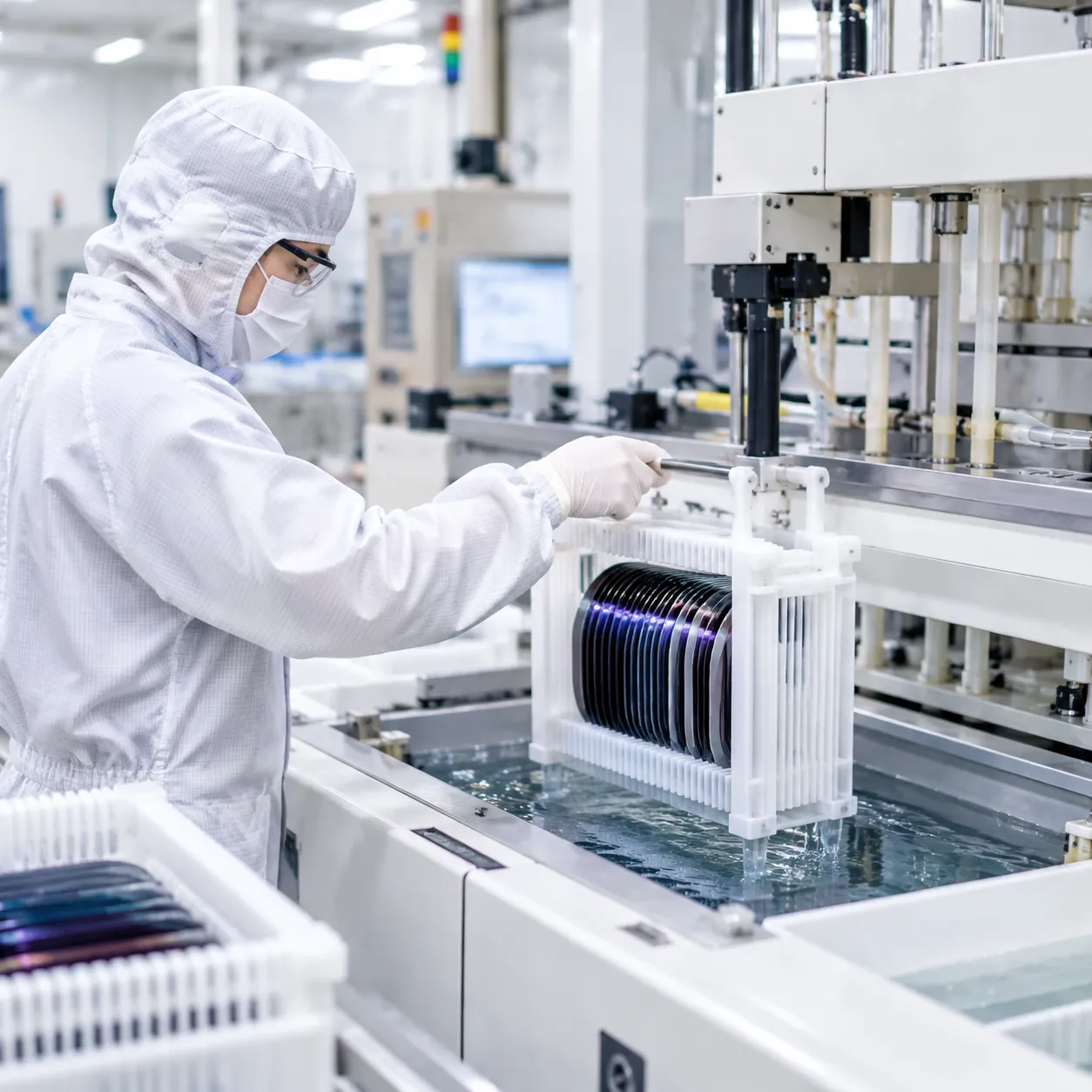
Unscheduled wet station shutdowns destroy fab margins by directly damaging wafer yield, line throughput, and overall equipment effectiveness (OEE).
-
- Wafer Scraps & Yield Loss: Bath stagnation and localized chemical crystallization cause immediate micro-staining and defect spikes on sub-20nm features.
- Line Bottlenecks: Because wet cleaning stations handle high-volume wafer flows, a single tool outage starves lithography and etch bays, stalling total fab throughput.
- Severe OEE Drops: Unplanned stops tank tool availability and drive up Mean Time to Repair (MTTR) when replacement components aren't staged.
Root Causes of Sudden Wet Station Shutdowns
In our experience managing cleanroom equipment uptime, four key failure modes drive over 80% of unexpected wet bench outages:
-
- Chemical Degradation: Concentrated HF, SPM, and solvent chemistries compromise non-optimized elastomers and structural plastics over continuous duty cycles.
- Sensor Drift: Optical leak detectors, dual float level switches, and inline concentration probes lose calibration, triggering false SEMI S2 safety interlocks or improper chemical dosing.
- Seal Fatigue: High-purity fluoropolymer pump seals and O-rings experience thermal and mechanical stress, leading to fluid loss and contamination.
- Valve Leakage: Diaphragm fatigue in PFA/PTFE control valves causes cross-contamination and pressure fluctuations across chemical recirculation lines.
Predictive Maintenance & Strategic Spares Kitting
Waiting for a component to fail before ordering replacements is no longer viable in modern semiconductor manufacturing. Staging recommended spare parts for wet bench semiconductor minimize downtime strategies shifts your fab from reactive firefighting to precision operational control.
| Maintenance Strategy | Operational Impact | MTTR Reduction |
|---|---|---|
| Reactive Sourcing | High scrap risk, tool idle time, waiting on long-lead deliveries | Baseline (Hours to Days) |
| Predictive Kitting | Pre-staged component swaps based on measured wear cycles | Up to 75% Faster MTTR |
Transitioning to pre-packaged consumable kits and emergency replacement modules ensures your cleanroom maintains maximum tool availability and steady wafer velocity.
High-Wear Wet Bench Component Categories & Critical Spares
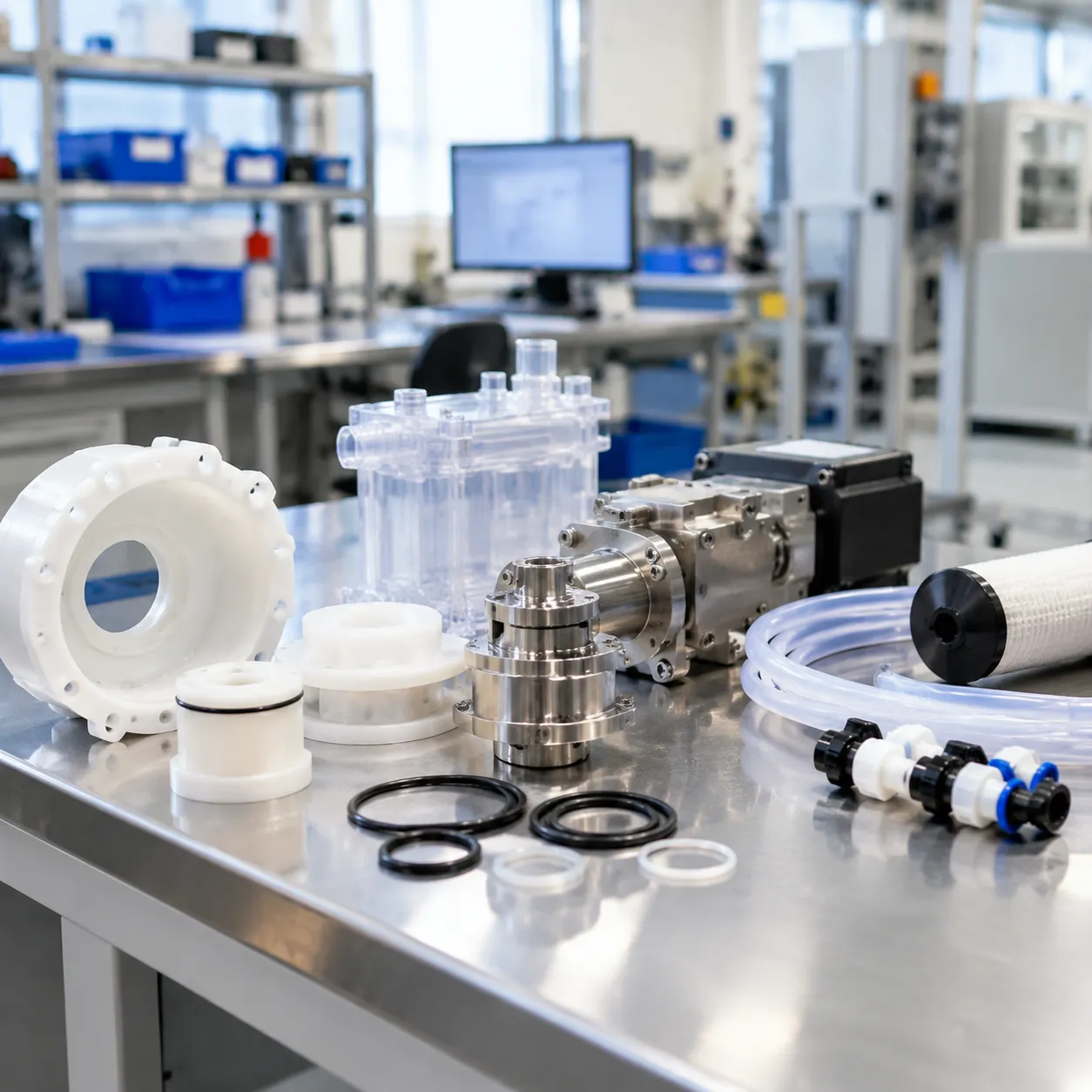
We categorize wet station wear points into five critical subsystems so your engineering team can address component fatigue before it degrades wafer yield.
| Subsystem Category | High-Wear Component Spares | Core Operational Impact |
|---|---|---|
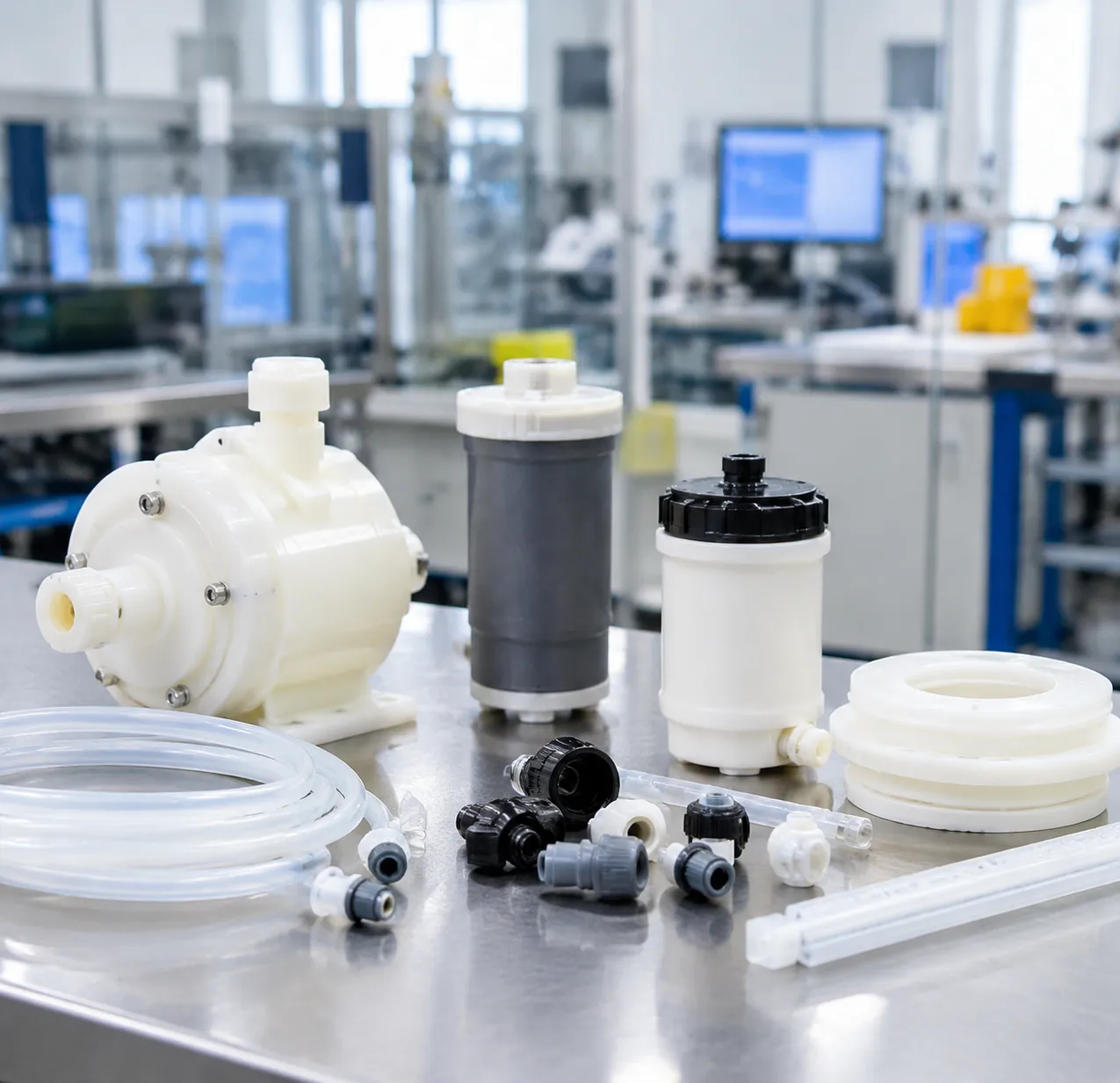
| Fluid Handling & Containment | High-purity PFA/PTFE tubing, flare fittings, dual-containment joints, chemical-resistant diaphragm valves, QDR valves, emergency shut-off valves, fluoropolymer pump seals, impellers, metering bladders | Eliminates chemical leaks, prevents air intrusion, and ensures precise fluid dosing across harsh acid lines. |
| Filtration & Recirculation | 0.005 μm PTFE membrane filter cartridges, magnetic-drive pump assemblies, chemical recirculation pump rebuild kits | Suppresses micro-particles to protect 100 nm / 200 nm wafer cleanliness standards. |
| Monitoring & Safety Sensors | Redundant optical chemical leak detectors, continuous-flow DI water sensors, closed-loop pH/ORP probes, inline chemical concentration sensors (±0.1%), dual float level switches, Photohelic pressure interlocks | Maintains critical bath chemistry parameters and provides real-time SEMI S2 safety interlock protection. |
| Thermal & Bath Hardware | Replacement quartz baths, quartz immersion heater jackets, PVDF tank seals, FRPP/CPVC shielding panels, megasonic transducer baths, RF generator matching modules | Prevents thermal degradation, maintains bath chemical stability, and guards against tank seal failure. |
| Automation & Subsystems | Spin Rinse Dryer (SRD) rotor kits, motor controllers, door seal gaskets, robotic wafer handler end-effectors, linear actuators, gripper pads, PLC I/O modules, SECS/GEM cards | Ensures repeatable wafer transfers, smooth drying cycles, and stable fab automation communication. |
Maintaining strategic inventory for these high-risk failure points drastically lowers Mean Time to Repair (MTTR). When servicing high-precision wet benches for semiconductor processing, having pre-tested components on site ensures your line resumes full target throughput without compromising sub-20nm process safety.
Chemistry-Driven Replacement Cycles & Maintenance Scheduling
Corrosive Acid Lines (SPM, DHF, BOE)
Concentrated acid baths degrade fluidic seals far faster than standard process lines.
Seal & Sensor Inspections: Inspect PTFE/PFA seals, Kalrez/Viton O-rings, and redundant optical leak sensors weekly.
Material Integrity: Ensure strict hydrofluoric acid (DHF) chemical compatibility across all inline valves and fittings. Replace diaphragm seals every 6 months to stop micro-leaks before acid attacks structural frames.
Alkaline & Clean Process Lines (SC1, SC2, RCA)
Caustic and oxidative clean chemistries cause crystal precipitation and progressive diaphragm strain within wet bench chemistry equipment for semiconductor cleanroom operations.
Filter Cartridge Replacement: Swap high-purity PTFE membrane filter cartridges every 30 to 60 days to prevent particle buildup and flow restriction.
Recirculation Pump Maintenance: Conduct monthly wear checks on chemical delivery pump diaphragms and magnetic drive bearings; execute rebuilds at the first sign of pressure variance.
Solvent Process Benches
Solvent processing introduces flammability risks that require rigorous structural and mechanical oversight.
Exhaust & Static Control: Inspect static-dissipative shielding, lip exhaust seals, and ducting quarterly to ensure complete vapor extraction and zero charge buildup.
Fire Safety Hardware: Audit NFPA/FM4910-certified fire suppression system valves, interlock sensors, and fast-acting emergency shut-off valves during every scheduled PM window.
Building a Zero-Downtime Spares Kitting Strategy
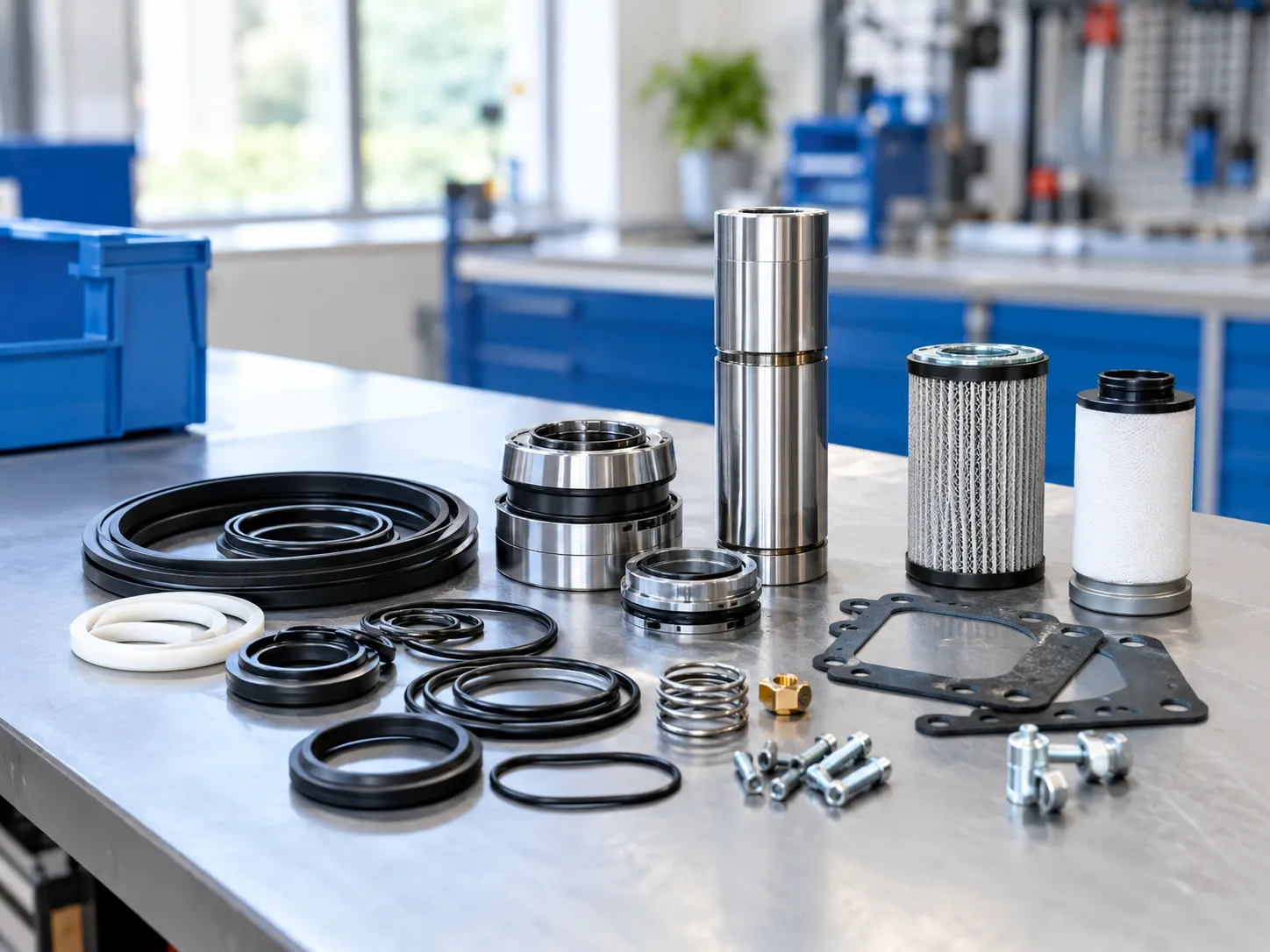
Strategic Wet Bench Spares Kitting Breakdown
| Kit Category | Target Components & Contents | Operational Impact |
|---|---|---|
| Consumable PM Kits | Bundled Kalrez/Viton O-rings, PFA flare fittings, fluoropolymer seals, and PVDF gaskets | Streamlines routine scheduled service; eliminates micro-leak risks across chemical lines |
| Critical Emergency Kits | Pre-assembled valve manifolds, chemical delivery pump rebuild modules, dual float level switches, optical leak sensors | Enables hot-swappable drop-in repairs; slashes unpredicted line stops from hours to minutes |
OEM Compatibility and Supply Chain Protection
We manufacture high-purity, drop-in replacement parts built to preserve process integrity across automatic wet bench systems. Every component complies with strict ISO Class 5–7 cleanroom standards and SEMI S2/S8 guidelines to protect your yield and technicians.
-
- Guaranteed Interoperability: Certified 1:1 dimensional matching ensures seamless fit for legacy and modern wet stations without requiring re-tooling or extensive recalibration.
- Rigorous Safety Standards: Built for high-purity chemical delivery, maintaining strict process compliance and safety across corrosive acid and solvent environments.
- Lead-Time Risk Mitigation: Our regional inventory buffers shield your fab from global supply chain disruptions, delivering critical hardware directly to your cleanroom floor.
- Direct Field Engineering Support: Technical specialists assist your equipment team in auditing high-wear components and establishing optimized replacement intervals.
Frequently Asked Questions
How do worn filter modules impact wafer yields in sub-20nm processes?
In sub-20nm node manufacturing, micro-particles larger than 0.005 μm lead to fatal pattern defects and killer shorts. When filter membranes wear out, they trigger severe processing issues:
-
- Particle Shedding: Degraded membranes break down, releasing trapped micro-contaminants back into bath chemistry.
- Differential Pressure Spikes: Clogged filters restrict recirculation flow, creating stagnant chemical zones and uneven bath temperatures.
- Defect Rate Escalation: Wafer surface defect density spikes instantly, drastically reducing overall line yield.
Replacing worn filter modules with high-purity PTFE membrane cartridges during preventive maintenance keeps your chemistry particle-free.
What are the most common failure points in automated chemical dosing loops?
Automated dosing loops face constant chemical degradation and mechanical stress. The top components prone to failure include:
-
- Diaphragm Valve Seals: Concentrated acids like hydrofluoric acid (DHF) and SPM embrittle PFA/PTFE seals over time, leading to valve leakage.
- Inline Sensor Drift: Optical liquid leak detectors and pH/ORP probes lose calibration, causing inaccurate dosing and unexpected tool interlocks.
- Metering Pump Assemblies: Fluoropolymer bladders and check valves wear down, leading to flow rate fluctuations that exceed ±0.1% volumetric control standards.
Keeping recommended spare parts for wet bench semiconductor systems ready—such as pre-assembled valve manifolds and pump rebuild kits—allows maintenance teams to fix dosing failures in minutes and minimize downtime.
Why is FM4910 material certification mandatory for replacement plastic sheets and tanks?
FM4910 is the cleanroom material fire-safety standard. Using non-certified plastic sheets or replacement tanks creates severe operational risks:
-
- Toxic Off-Gassing: Standard plastics emit heavy smoke and corrosive particulate off-gassing during thermal incidents, destroying nearby wafers and sensitive optics.
- Rapid Flame Spread: Uncertified materials burn rapidly without self-extinguishing, posing an immediate threat to cleanroom infrastructure.
- Safety Audit Non-Compliance: Non-certified structural shielding fails SEMI S2/S8 safety audits and voids facility insurance policies.
We supply certified FM4910-compliant plastics (FRPP, PVDF, CPVC) to keep custom enclosures and tank replacements fire-safe and fully compliant.
Should fabs maintain OEM or cross-referenced third-party spare parts for legacy wet benches?
Relying strictly on original equipment manufacturers for legacy wet stations often leads to extended lead times and inflated maintenance costs. A strategic hybrid replacement strategy yields the best operational balance:
-
- Direct-Fit Equivalence: Sourcing certified, high-purity PFA fittings, quartz baths, and pneumatic valves that match exact OEM dimensions protects your budget without compromising yield.
- Supply Chain Resilience: Maintaining cross-referenced spares eliminates reliance on single-source suppliers and prevents months-long tool outages.
We stock certified replacement parts for automated wet bench semiconductor wet processing systems and custom semiconductor wet bench systems, delivering cleanroom-ready quality with immediate regional availability.