Core Architecture & Operating Principles
Batch Immersion Systems and Automated Wet Bench Mechanics
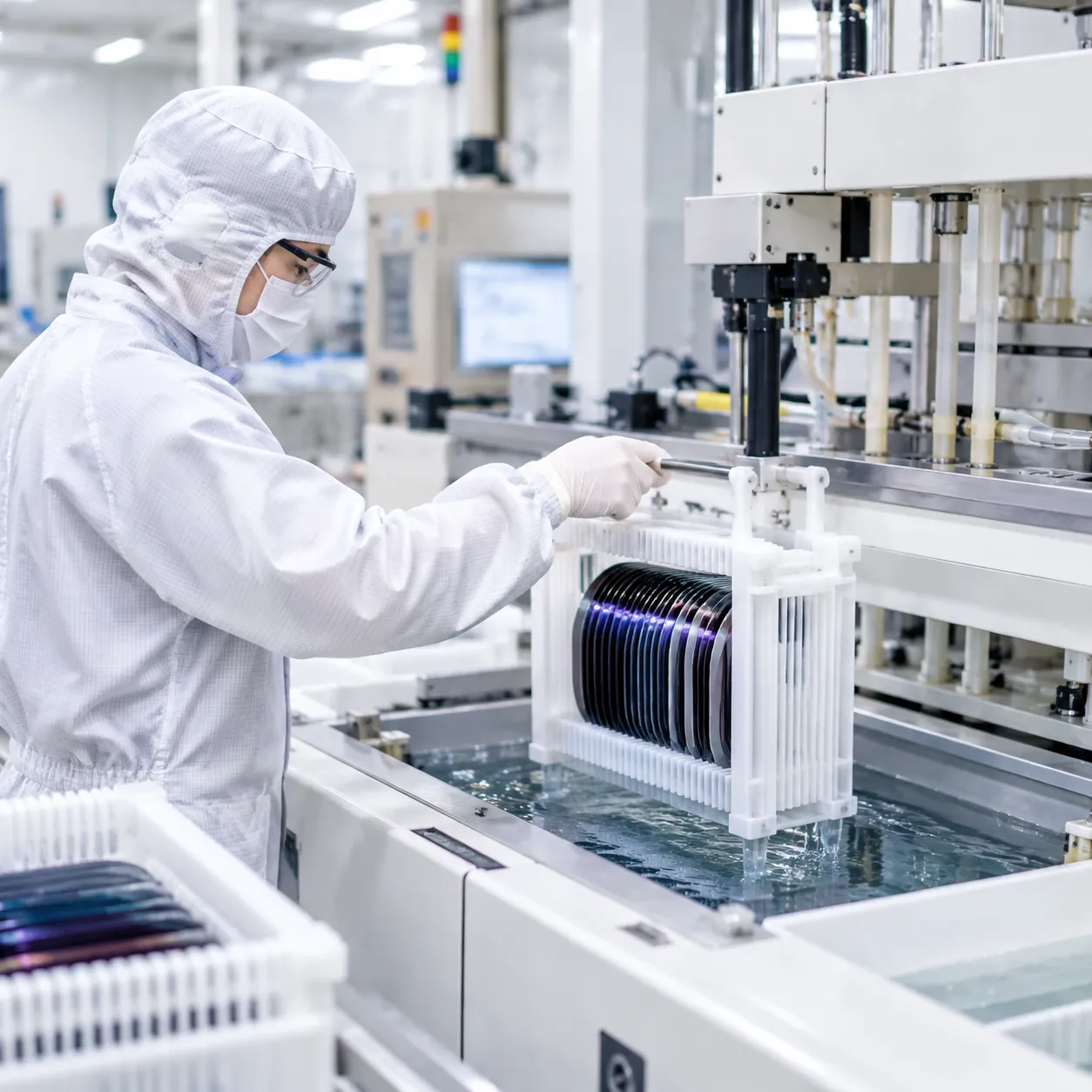
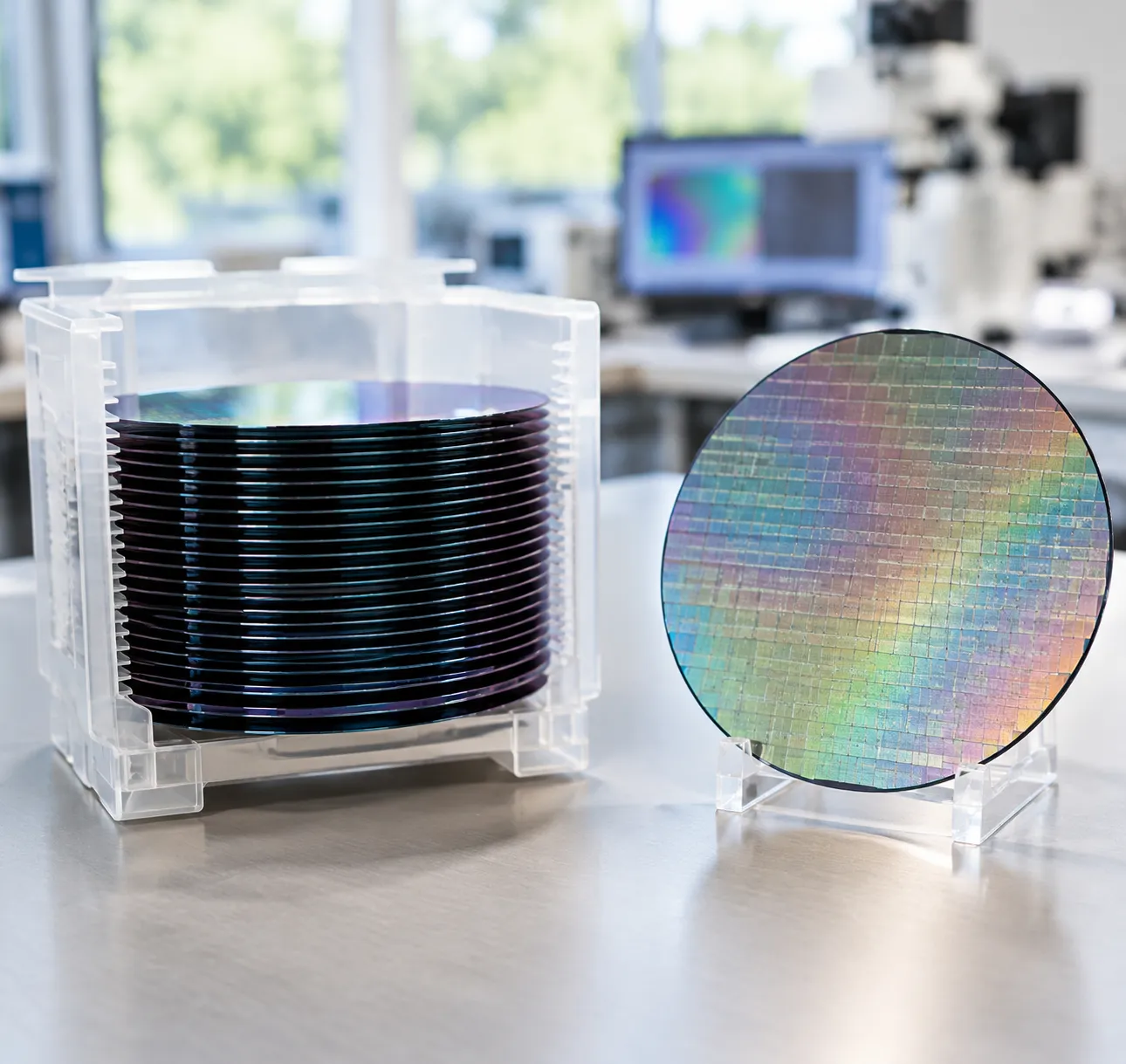
Automated wet bench equipment processes multiple wafers simultaneously—typically 25 to 50 wafers per carrier or in direct lot-to-lot transfers. The platform architecture relies on high-precision overhead robotic end-effectors to transfer wafer cassettes across sequenced process zones:
-
- Linear transfer robotics: Sub-millimeter position accuracy across clean, etch, and rinse sequences.
- Continuous batch throughput: Ideal for high-volume manufacturing (HVM) where bulk processing keeps cycle times low.
- Sealed environmental mini-environments: Integrated laminar flow hoods maintaining Class 1 cleanroom conditions over open process tanks.
Multi-Tank Configurations and Recirculated Chemical Baths
Batch systems rely on specialized tank sequences with dedicated functions:
-
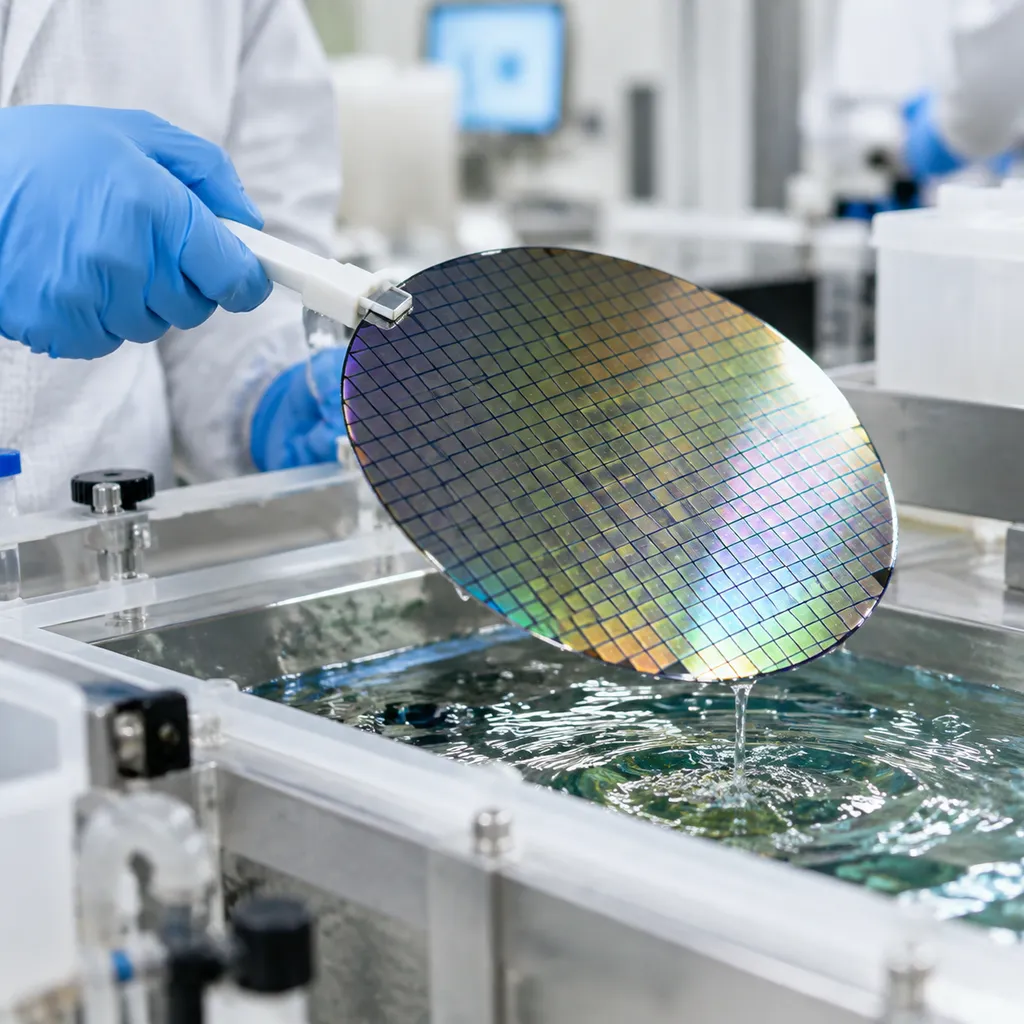
- Cascading Quick Dump Rinse (QDR): High-speed deionized (DI) water flooding and bottom dumping to rapidly displace residual process chemistry.
- Recirculated chemical baths: Continuous filtration via inline sub-micron fluoropolymer filters to capture dislodged particles.
- Constant concentration tuning: Integrated spiking modules and inline conductivity/refractive index sensors that balance chemical bath life and chemical consumption.
Megasonic Integration and Marangoni IPA Vapor Drying
Advanced immersion cleans require tight defectivity control at microscopic scales:
-
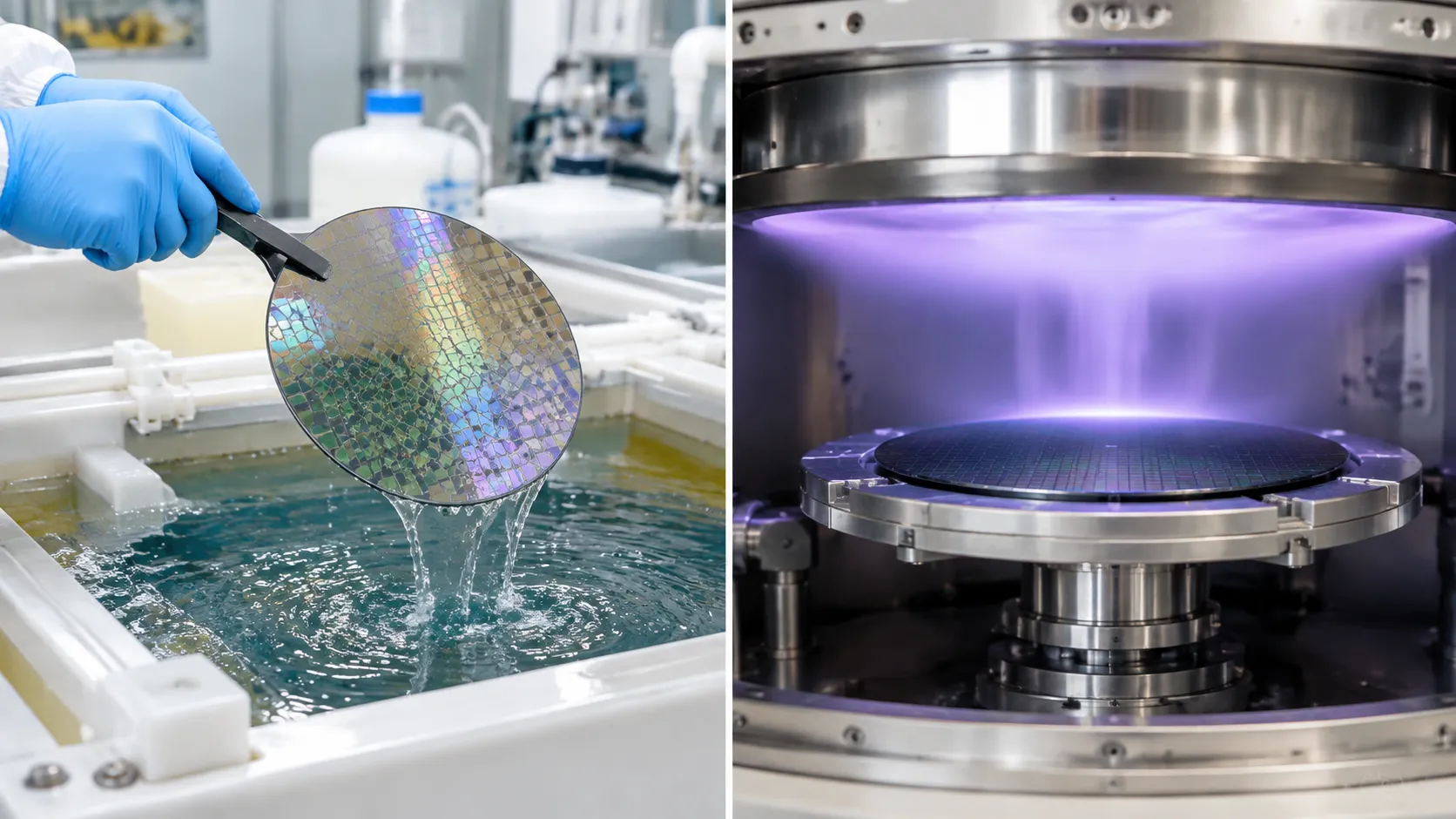
- Megasonic transducer arrays: Direct acoustic energy (700 kHz – 1.5 MHz) into the chemical bath, creating controlled acoustic cavitation to break the chemical boundary layer and lift sub-micron particles.
- Marangoni IPA vapor drying: Uses a controlled surface tension gradient between DI water and isopropyl alcohol (IPA) vapor as the wafer carrier exits the rinse tank, pulling moisture off surfaces without leaving watermarks or causing high-aspect-ratio feature collapse.
Single-Wafer Wet Processors and Enclosed Spin Chambers
Single-wafer spin processors isolate each substrate inside a dedicated, fully enclosed, inert mini-chamber:
-
- Chuck-driven rotation: Bernoulli or mechanical pin chucks spin wafers at speeds up to 3,000+ RPM.
- Point-of-use chemistry delivery: Fresh, uncompromised process chemicals sprayed directly onto the active surface eliminate cross-wafer bath contamination risks.
- Multi-level exhaust management: Segmented chamber bowls divert acidic, solvent, and toxic fumes into dedicated exhaust streams for safe fab facility integration.
Dynamic Nozzle Scanning and Backside Bevel Cleaning
Single-wafer tools provide surgical precision across complex surface topographies:
-
- Dynamic oscillating dispense arms: Programmable chemical and DI water scan profiles adjust radial fluid velocity, achieving uniform boundary layer thinning from center to edge.
- Targeted backside and bevel cleans: Shielded edge-exclusion nozzles deliver chemistries directly to the wafer bevel and backside without exposing active frontside patterns.
- Localized fluid boundary control: High-pressure physical cleans and localized megasonic sweep nozzles clear dense pattern residues where immersion baths struggle.
Technical Comparison: Batch Immersion vs Single-Wafer Wet Processing
Choosing between batch immersion and single-wafer wet processing comes down to balancing defectivity tolerances, chemical costs, and sheer production throughput. Here is how both architectures compare across key engineering metrics.
Process Uniformity and Boundary Layer Fluid Dynamics
-
- Single-Wafer Spin Processing: High-speed substrate rotation shears fluid outward, creating an ultra-thin chemical boundary layer. This enables fast, uniform chemical replenishment and precise edge-to-center etch control.
- Batch Immersion: Fluid convection across dense wafer cassettes creates a thicker boundary layer. While optimized tank agitation and recirculated chemical flow deliver solid within-wafer uniformity, center-to-edge flow profiles inside tight pitch carriers require tight fluid modeling.
Particle Removal Efficiency (PRE) and Cross-Contamination Risks
-
- Cross-Contamination: Single-wafer chambers use single-use chemistry on isolated wafers, eliminating backside-to-frontside or wafer-to-wafer cross-contamination.
- Defectivity & PRE: Modern batch immersion wet bench systems for wafer processing achieve high particle removal efficiency (PRE) via megasonics and continuous weir overflow filtration, though high-defect lots can risk cross-contaminating shared baths.
Wafer Throughput (WPH) vs Cycle Time Trade-Offs
-
- Batch Immersion: Delivers massive throughput (often exceeding 200 to 300+ WPH) by processing lots of 25 to 50 wafers simultaneously.
- Single-Wafer Tools: Offer rapid cycle time for rapid feedback (1 to 3 minutes per wafer), making them ideal for agile R&D and critical FEOL steps, but they require multi-chamber cluster tools to scale volume.
Chemical Consumption, Bath Lifetime, and Cost of Ownership (CoO)
-
- Chemical Spend: Batch immersion systems use chemical baths across hundreds of wafers, drastically lowering per-wafer chemical consumption.
- Single-Pass Waste: Single-wafer processors frequently operate on single-pass or limited-dispense cycles, which increases chemical spend unless equipped with dedicated spike recovery systems.
Cleanroom Footprint and Facilities Integration Requirements
-
- Floor Space Efficiency: A fully automated chemical wet bench for wafer cleaning and etching maximizes throughput per square foot of expensive fab floor space.
- Facility Hookups: Single-wafer clusters require multiple exhaust drops, high-capacity DI water feeds, and complex chemical delivery manifolds across multiple spin modules to match the raw output of a single batch tank.
| Metric | Batch Immersion Systems | Single-Wafer Wet Processors |
|---|---|---|
| Gross Throughput (WPH) | Very High (200–350+ WPH) | Moderate (30–60 WPH per chamber) |
| Wafer-to-Wafer Uniformity | Good (dependent on bath circulation) | Excellent (isolated dynamic control) |
| Cross-Contamination Risk | Low-to-Moderate (shared bath) | Extremely Low (isolated single-pass) |
| Chemical Cost per Wafer | Low (recirculated bath lifetime) | High (single-pass point-of-use) |
| Footprint Efficiency | High output per m² of cleanroom | Lower output per m² of cleanroom |
| Best Process Fit | Bulk cleans, photoresist strip, high-mix | Critical cleans, single-side etch, bevel clean |
Application-Driven Selection Framework: Batch Immersion vs Single-Wafer Wet Processing
Choosing between an automated batch immersion bench and a single-wafer spin processor comes down to matching your process sensitivity with your fab's target cost of ownership. Different manufacturing stages and substrate materials impose vastly different mechanical, chemical, and defect-budget constraints on wet tools.
FEOL Critical Cleans and Surface Prep
Front-end-of-line (FEOL) processing demands absolute control over surface roughness, chemical oxide termination, and sub-micron particulate counts:
-
- Single-Wafer Spin Processors: Dominate leading-edge gate oxide pre-cleans and shallow trench isolation (STI) cleans. Direct chemical dispense prevents cross-contamination across wafers, while dynamic megasonics achieve high particle removal efficiency (PRE) without pattern damage on sensitive gate stacks.
- Batch Wet Benches: Excel at non-pattern-critical bulk cleans, including native oxide stripping (DHF) and bulk SC-1/SC-2 cleans. Advanced semiconductor wet processing systems for 300mm wafers utilize automated chemical spiked baths and Marangoni surface tension drying to meet strict FEOL defect thresholds at maximum wafer throughput.
BEOL Post-Etch Polymer Removal and Packaging
Back-end-of-line (BEOL) metal stacks and advanced packaging layers introduce aggressive chemistries and strict backside/bevel cleanliness rules:
-
- Polymer Removal: Single-wafer tools use targeted chemical nozzle scanning to break down tough fluorinated polymers after via and trench reactive-ion etching (RIE). Single-wafer systems isolate frontside solvent cleans while continuously rinsing the backside to eliminate cross-contamination on exposed copper or low-k dielectrics.
- Under-Bump Metallization (UBM) & Lift-Off: Batch immersion tanks handle bulk photoresist stripping and metal lift-off efficiently, soaking multiple cassettes simultaneously in heated solvent baths to dissolve thick resist layers before a single-wafer final rinse.
Compound Semiconductor Wet Processing for SiC and GaN
Silicon Carbide (SiC) and Gallium Nitride (GaN) power devices present unique physical challenges, including substrate brittleness, transparent wafer alignment, and extreme chemical resistance:
-
- Substrate Etching & Surface Prep: Molten KOH, hot phosphoric acid ($H_3PO_4$), and aggressive piranha solutions require fluoropolymer or quartz immersion tanks built to withstand high temperatures (>150 °C).
- Mechanical Handling: Batch immersion minimizes mechanical stress on warped or thin compound semiconductor wafers by processing full lots submerged in liquid, avoiding the high rotational stress and chuck clamping risks found in spin tools.
Legacy Nodes, MEMS, and High-Mix Specialty Wafer Production
For 100mm to 200mm legacy fabs, university cleanrooms, and MEMS foundries, production flexibility is far more critical than single-digit nanometer defect control:
-
- High-Mix Recipe Flexibility: A versatile standalone wet process bench for semiconductor labs allows process engineers to run small batch runs, multi-step acid/base sequences, and specialty MEMS sacrificial layer etches (such as timed HF oxide release) in a compact footprint.
- Capital Efficiency: Batch wet benches deliver the lowest capital expenditure (CAPEX) per wafer slot, providing small-to-mid volume fabs with predictable yields without the high hardware complexity and dynamic maintenance overhead of multi-chamber single-wafer platforms.
Process Comparison Matrix: Batch Bench vs Single-Wafer Wet Processing

Selecting between automated immersion systems and single-substrate tools requires balancing defect limits, yield requirements, and operational costs. We evaluate both architectures across core operational metrics below:
| Feature / Metric | Batch Immersion Bench | Single-Wafer Spin Processor |
|---|---|---|
| Wafer Throughput (WPH) | High (150–250+ WPH via 25/50 wafer lots) | Moderate to Low (30–60 WPH per chamber) |
| Defectivity & Particle Control | Susceptible to cross-contamination across baths | Superior isolation; zero cross-contamination |
| Chemical Delivery | Recirculated, filtered baths (Extended bath life) | Fresh single-use chemical dispensing |
| CAPEX per Tool | Moderate to High based on automation level | High initial investment for multi-chamber units |
| OPEX (Chemical Spend) | Lower per-wafer chemical costs | Higher chemical usage per wafer |
| Recipe Agility | Fixed chemistry flow; slow changeovers | Instant dynamic recipe swapping per wafer |
| Wafer-to-Wafer Uniformity | Moderate boundary layer variations | Exceptional across full surface, bevel, and backside |
Side-by-Side Technical Trade-Offs and Defectivity Control
When evaluating defect budgets at advanced nodes, process isolation determines yield outcomes:
-
- Particle Removal Efficiency (PRE): A single-wafer wet clean system for precision cleaning delivers targeted chemical delivery and fluid boundary layer control, achieving consistent particle removal down to advanced sub-micron specs.
- Cross-Contamination Risks: Immersion tanks share chemical baths across entire cassettes. While megasonics and filtration minimize issues, single-wafer chambers eliminate bath aging risks entirely by purging chemistry after every single run.
- Bevel and Backside Cleaning: Single-wafer platforms allow localized backside and edge-bevel processing without exposing frontside critical device structures.
CAPEX vs OPEX Chemical Spend Evaluation
Fab financial planning requires balancing machine hardware investments against ongoing operational running costs:
-
- Initial Tool CAPEX: High-capacity batch equipment typically provides a lower capital cost per unit of output capacity. In contrast, scaling single-wafer throughput requires purchasing multiple process chambers on clustered mainframes.
- Chemical Consumption (OPEX): A dedicated acid wet bench for safe chemical processing recirculates expensive process mixes like SC-1, SC-2, and buffered oxide etchants over many hours. Single-wafer tools use fresh chemistries per cycle, resulting in significantly higher raw chemical and disposal spend unless recycling systems are integrated.
- Facilities Footprint: A single automated batch bench handles large volume requirements within a tight cleanroom footprint, whereas multi-chamber single-wafer footprints scale linearly with target fab capacity.
Recipe Flexibility and Production Scaling Metrics
-
- High-Mix Agility: Single-wafer tools excel in R&D fabs, pilot lines, and high-mix specialty wafer manufacturing where etching chemistries, rinse profiles, and spin drying parameters change continuously between production runs.
- High-Volume Mass Production: Batch wet processing dominates high-volume manufacturing (HVM) for legacy nodes, MEMS, and discrete power devices where fixed-recipe processing requires fast wafer throughput at the lowest achievable cost per wafer.
Next-Generation Innovations in Wet Processing Platforms
Modern Tank Flow Modeling & Surface Tension Drying
Stagnant zones inside chemical baths used to be the main culprit behind particle re-deposition in batch systems. We now use advanced computational fluid dynamics (CFD) to optimize multi-tank fluid mechanics:
-
- Symmetric Weir Inflow: Eliminates chemical dead zones by forcing continuous, laminar up-flow across all wafer slots.
- Vapor-Assisted Marangoni Drying: Utilizing precise surface tension gradient control, ultra-low IPA vapor flows lift liquid sheets off wafer surfaces without pattern collapse or watermark defects.
- Optimized Immersion Integration: Upgraded fluid paths in modern high-precision wet benches for semiconductor processing ensure fresh chemical refresh rates across dense 25-to-50-wafer carriers.
CFD-Optimized Tank Flow
→ Minimizes stagnant flow zones
Controlled Marangoni IPA Lift
→ Minimizes watermarks & supports sub-nm particle removal efficiency (PRE)
Chemical Recovery Loops for Single-Wafer Spin Tools
The biggest historic bottleneck for single-wafer tools has been chemistry cost. To solve this, next-generation single-wafer spin platforms integrate smart chemical recapture loops:
-
- Multi-Bowl Segregated Drains: Differentiates concentrated acids, dilute chemistries, and rinse waters at high spin speeds to avoid cross-contamination.
- Point-of-Use Filtration & Reclaim: Re-circulates expensive functional chemistries (such as selective polymer removers and hot phosphoric acid) back into localized reservoirs.
- In-Line Spike Dosing: Automatically monitors and restores active chemical concentrations in real time, extending bath life by up to 40% on single-wafer tracks.
Custom Platform Tuning for Yield and Cost-per-Wafer Balance
When evaluating batch immersion vs single-wafer wet processing, you no longer have to settle for an all-or-nothing approach. We tailor tool setups directly to your specific yield targets and operational budget:
-
- Hybrid Fab Architectures: Running high-volume batch immersion benches for bulk photoresist stripping and basic oxide etches, while deploying single-wafer spin tools for critical defect-sensitive FEOL cleans.
- Application-Specific Hardware: Customizing chamber materials, nozzle scan profiles, and specialized tank volumes in our semiconductor wet bench cleanroom solutions to maximize wafer throughput (WPH) while lowering overall cost of ownership (CoO).
Frequently Asked Questions: Batch Immersion vs Single-Wafer Wet Processing
When should our fab upgrade from batch to single-wafer processing?
The transition typically happens when device scaling reaches nodes below 28nm, where pattern collapse, wafer-to-wafer uniformity tolerances (<1%), and cross-contamination risks become critical yield bottlenecks. If your process flow involves fragile high-aspect-ratio structures or advanced packaging requiring frontside protection during backside/bevel etching, migrating to dedicated single-wafer cleaning systems provides the precise fluid dynamics and individual wafer control needed.
How does chemical consumption compare between batch benches and single-wafer tools?
-
- Batch wet benches: Maximize chemical efficiency by processing 25 to 50 wafers simultaneously in recirculated baths. This structure keeps chemical spend low and yields an attractive cost of ownership (CoO) for high-volume legacy nodes and standard cleans (SPM, SC-1, DHF).
- Single-wafer processors: Typically use single-use, point-of-use chemical dispenses to ensure fresh chemical activity and zero cross-contamination. While this increases raw chemical consumption per wafer, modern platforms mitigate chemistry spend through closed-loop chemical reclaim and spiked injection systems.
Can batch immersion tools achieve sub-micron defectivity targets?
Yes. Modern batch wafer cleaning systems equipped with fluid-modeled recirculated tanks, megasonic wet cleaning integration, and Marangoni IPA vapor drying routinely achieve superior particle removal efficiency (PRE) down to sub-45nm defect specs. For non-critical front-end layers, planar substrates, power devices, and MEMS manufacturing, automated batch immersion remains the primary standard for defect control at maximum throughput.
Which wet process architecture works best for SiC and GaN substrates?
Compound semiconductor fabs utilize both architectures depending on the specific fabrication step:
-
- Batch Immersion: Best suited for high-temperature oxide stripping, bulk RCA cleans, and aggressive soak-intensive metal lift-off where high batch throughput offsets extended process times.
- Single-Wafer Processing: Essential for post-CMP cleanups, wafer thinning, front-to-back isolation, and edge-bevel cleans where severe substrate warp, wafer bow, and defect cross-talk require individualized handling.