Formula details
Product Details
Overview
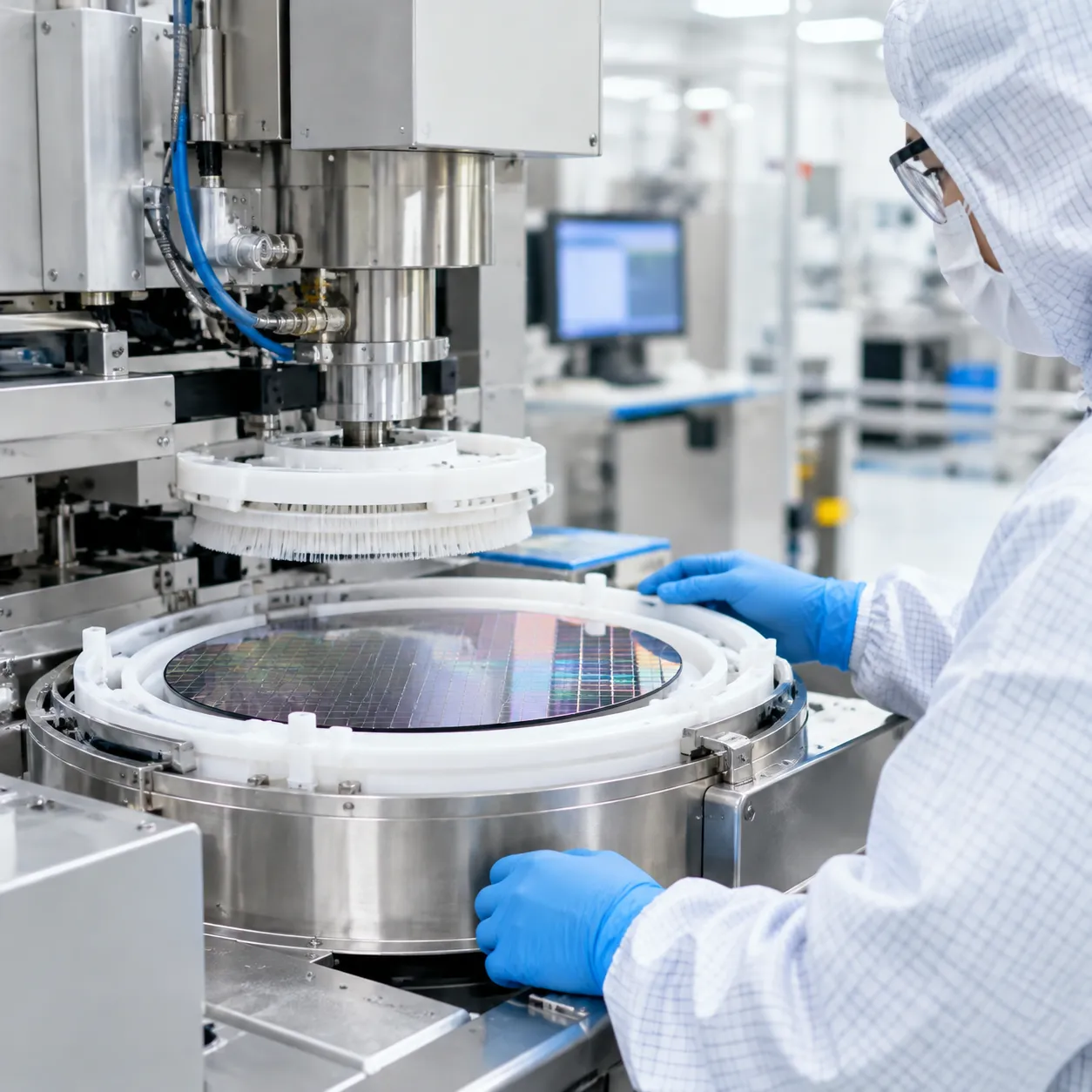
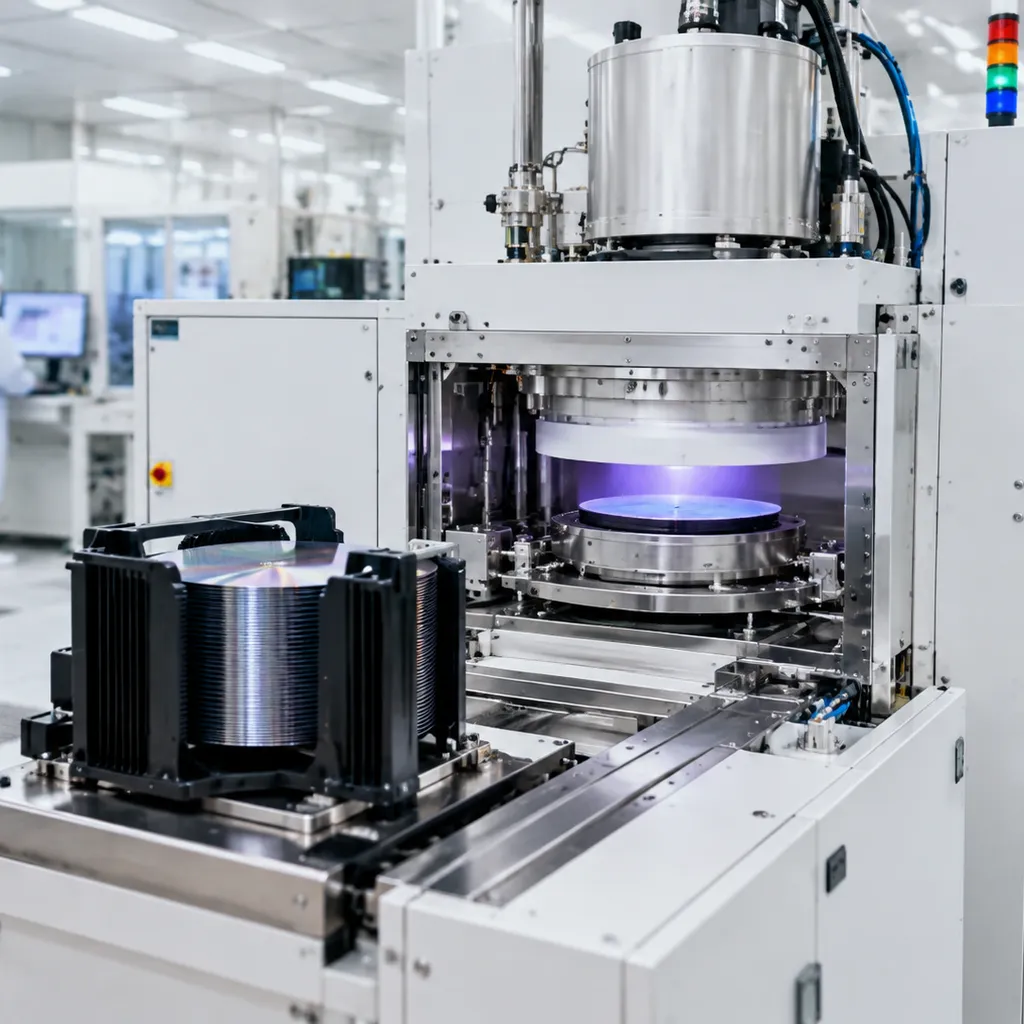
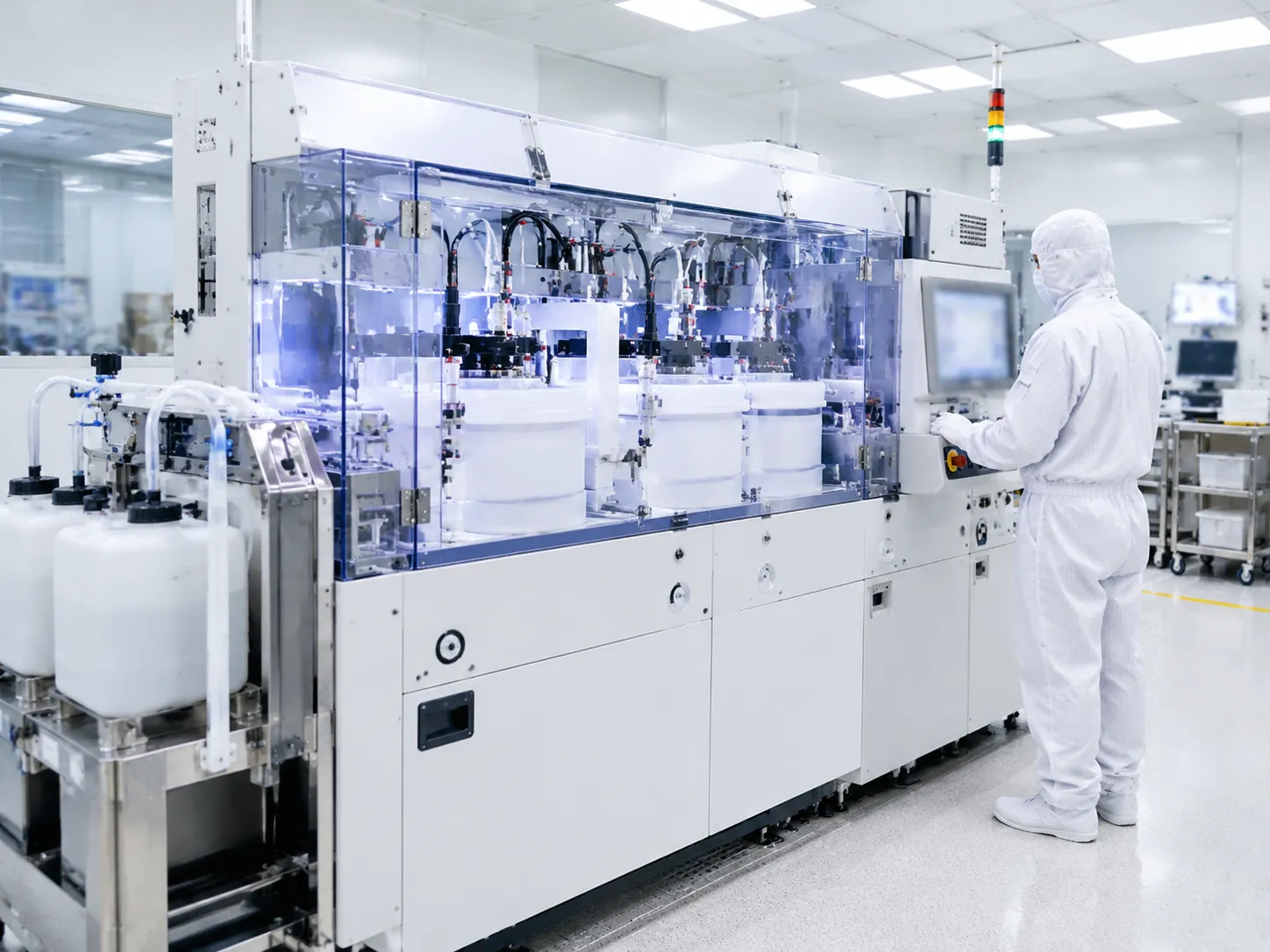
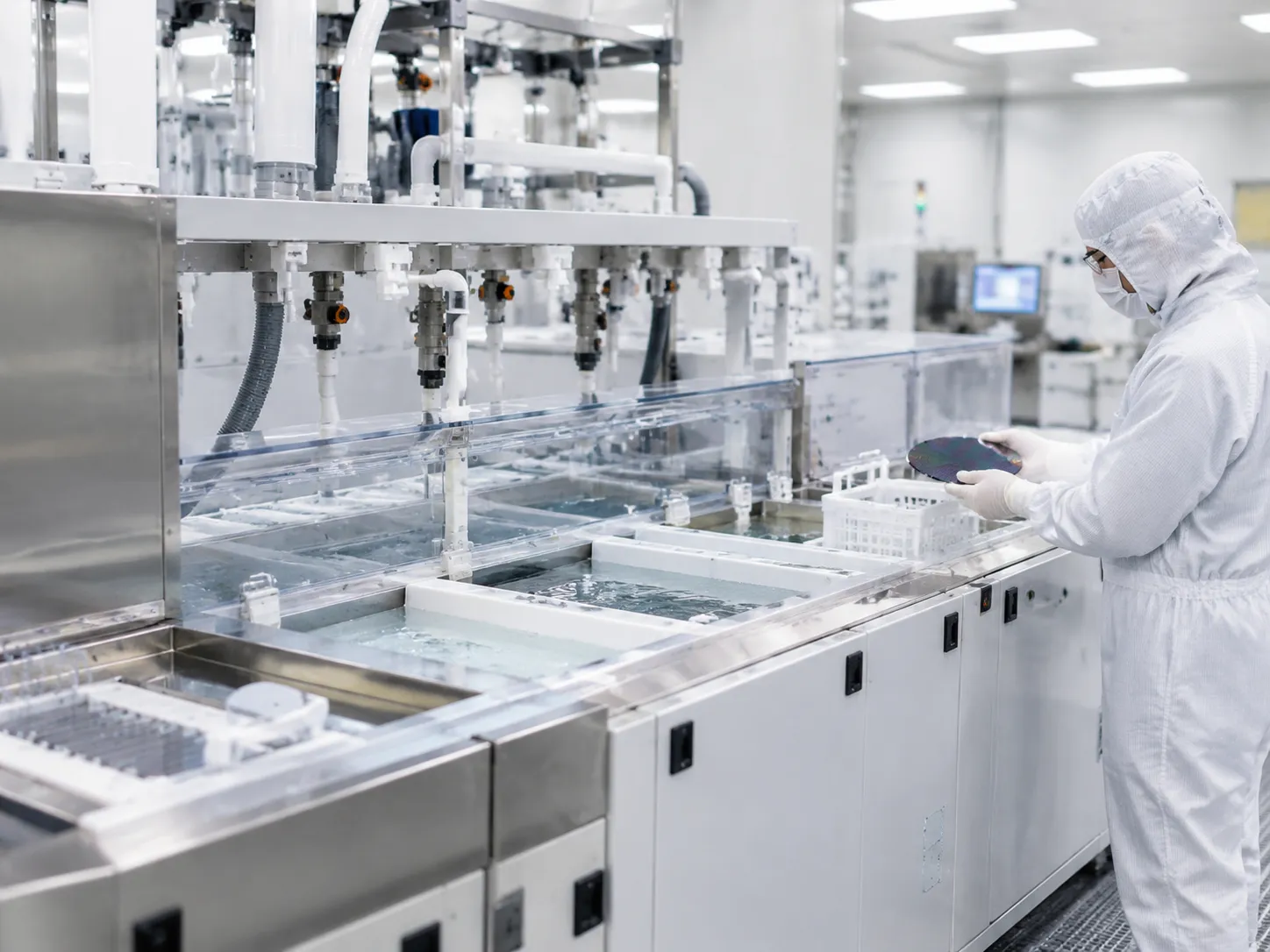
RCA Cleaning Wet Bench Systems: High-Yield Surface Preparation
Core Capabilities & Process Reliability
-
- Sub-Micron Particle Removal: Precision chemical baths integrated with megasonic agitation achieve high-efficiency particle lift-off, driving down defect density prior to critical oxidation and thin-film deposition.
- Metallic & Organic Stripping: Sequential standard clean steps target trace metallic impurities, heavy metals, and stubborn organic films to baseline defect counts.
- Process Repeatability: Closed-loop chemical dosing, temperature stabilization, and automated recipe control ensure absolute run-to-run consistency.
Universal Substrate Handling Versatility
Our wet benches accommodate diverse substrate form factors, material types, and production volumes:
-
- Substrate Form Factors: Standard 2-inch to 12-inch wafers, photomasks, solar substrates, and custom carrier configurations.
- Material Compatibility: Silicon (Si), Silicon Carbide (SiC), Gallium Nitride (GaN), Gallium Arsenide (GaAs), Indium Phosphide (InP), and Sapphire.
- Flexible Platforms: Available in manual wet benches for lab R&D, semi-automated transfer platforms, and fully automated robotic wet benches for high-volume fab lines.
Turnkey Surface Conditioning for High Device Yields
Whether deploying pre-diffusion cleans, gate oxide surface prep, or wide-bandgap substrate cleaning, our RCA wet bench architecture ensures uncompromising chemical purity, tight thermal uniformity, and robust defect reduction across your entire device manufacturing workflow.
Modular Chemical Tank Architecture & RCA Cleaning Sequence
We engineer every RCA cleaning wet bench around a modular, multi-tank configuration engineered to eliminate cross-contamination and maximize wafer yields. Our standard and customizable sequences integrate precision chemical baths, dynamic DI water rinsers, and non-contact drying modules into an inline, continuous workflow.
If you require dedicated bath configurations, our chemical wet bench for wafer cleaning and etching provides complete process isolation and flexible chemistries tailored to your exact fab protocols.
Module 1: Heated SPM / Piranha Bath (Organic Stripping)
-
- Chemistry: Sulfuric Acid and Hydrogen Peroxide (H₂SO₄ + H₂O₂)
- Function: Aggressive organic contaminant removal and stubborn photoresist stripping.
- Tank Build: High-purity quartz bath with integrated temperature management and chemical recirculation.
Module 2: SC-1 / APM Megasonic Bath (Particle & Light Organic Clean)
-
- Chemistry: Ammonium Hydroxide, Hydrogen Peroxide, and DI Water (NH₄OH + H₂O₂ + H₂O)
- Function: Sub-micron particle lift-off via controlled micro-etching and simultaneous light organic removal.
- Tank Build: Heated quartz tank integrated with multi-frequency megasonic cleaning transducers for defect-free acoustic cavitation.
Module 3: Precision Dilute HF (DHF) Bath (Native Oxide Stripping)
-
- Chemistry: Dilute Hydrofluoric Acid / Buffered Oxide Etch (DHF / BOE)
- Function: Rapid native oxide etch and surface hydrogen passivation.
- Tank Build: Chemical-resistant PTFE and PVDF construction with high-precision dosing loops.
Module 4: Heated SC-2 / HPM Bath (Metallic & Ionic Contamination Removal)
-
- Chemistry: Hydrochloric Acid, Hydrogen Peroxide, and DI Water (HCl + H₂O₂ + H₂O)
- Function: Desorption of heavy metals, trace alkali ions, and residual metallic impurities.
- Tank Build: High-purity quartz tank with real-time chemical spiking and closed-loop PID heating.
Module 5: Quick Dump Rinse (QDR) & Cascade Overflow Systems
-
- Function: Fast chemical quenching and sub-surface dilution to prevent chemical carryover.
- Tank Build: High-speed bottom dump valves, nitrogen (N₂) bubbling manifolds, and multi-stage DI water cascade overflow baths.
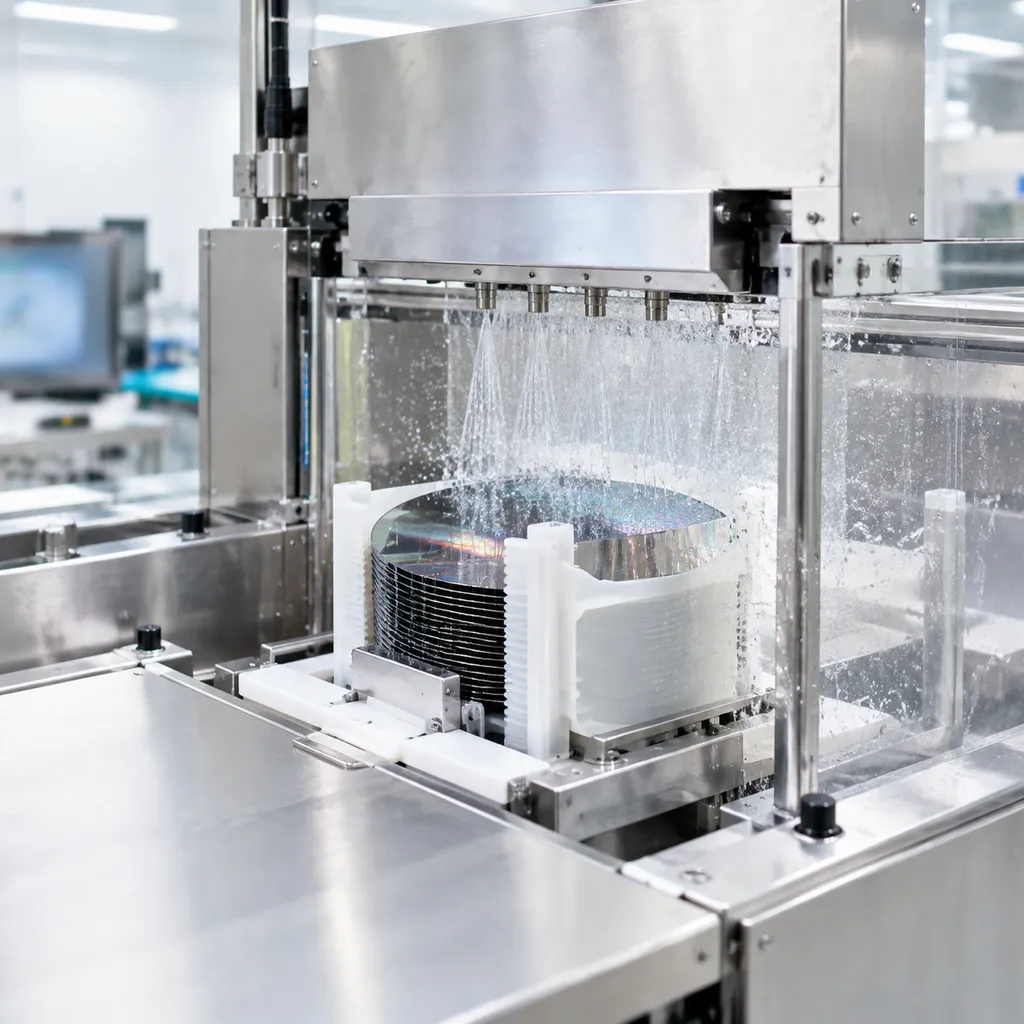
Module 6: Advanced Wafer Drying Systems
-
- Marangoni / IPA Vapor Dryer: Surface-tension gradient drying to prevent pattern collapse and watermark defects on high-aspect-ratio structures.
- Spin Rinse Dryer (SRD): High-throughput centrifugal drying with heated nitrogen purging for standard batch processes.
RCA Process Tank Operating Matrix
| Process Stage | Chemistry / Bath Type | Bath Material | Primary Target | Agitation / Drying Method |
|---|---|---|---|---|
| SPM / Piranha | H₂SO₄ + H₂O₂ | Pure Quartz | Heavy organics & resist | Recirculation filter loop |
| DHF Etch | Dilute HF / BOE | PVDF / PTFE | Native silicon dioxide | Chemical recirculation |
| SC-1 (APM) | NH₄OH + H₂O₂ + H₂O | Pure Quartz | Sub-micron particles | Megasonic agitation |
| SC-2 (HPM) | HCl + H₂O₂ + H₂O | Pure Quartz | Metallic & ionic traces | Heated recirculation |
| Rinsing | High-Purity DI Water | PVDF / Quartz | Residual chemistry | Fast-dump QDR & cascade overflow |
| Drying | IPA Vapor / Heated N₂ | Stainless Steel / Quartz | Watermark prevention | Marangoni / Spin Rinse Dryer |
Automation Platforms & Substrate Handling Configurations
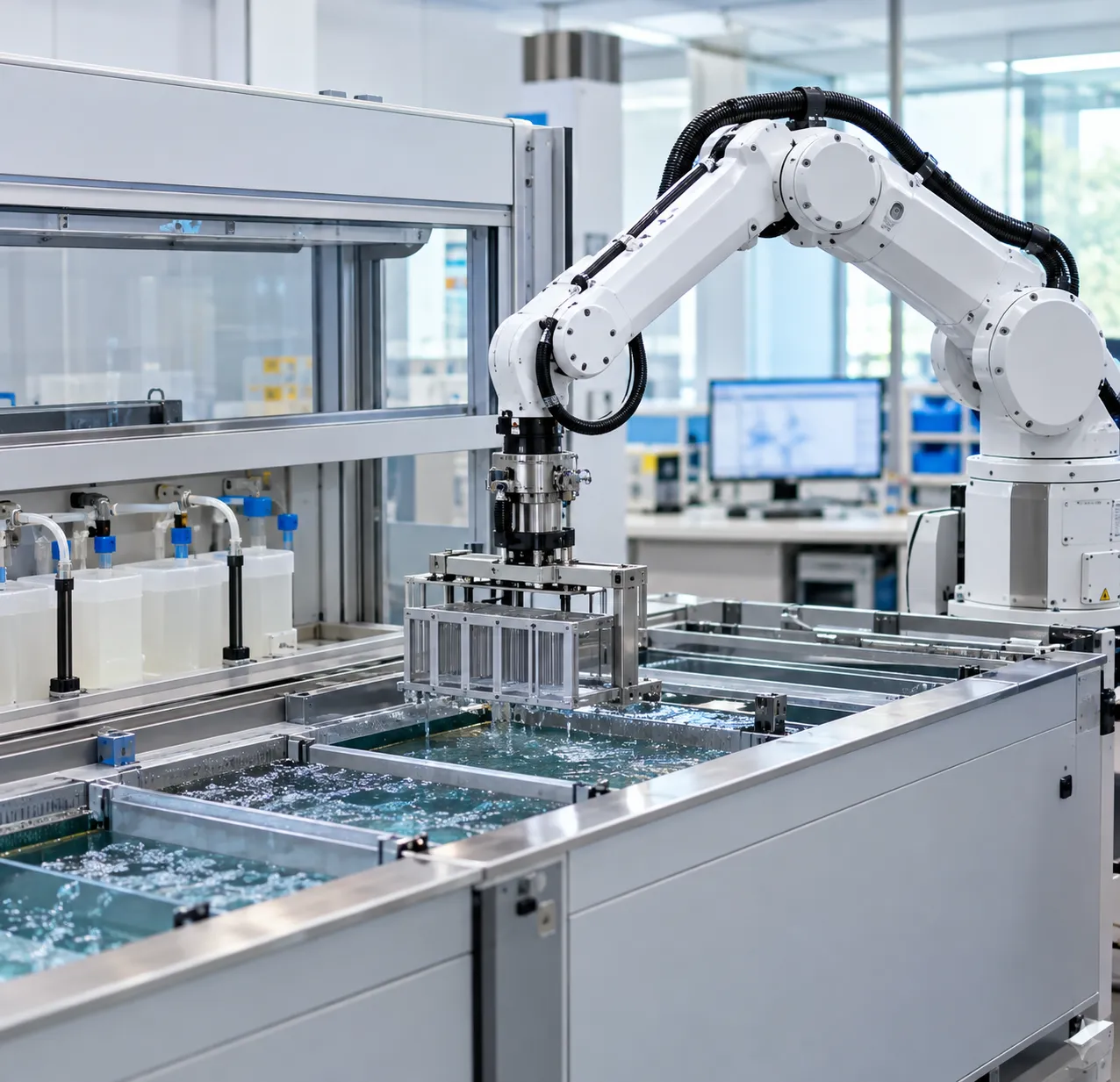
We configure every RCA cleaning wet bench to match specific throughput, footprint, and process control targets.
| Fully Automated | Semi-Automated Hoist | Manual Benches |
|---|---|---|
| Dual-axis robotic handling | Motorized / pneumatic lift | Ergonomic deck layout |
| SECS/GEM fab host integration | Automated recipe timers | Integrated timers / alarms |
| Cassette-to-dryer automation | Manual cassette positioning | Direct operator handling |
Fully Automated Robotic Systems
Designed for high-throughput production lines, our automated wet bench semiconductor wet processing systems remove human variability entirely from the cleaning cycle:
-
- Robotic Transfer: Multi-axis, servo-driven linear transfer mechanisms transfer wafer cassettes smoothly between aggressive acid baths, megasonic tanks, and final drying stations.
- Factory Integration: Integrated SECS/GEM communication protocols enable real-time status reporting, recipe management, and automated lot tracking directly through your host MES.
- Controlled Immersion & Lift: Precision speed profiling controls fluid turbulence during tank entry and exit, minimizing chemical carryover and micro-bubble entrapment.
Semi-Automated Hoist Systems
For pilot lines and medium-scale batch production, semi-automated transfer platforms combine robust recipe repeatability with operational flexibility:
-
- Motorized & Pneumatic Hoists: Vertical lift mechanisms control immersion times down to the second, eliminating over-etching in DHF or chemical over-exposure in heated SC-1 and SC-2 baths.
- Smart Interlocks: Integrated safety sensors verify carrier positioning, process tank readiness, and bath temperature stability before lowering the substrate batch.
- User-Friendly HMI: Touchscreen PLC interfaces allow operators to select pre-programmed recipes while moving carriers between processing zones with minimal manual effort.
Ergonomic Manual Wet Benches
For academic research, device prototyping, and low-volume laboratory cleaning, our manual RCA wet stations offer maximum process freedom:
-
- Operator-Centric Layout: Chemical baths, quick dump rinsers, and DI water spray guns sit within direct reach behind clear sliding sashes.
- Process Assist Timers: Individual tank digital timers with visual and audible alarms ensure precise manual transfer intervals between RCA sequence steps.
- Comprehensive Safety Shields: Protective deck shields, dedicated glove wash fixtures, and high-efficiency lip exhausts safeguard operators during manual chemical immersion steps.
Materials of Construction, Chemical Fluidics & Cleanroom Standards
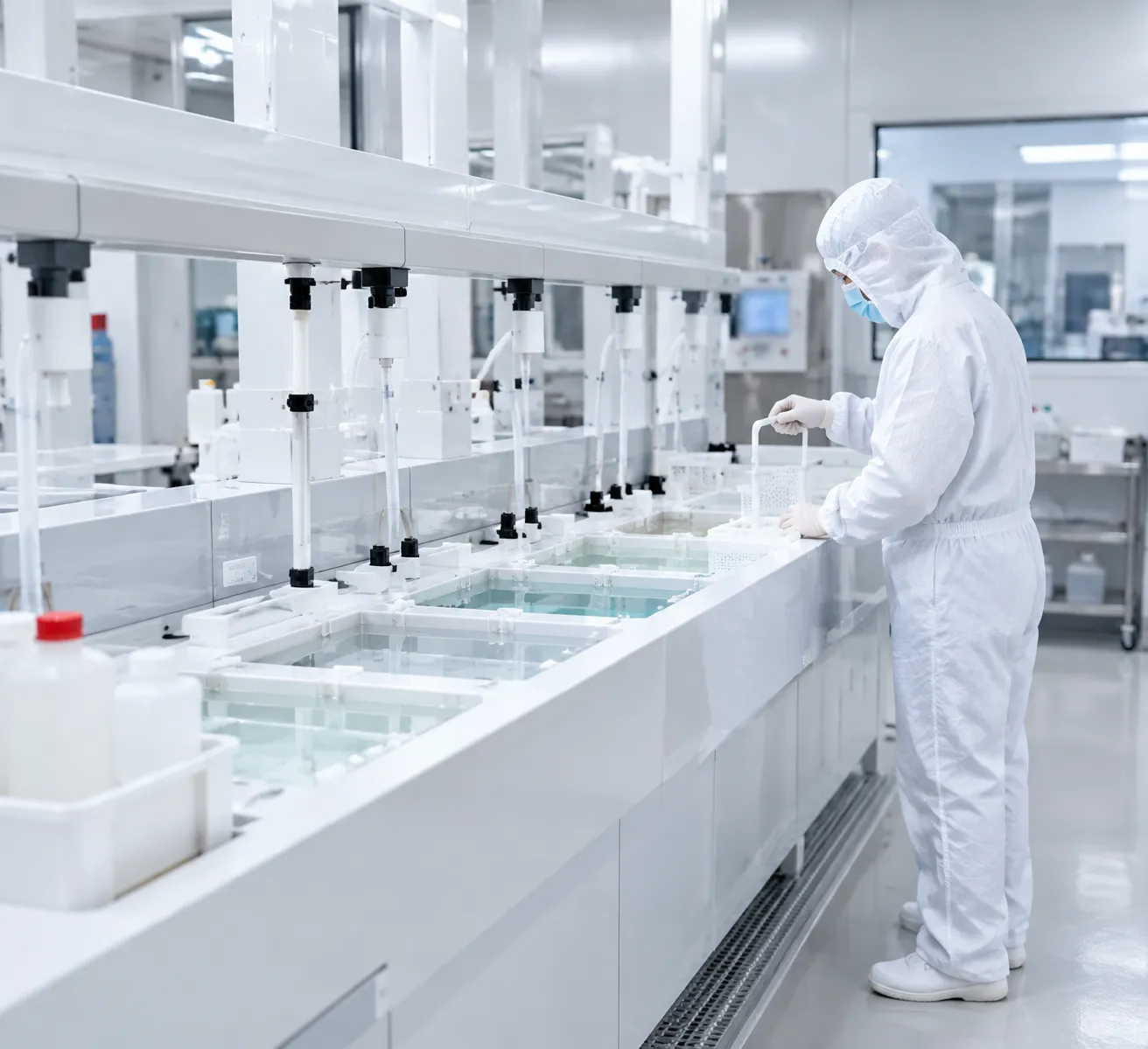
Corrosion-Resistant Enclosures & Process Baths
To balance chemical compatibility and fab safety, our structural frames and chemical tanks use high-purity, certified materials:
FM4910-Compliant Plastics: Flame-retardant white polypropylene (PP) and specialized fluoropolymers form the main bench body to meet stringent cleanroom fire safety standards. Learn more about our manufacturing standards in our wet bench chemistry equipment for semiconductor cleanroom solutions.
Ultra-Pure Quartz Baths: High-purity, seamless quartz vessels handle high-temperature SC-1, SC-2, and SPM processes without ionic leaching.
Fluoropolymer Tanks (PVDF / PTFE / PFA): Dedicated non-metallic tanks provide total chemical inertness for ambient and heated dilute hydrofluoric (DHF) acid etching.
High-Purity Chemical Fluidics & Recirculation
Our chemical delivery loops ensure continuous chemical purity, uniform bath temperature, and steady flow dynamics:
Sealless Magnetic-Drive Pumps: High-purity PFA/PTFE pumps eliminate mechanical seal wear, preventing metallic and particulate contamination.
Continuous In-Line Filtration: 0.05 µm to 0.1 µm PTFE membrane filters remove sub-micron particulates during active bath recirculation.
Double-Containment Tubing: Dual-wall PFA manifolds and secondary containment trays catch and isolate any trace leaks before they affect production areas.
Cleanroom Airflow & ISO Class Integration
To maintain wafer surface integrity during chemical transfer, our wet stations seamlessly integrate with fab environment controls:
Motorized HEPA / ULPA FFUs: Overhead Fan Filter Units deliver continuous vertical laminar flow directly over open process baths.
ISO Class 1 to Class 100 Compatibility: Positive-pressure mini-environments and anti-static polyacrylate sash shields block ambient air drafts and airborne micro-contaminants from reaching the wafer plane.
Safety Engineering, Exhaust Separation & Facility Interlocks
Worker safety and cleanroom integrity drive every aspect of our equipment design. Handling aggressive chemistries like heated Piranha, concentrated HF, and APM solutions requires uncompromising safety hardware. We engineer our RCA cleaning wet bench platforms with multi-layered safety redundancies and smart interlocks to prevent hazardous reactions, chemical leaks, and thermal runaway.
Segmented Exhaust Management
Cross-mixing chemical fumes creates dangerous secondary reactions. We design physical segregation directly into the deck architecture to handle distinct chemical vapor streams:
-
- Acid Exhaust Segregation: Dedicated corrosive-resistant exhaust pathways direct hot acidic vapors (HF, HCl, H2SO4) directly to your facility's acid gas scrubbers.
- Alkaline & Solvent Isolation: Separate ducting handles ammonia fumes from the SC-1 bath and alcohol vapors from drying modules, directing them to appropriate chemical exhaust scrubbers.
- Differential Pressure Monitoring: Continuous static pressure sensors verify active exhaust draw before allowing any chemical heating or chemical dispensing sequences.
Real-Time Leak Detection & Thermal Interlocks
To protect cleanroom assets and eliminate thermal hazards, we integrate automated sensors that continuously communicate with the central PLC:
-
- Dual-Level Float Switches: High- and low-level liquid sensors prevent chemistry overflow and ensure immersion heaters remain fully submerged during active cycles.
- Heater Dry-Run Protection: Thermocouple interlocks cut primary power directly if fluid drops below safe operating thresholds, preventing tank melt and fire hazards.
- Conductive Leak Sensors: Continuous loop sensors in secondary containment basins detect chemical breaks immediately, initiating automated safety drains and recipe holds.
Safety Shields, EMO & Fire Suppression
Our wet benches feature automated physical barriers and clean-agent safety systems built for 24/7 semiconductor cleanroom compliance:
-
- Motorized Safety Shields: Transparent, chemical-resistant sliding sashes protect operators from splash hazards and maintain laminar airflow balance.
- Hardwired Emergency Machine Off (EMO): Ergonomically placed EMO buttons immediately isolate chemical pumps, drop heating power, and park robotic arms in neutral positions.
- Integrated Fire Suppression: Automatic clean-agent fire suppression systems deploy instantly upon thermal or optical flame detection without contaminating adjacent process bays.
RCA Cleaning Wet Bench Technical Specifications & Operating Matrix
Substrate Handling & Batch Capacity
Our wet bench platforms accommodate diverse substrate types and sizes with configurable carrier profiles:
-
- Substrate Compatibility: 2-inch, 3-inch, 100 mm (4"), 150 mm (6"), 200 mm (8"), and 300 mm (12") wafers, along with photomask plates and solar substrates.
- Material Versatility: Silicon (Si), Silicon Carbide (SiC), Gallium Nitride (GaN), Gallium Arsenide (GaAs), Indium Phosphide (InP), and Sapphire.
- Batch Capacity: Standard 25-wafer single cassette or 50-wafer dual cassette configurations, with custom lot carriers available for non-standard substrates.
- Platform Footprint: Modular designs ranging from compact lab-scale setups (approx. 1.5 m to 2.5 m width) to full-scale automated multi-tank production lines (3.5 m to 6+ m width).
Process Control & Fluidic Specifications
Tight chemical management ensures zero cross-contamination and repeatable particle lift-off across all RCA bath steps. Our systems integrate advanced chemical process management systems to maintain continuous process integrity.
| Parameter | Operating Range / Specification | Details & Engineering Controls |
|---|---|---|
| Temperature Control Range | Ambient up to 90°C (SC-1/SC-2) / 130°C+ (SPM) | Closed-loop PID control with ±0.5°C to ±1.0°C bath stability |
| Filtration Ratings | 0.05 µm to 0.2 µm PTFE/PFA filters | Continuous recirculation with low-pulsation magnetic pumps |
| Bath Turnover Rates | 2 to 4 bath volumes per minute | High-flow recirculation loops optimized for uniform chemical exposure |
| Megasonic Agitation | 800 kHz to 1.5 MHz (Direct or Transducer-plate) | Programmable power output for damage-free particle removal |
| Rinse Water Resistivity | Up to 18.2 MΩ·cm | Real-time resistivity monitoring with automated dump triggers |
Facility Utility Requirements
To ensure rapid hookup and seamless installation within cleanroom sub-fab and utility chasing, our wet station semiconductor equipment operates within the following baseline facility specs:
-
- Ultra-Pure Water (UPW / DI Water): 2.0 to 4.0 bar (30–60 psi) supply pressure at 18.2 MΩ·cm quality.
- Clean Dry Air (CDA): 5.0 to 7.0 bar (70–100 psi), filtered to ISO 8573-1 Class 1 for pneumatic actuation and valve operations.
- High-Purity Nitrogen (N2): 3.0 to 5.0 bar (45–75 psi) for chemical bubbling, nitrogen purges, and drying cycles.
- Segmented Exhaust Static Pressure: Dedicated negative static pressure connections (-200 Pa to -500 Pa) for segregated acid, ammonia/alkaline, and solvent exhaust lines to prevent vapor mixing.
Semiconductor Fabrication & Industrial Use Cases
Silicon Microelectronics: Pre-Gate, Pre-Diffusion & Pre-Oxidation Cleans
Thermal processing requires pristine, defect-free substrate surfaces. Even minor metallic impurities or organic films diffuse into the bulk silicon, degrading dielectric breakdown voltage and shifting threshold parameters.
Pre-Gate Oxide Cleans: Combines SC-1 particle stripping with DHF native oxide removal to ensure an ultra-clean, atomically abrupt interface before high-k dielectric deposition.
Pre-Diffusion & Pre-Oxidation: SC-2 processing strips ionic and heavy metal contamination (such as Fe, Cu, and Ni) down to sub-ppb levels, safeguarding furnace tubes and improving minority carrier lifetime in high-volume advanced wafer fabrication environments.
Patterned Wafer Defect Reduction: Optimized megasonic energy coupled with high-purity chemical recirculation removes sub-micron residue without pattern collapse.
Wide-Bandgap Power Devices: SiC & GaN Surface Prep
Compound semiconductors demand stringent chemical compatibility and thermal management due to tough surface oxides and unique lattice chemistry:
Silicon Carbide (SiC) Substrates: High-temperature SPM (Piranha) stripping eliminates stubborn graphitic carbon and heavy organic residue from wafer sawing and polishing steps.
Gallium Nitride (GaN) RF & Power HEMTs: Controlled chemical dosing prevents surface pit formation while etching trace oxides, ensuring ideal surface passivation and reliable ohmic contact formation for demanding power semiconductor manufacturing runs.
Photomask Stripping, Reticles & MEMS Micro-Structures
-
- Photomask & Reticle Cleaning: Non-destructive chemical formulations strip aged photoresist and sub-micron pellicle contaminants while preserving critical dimension (CD) integrity on quartz and chrome plates.
- MEMS Substrate Release & Cleaning: Precision chemical rinse sequences and Marangoni drying eliminate surface tension forces, preventing stiction and micro-structure collapse in high-aspect-ratio sensors and actuators.
Frequently Asked Questions (FAQs)
How does the RCA cleaning sequence effectively remove both particles and metallic ions?
The RCA wafer cleaning system relies on a sequential chemical approach that targets different contamination mechanisms step by step:
-
- Organic & Particle Removal (SC-1): The Standard Clean 1 APM bath (NH_4OH/H_2O_2/H_2O) simultaneously oxidizes organic films and slightly etches the substrate surface. This creates matching negative zeta potentials on both the wafer and the particles, causing electrostatic repulsion that dislodges sub-micron contaminants.
- Oxide Stripping (DHF): A dilute HF bath removes the chemical oxide layer created in SC-1, clearing trapped surface impurities and leaving a hydrogen-passivated surface.
- Metallic Contamination Removal (SC-2): The Standard Clean 2 HPM bath (HCl/H_2O_2/H_2O) dissolves alkali and transition metals, forming soluble metal-chloride complexes that prevent trace ions from re-adsorbing onto the exposed substrate.
Why are megasonics critical in the SC-1 bath?
Megasonic agitation operating in the 0.8 MHz to 2 MHz range provides the physical acoustic energy required to overcome strong boundary layer forces on the wafer surface:
-
- Acoustic Streaming: Generates micro-scale cavitation and high-velocity fluid flow directly at the wafer boundary layer without damaging fragile sub-micron surface topographies.
- Particle Lift-Off: Enhances the chemical undercutting action of the SC-1 chemistry, drastically boosting particle removal efficiency (PRE) down to sub-100nm defect sizes.
- Reduced Cycle Times: Accelerates chemical reaction rates at lower bath temperatures, preserving chemical bath life and maximizing throughput.
How does Marangoni drying prevent watermark defects on high-aspect-ratio patterns?
Marangoni drying eliminates capillary-induced pattern collapse and drying watermarks through surface tension gradients:
-
- Surface Tension Differential: High-purity IPA vapor is introduced at the nitrogen interface as the wafer carrier slowly withdraws from the hot ultra-pure DI water rinse.
- Capillary Pull: The alcohol dissolves into the meniscus, lowering the local surface tension and pulling the liquid film continuously downward off the wafer surface.
- Zero Residue: The wafer emerges completely dry without droplet evaporation, preventing dissolved silica precipitation and watermark formation across dense, high-aspect-ratio structures.
What makes FM4910 materials necessary for cleanroom wet benches?
FM4910-compliant plastics are specialized, flame-retardant polymers strictly required by global semiconductor fab standards:
-
- Fire Propagation Resistance: Limits flame spread and self-extinguishes in the event of an electrical or thermal runaway incident.
- Low Smoke Generation: Prevents the release of dense, corrosive combustion byproducts that could contaminate multi-million-dollar cleanroom air handling systems and processing bays.
- Chemical Compatibility: Maintains exceptional structural integrity against concentrated hot acids, solvents, and oxidizing chemistries over years of continuous operation.
Can the wet bench handle mixed wafer sizes and compound semiconductor materials?
Yes, we engineer our equipment for flexible multi-substrate manufacturing environments:
-
- Substrate Versatility: Fully compatible with standard silicon, as well as wide-bandgap compound semiconductors including silicon carbide (SiC), gallium nitride (GaN), gallium arsenide (GaAs), and quartz photomasks.
- Modular Tooling: Utilizing quick-change universal cassettes and adjustable end-effectors, our wet stations seamlessly accommodate substrate sizes ranging from 2-inch pieces up to 12-inch wafers within our custom wet process stations.
- Recipe Agility: Dedicated PLC/PC recipe management permits immediate parameter adjustments for etching time, chemistry ratios, and megasonic power tailored to specific compound semiconductor surface chemistry requirements.