Formula details
Product Details
Overview
What is a Semiconductor Wet Station?
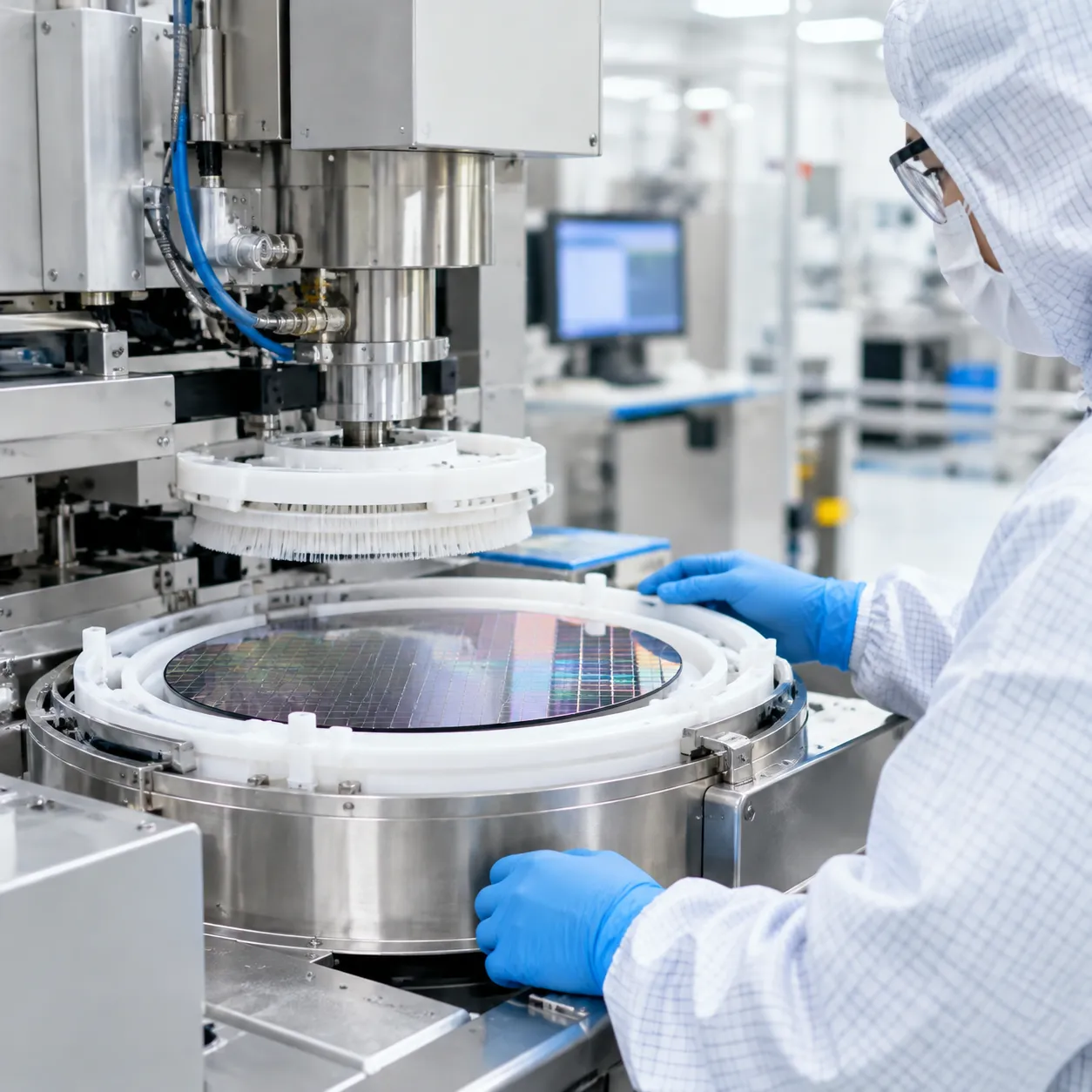
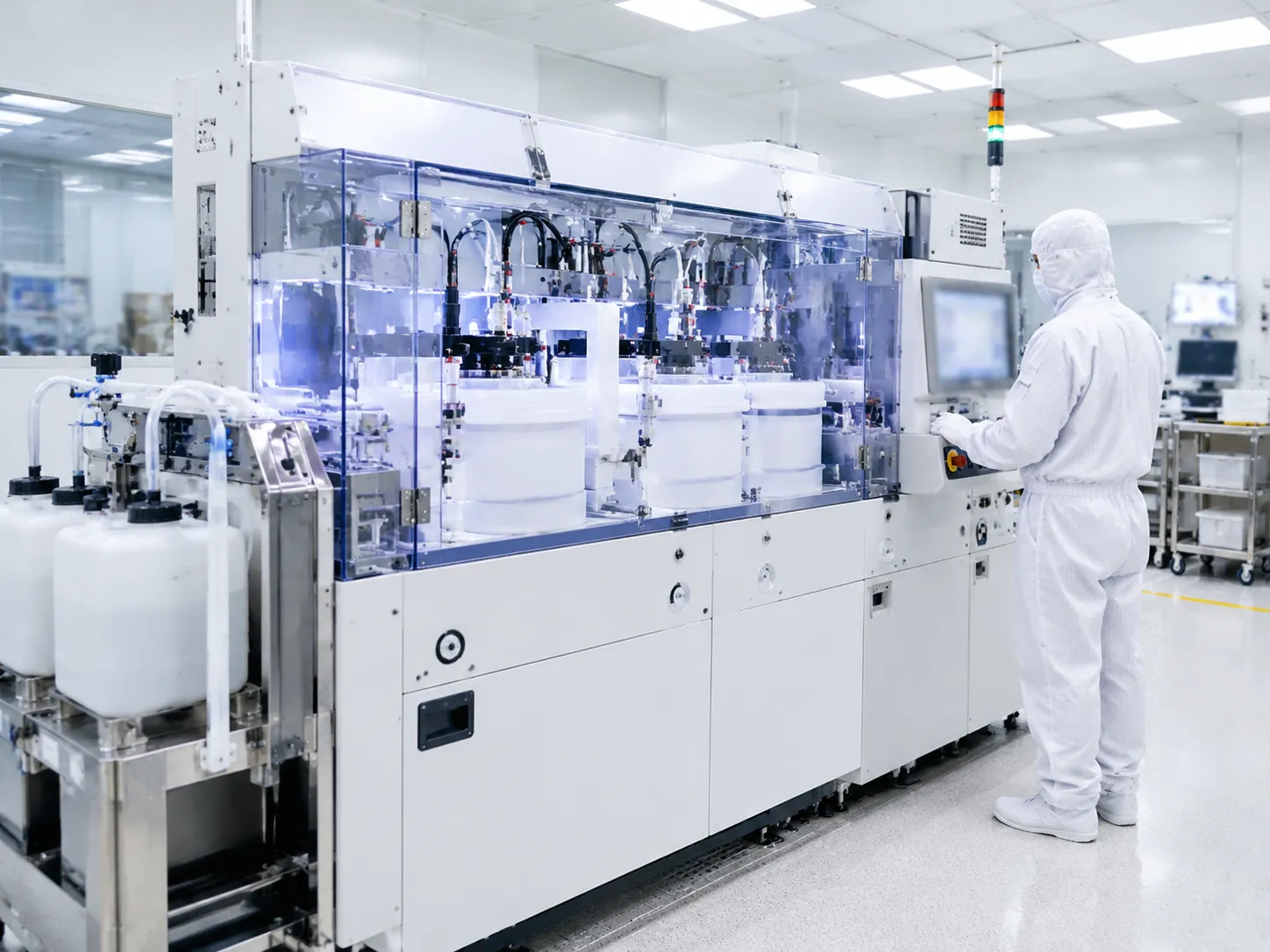
A semiconductor wet station (wet processing bench) is a specialized cleanroom platform engineered to perform controlled liquid chemical treatments on semiconductor substrates.
Wet Station Configurations
To address diverse fabrication environments, throughput demands, and cleanroom protocols, we provide three primary automation architectures:
-
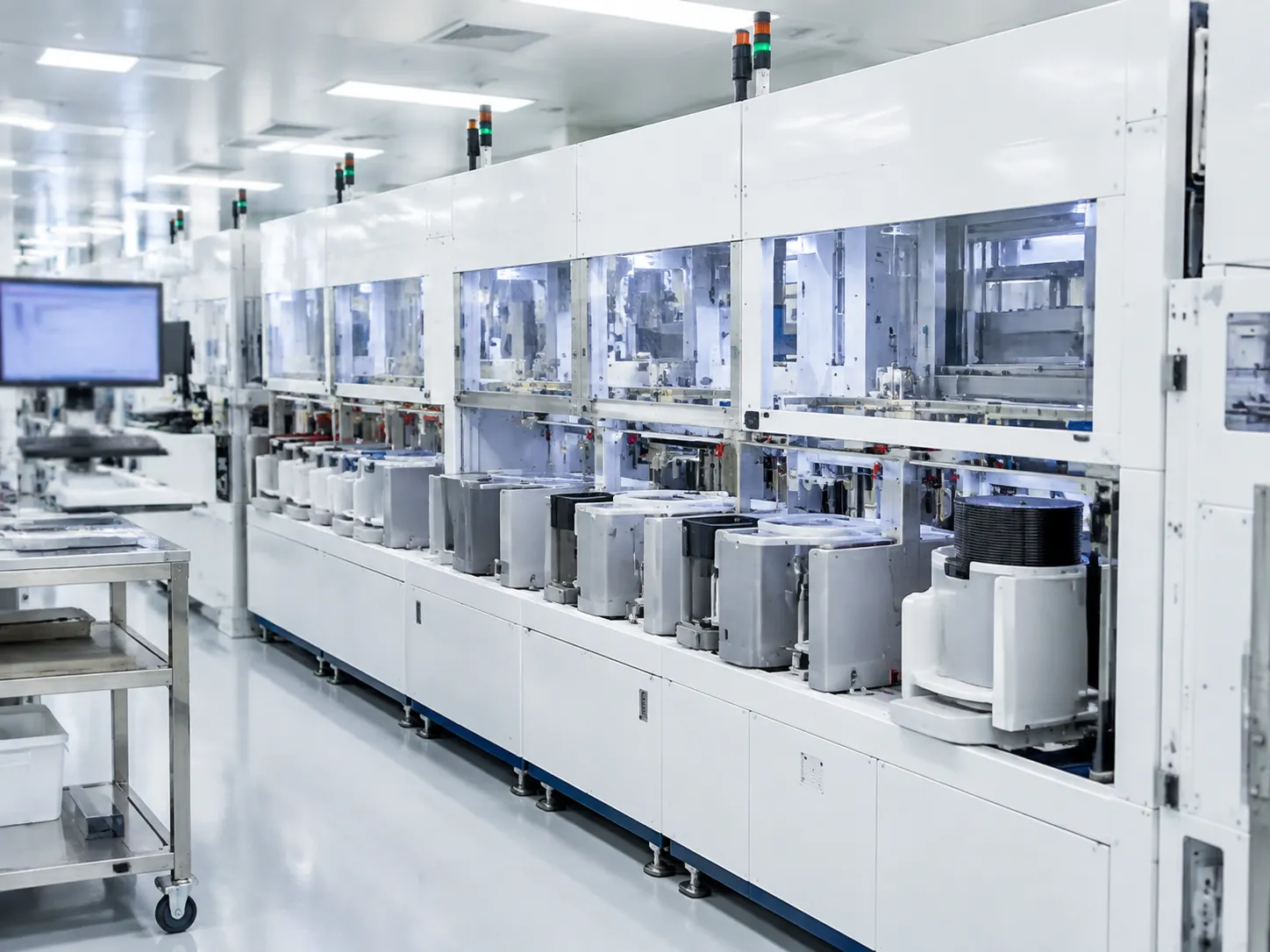
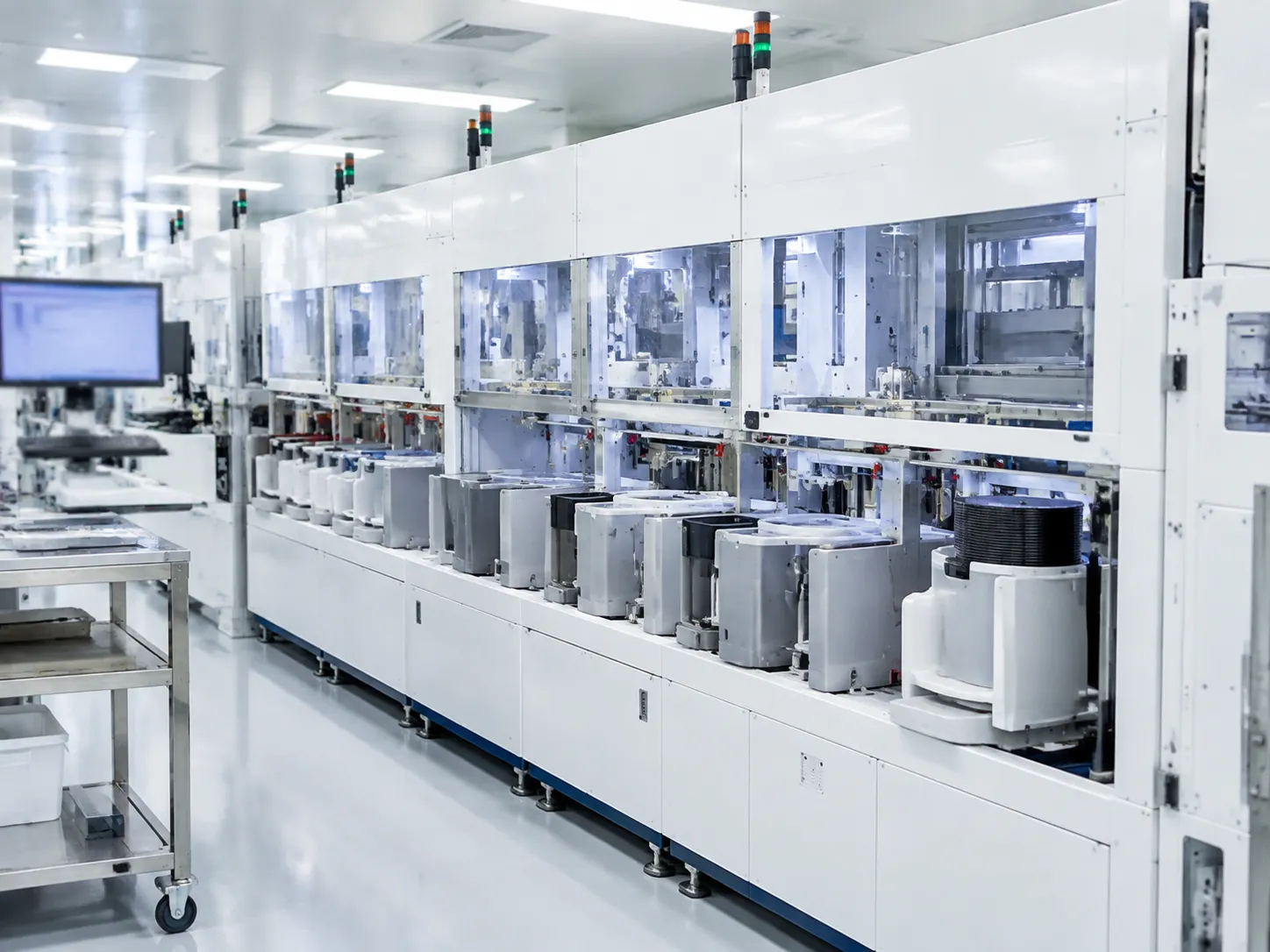
- Fully Automated Robotic Wet Benches (Cassette-to-Cassette):
Equipped with high-precision robotic transfer arms, continuous recipe tracking, and automated chemical replenishment. These closed-loop systems deliver maximum yield protection, zero operator chemical exposure, and consistent wafer-to-wafer uniformity in high-volume manufacturing (HVM). - Semi-Automated Linear Transfer Systems:
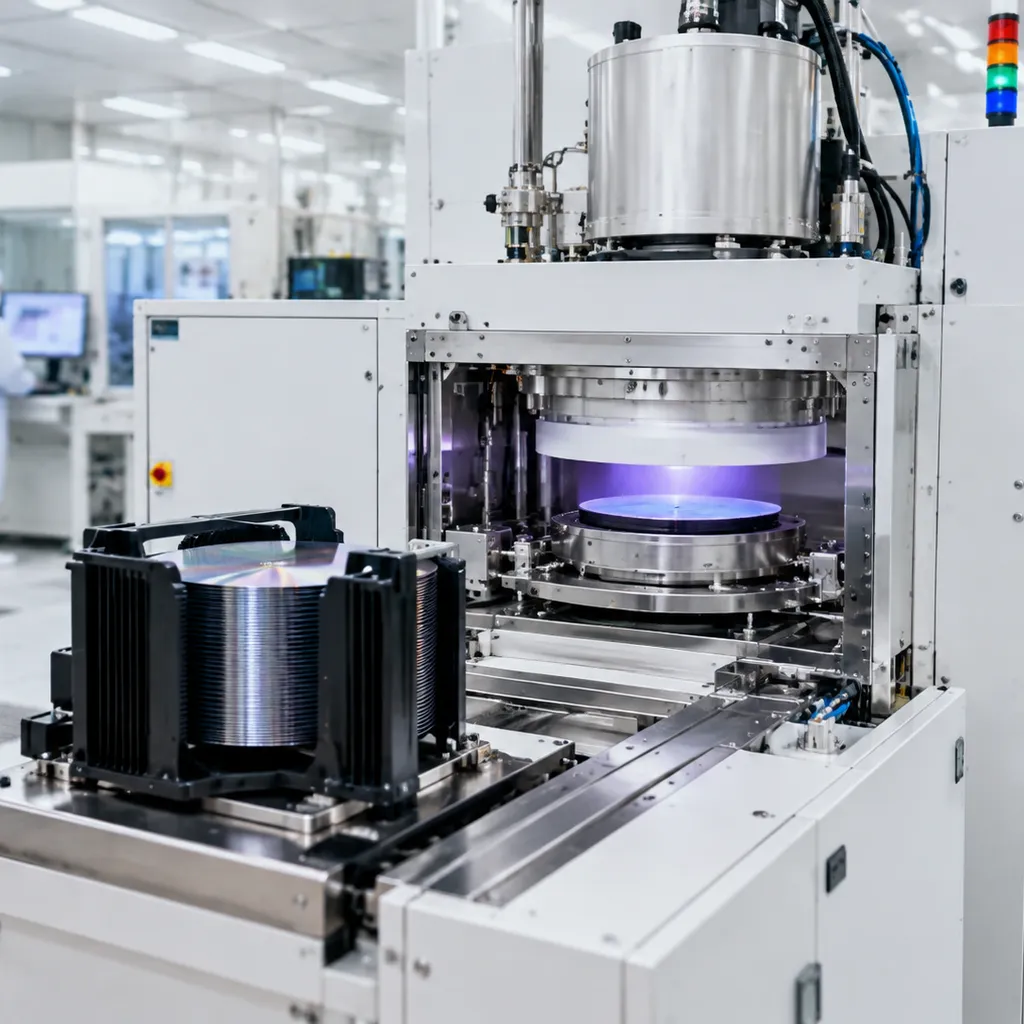
Utilize programmable linear indexers and automated vertical hoists to execute precise bath immersion profiles. Operators manage load/unload sequences, while the system automates process timing, bath agitation, and rinse transitions. - Manual Acid, Base, and Solvent Benches:
Ergonomic, operator-controlled workstations optimized for R&D facilities, pilot lines, university laboratories, and failure analysis (FA). Each bench incorporates isolated chemical zones, dedicated deck aspiration, and fail-safe interlocks.
- Fully Automated Robotic Wet Benches (Cassette-to-Cassette):
Substrate Compatibility and Wafer Sizes
Our wet station platforms accommodate standard and specialized substrate geometries across the following specifications:
-
- Supported Substrate Sizes: 75 mm (3"), 100 mm (4"), 150 mm (6"), 200 mm (8"), and 300 mm (12")
- Supported Materials:
- Prime Silicon (Si)
- Silicon Carbide (SiC)
- Gallium Nitride (GaN)
- Gallium Arsenide (GaAs)
- Indium Phosphide (InP), Sapphire, and Fused Silica
- Form Factors: Standard SEMI-spec round wafers, thinned wafers, custom carrier-mounted dies, and square substrates.
Process Capabilities and Bath Configurations for Wet Station Semiconductor Systems
We engineer every wet station semiconductor platform to support critical surface preparation, etching, and drying sequences with micro-contamination control and tight process repeatability.
TYPICAL WAFERS FLOW
[ SPM / RCA Cleaning ] ──> [ Megasonic Rinse / QDR ] ──> [ Precision Etch ] ──> [ Marangoni / SRD Dryer ]
Advanced Chemical Cleaning and Organic Stripping
-
- RCA Cleans (SC-1 and SC-2): Our standard cleaning recipes deploy heated ammonium hydroxide/hydrogen peroxide mixtures (SC-1) for particle displacement and light organics, followed by hydrochloric acid/peroxide solutions (SC-2) for metallic ion neutralization.
- Piranha Clean (SPM): High-temperature sulfuric acid and hydrogen peroxide baths efficiently strip tough photoresist layers and organic contaminants without damaging underlying substrate surfaces.
- Megasonic-Assisted Cleaning: Configured with multi-frequency transducer arrays to dislodge sub-micron particles from high-aspect-ratio patterns without substrate pitting or pattern collapse.
Precision Chemical Etching and Lift-Off
Our wet etching modules deliver stable etch rates and bath uniformities across single and multi-wafer batch runs:
Dielectric Etching: Dedicated tanks for Buffered Oxide Etch (BOE) and Dilute Hydrofluoric acid (DHF) to remove native and thermal silicon oxides, alongside hot phosphoric acid baths for selective silicon nitride stripping.
Metal Etch and Chemical Lift-Off: Heated solvent and acid stations designed for precise metal layer patterning and clean photoresist lift-off in advanced packaging and compound semiconductor processes.
High-Purity Rinsing and Drying Technologies
To eliminate chemical carryover and surface defectivity, we equip each semiconductor wet bench cleanroom for precision cleaning with matched rinse and dry modules:
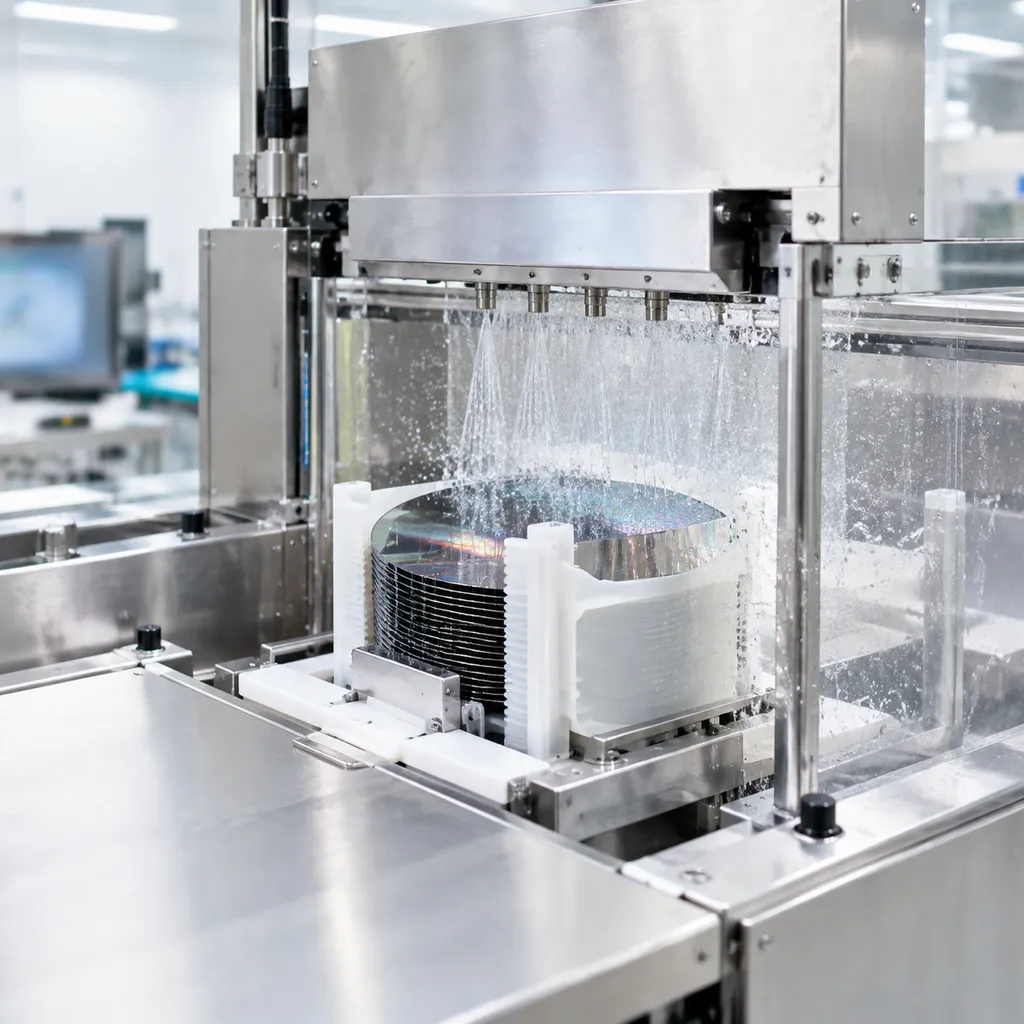
Quick Dump Rinsing (QDR) & Cascade Overflow: Rapid bottom-dump cycles combined with continuous high-resistivity DI water replenishment drive bath resistivity to baseline within seconds.
Marangoni & IPA Vapor Dryers: Surface-tension gradient drying eliminates drying watermarks on hydrophobic wafer topologies down to ultra-fine feature sizes.
Centrifugal Spin Rinse Dryers (SRD): High-speed balanced rotation with heated nitrogen purge delivers fast cycle times and dry wafer cassettes for standard production runs.
Engineering Design and Hardware Architecture
We design every wet station semiconductor platform for high uptime, tight chemical process control, and cleanroom safety. From acid etch modules to high-flashpoint solvent stations, our hardware architecture isolates aggressive chemistries while safeguarding wafers and cleanroom personnel.
-
- Corrosion-Proof & Fire-Safe Materials: For acid and caustic processing, our high-precision wet benches for semiconductor processing use FM4910-compliant fluoropolymers (PVDF, PTFE, and PFA) that prevent chemical degradation and meet cleanroom flammability standards.
- 316L Stainless Steel Solvent Enclosures: Solvent stations feature continuous-welded 316L electro-polished stainless steel enclosures with continuous $N_2$ blanket purging and vapor monitoring to prevent volatile vapor accumulation.
- Non-Contact Robotic Transfer: Fully automated systems utilize multi-axis servo transfer robotics paired with non-contact edge-grip end-effectors. This eliminates front- and back-side wafer scratching and slashes particle generation across bath transfers.
- Inline Concentration & Spiked Dosing: Closed-loop spiking systems monitor real-time chemical baths and replenish depleted oxidizers and acids automatically, keeping bath concentration uniform across continuous production runs.
- Recirculated Thermal Management: Filtered bath loops integrate inline PFA immersion heaters and custom heat exchangers, holding bath temperatures up to 180°C with tight ±0.5 °C control.
- Segregated Facility Drains: Process tanks route effluents into dedicated, isolated plumbing manifolds for acid, alkaline, solvent, and fluoride waste, eliminating cross-reaction risks in fab sub-fab infrastructure.
Safety Systems, Ergonomics, and Cleanroom Compliance
Operator safety and cleanroom integrity drive every wet station semiconductor build we produce. We design our platforms with multi-layered fail-safes, strict exhaust management, and ergonomic access to protect your personnel, fab facilities, and sensitive wafer lots.
Standards and Environmental Controls
-
- Industry Safety Standards: Fully compliant with SEMI S2 (environmental safety), SEMI S8 (ergonomics), SEMI S10 (risk assessment), and CE directives.
- Fire Detection and Suppression: Optical UV/IR flame detectors paired with automated CO2 or FM-200 fire extinguishing systems for solvent and high-temperature processing zones.
- Secondary Leak Containment: Welded, dual-containment sumps equipped with continuous optical liquid-level sensors that immediately isolate chemical lines upon leak detection.
- Exhaust Interlocks & Pressure Monitoring: Differential pressure transducers monitor real-time exhaust airflow, triggering automated tool interlocks and chemical shut-offs if ventilation drops below safety thresholds.
- Cleanroom Airflow Management: Seamless integration into ISO Class 3 (Class 1) environments utilizing dedicated overhead HEPA/ULPA fan filter units (FFUs) to maintain laminar downflow and suppress airborne micro-contaminants during operations on our cleanroom wet process equipment.
Technical Specifications and Operating Parameters
| Parameter | Specification Details |
|---|---|
| Substrate Handling | 75mm, 100mm, 150mm, 200mm, and 300mm wafers |
| Batch Processing Capacity | Up to 50 wafers per carrier / dual-cassette batch |
| Thermal Range & Accuracy | Ambient up to 180°C with precision ±0.5°C bath uniformity |
| Chemical Dispense | BCDS direct hookup or localized pressurized canister delivery |
| Facility Integration | Bay-and-chase or open ballroom cleanroom layouts |
| Control Architecture | Industrial PLC with SECS/GEM (GEM300) standard interface |
Precision Bath Control and Dosing
Maintaining consistent bath chemistry and thermal stability is critical for repeatable etch rates and surface cleaning.
Stable Thermal Control: Our high-temperature tanks hold setpoints up to 180°C with tight ±0.5°C uniformity across the entire carrier bath.
Chemical Delivery: We support both centralized bulk chemical distribution system (BCDS) connections and automated canister systems via advanced chemical process management systems for spiked chemical dosing.
Cleanroom Footprint and Fab Integration
We adapt our equipment footprints to fit both compact bay-and-chase servicing and open ballroom cleanrooms.
High-Throughput Batch Processing: Our batch wafer cleaning systems handle up to 50 wafers per run to optimize overall fab productivity.
Smart Fab Automation: Factory communication runs through an industrial PLC connected to your host MES via standard SECS/GEM and GEM300 protocols, delivering real-time recipe execution, lot tracking, and fault diagnostics.
Target Applications Across Semiconductor Fabrication
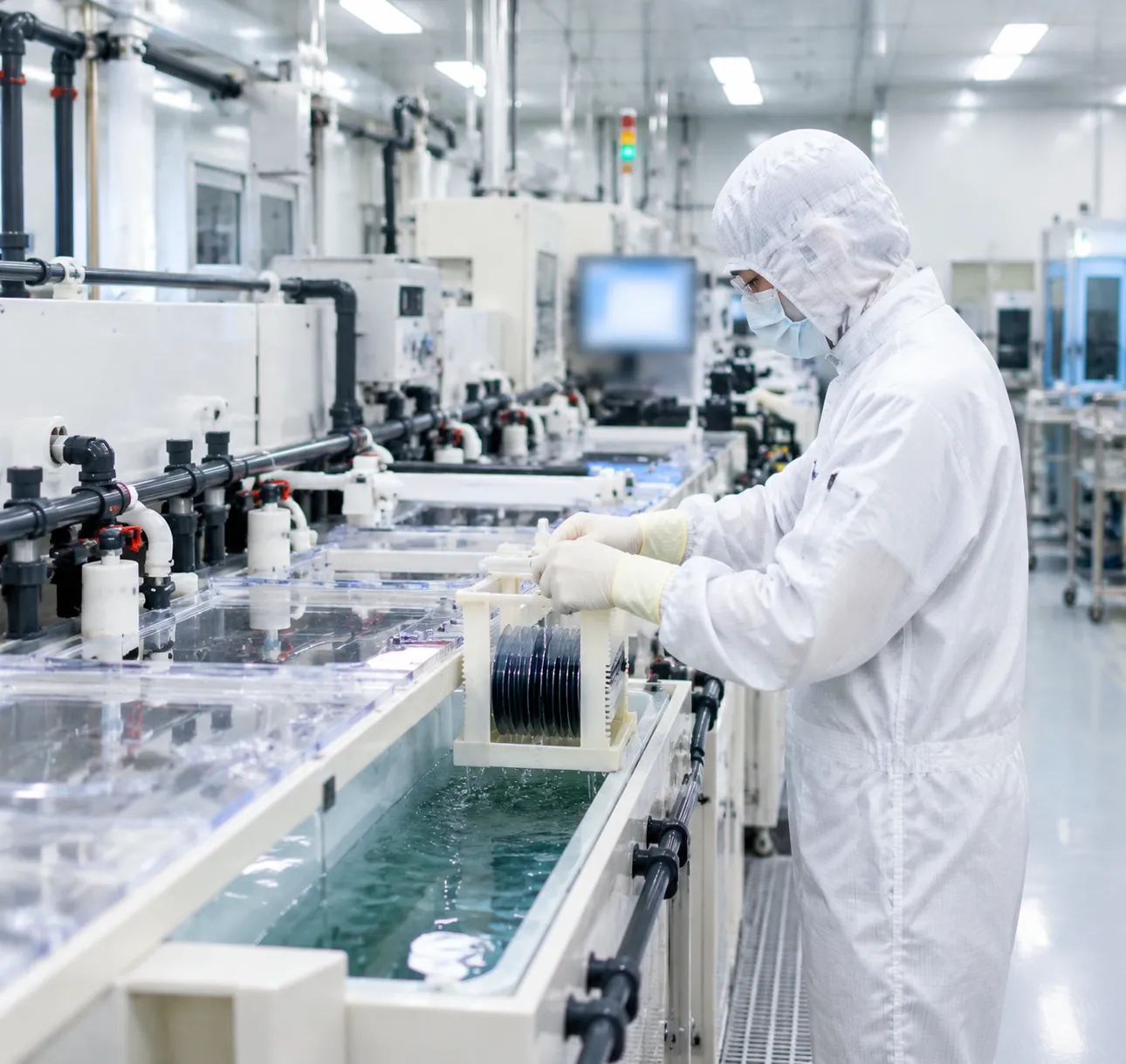
Our wet station semiconductor platforms deliver precise chemical processing, controlled etch rates, and sub-micron particle removal across advanced fabrication lines. We engineer each system to handle specific substrate chemistries and contamination challenges across multiple manufacturing sectors:
- Front-End-of-Line (FEOL) Pre-Gate Clean & Post-CMP Cleaning:
- Removes trace metallic impurities, native oxides, and slurry residue before critical thermal oxidation and gate dielectric deposition.
- Utilizes megasonic-assisted chemistry and controlled chemical boundary layers to prevent pattern collapse on high-aspect-ratio nodes in semiconductor manufacturing.
- Compound Semiconductor Manufacturing for SiC & GaN:
- Handles high-temperature acid formulations for surface passivation, native oxide strip, and defect etching on wide-bandgap substrates.
- Engineered specifically for demanding compound semiconductor applications, including substrate thinning and back-end metallization preparation for power devices.
- MEMS, Sensors, and Microfluidics Etching:
- Delivers precise anisotropic and isotropic wet etching for silicon cavities, diaphragms, and microchannels using controlled KOH, TMAH, and buffered oxide etch (BOE) baths.
- Maintains tight bath temperature uniformity (±0.5°C) to ensure uniform etch depth and consistent structural profiles across every batch.
- Photovoltaic Texturing & Display Surface Preparation:
- Enables high-throughput alkaline texturing and acid polishing on silicon wafers to optimize light-trapping surfaces.
- Removes organic residues and particles from glass and flat panel substrates prior to thin-film coating and lithography.
Quality Assurance, Testing, and Turnkey Support
Factory and Site Acceptance Testing (FAT/SAT)
Every automated wet processing station undergoes rigorous validation before and after delivery:
-
- Factory Acceptance Testing (FAT): Completed at our assembly plant with full DI water cycling, dry cycling, robotic transfer accuracy testing, sensor calibration, and software interlock verification.
- Site Acceptance Testing (SAT): Conducted inside your cleanroom to verify chemical compatibility, bath temperature uniformity, exhaust balancing, and host SECS/GEM communication.
- Standards Validation: Full verification against SEMI S2, S8, and cleanroom air handling standards through our certified quality management system.
Customized Bath Sequencing and Facility Hookup
We tailor every wet bench layout to match your specific fab footprint and chemical handling needs:
-
- Custom Recipe Sequencing: We optimize bath-to-bath transfer sequences, chemical immersion times, and megasonic settings to maximize throughput and wafer yield.
- Facility Integration Support: Our engineering team provides detailed hookup schematics for DI water, chemical delivery, N2 purges, cleanroom exhaust, and segregated drain lines.
- Streamlined Build Standards: Our tools adhere strictly to our standardized manufacturing process to eliminate cleanroom installation bottlenecks.
Global Field Service, SLAs, and Spare Parts
We protect your capital investment with direct technical support and dependable maintenance programs:
-
- Preventive Maintenance SLAs: Scheduled on-site servicing for pump overhauls, filter replacements, robotic re-calibration, and heater element checks.
- Rapid-Response Field Service: Dedicated process and hardware engineers ready for immediate troubleshooting and line optimization.
- Guaranteed Spare Parts Supply: Fast global dispatch for critical consumables, PFA valves, optical sensors, immersion heaters, and motor drives to minimize tool downtime.
Frequently Asked Questions (FAQ)
What is the difference between manual, semi-automated, and fully automated wet stations?
We configure wet processing platforms based on your fab's throughput, automation requirements, and budget:
| Station Type | Transfer Mechanism | Best For | Key Advantage |
|---|---|---|---|
| Manual | Operator-handled wafer carriers | R&D labs, low-volume university cleanrooms | Lower initial capital cost and maximum recipe flexibility |
| Semi-Automated | Pneumatic/linear head transfer with manual load | Pilot lines, medium-scale production | Controlled dip times with minimal operator chemical exposure |
| Fully Automated | Multi-axis robotics (cassette-to-cassette) | High-volume manufacturing (HVM) fabs | Complete process repeatability, zero human contact, and high throughput |
For high-yield cleanroom production, our automated wet bench semiconductor systems deliver cassette-to-cassette handling, while our manual wet bench systems provide flexible, cost-effective solutions for targeted process development.
How does Marangoni drying eliminate wafer water marks compared to standard SRDs?
Standard spin rinse dryers (SRD) rely on high-speed centrifugal force, which can leave microscopic water marks, create mechanical stress, or trap droplets in high-aspect-ratio patterns.
Our Marangoni drying process utilizes an isopropyl alcohol (IPA) vapor-assisted surface tension gradient:
Zero Mechanical Stress: The substrate is slowly lifted from ultra-pure hot DI water while exposed to a low-concentration IPA/N2 vapor layer.
Surface Tension Gradient: The resulting gradient pulls water off the hydrophilic/hydrophobic wafer surface instantly without droplet formation.
Particle-Free Results: Leaves completely dry, watermark-free wafers suitable for sub-micron and critical pre-gate steps.
What materials are used to ensure chemical compatibility with hot acids and solvents?
We select construction materials strictly matched to chemical properties and fab safety ratings:
FM4910-Rated Plastics: Natural PVDF, PTFE, and high-purity PFA for hot acid and base tanks (such as Piranha SPM, SC-1, SC-2, and BOE) to resist chemical degradation and meet cleanroom fire safety standards.
Electropolished 316L Stainless Steel: Fully bonded, grounded, and N2-purged stainless steel enclosures for solvent benches to mitigate static charge buildup and volatile organic compound (VOC) ignition risks.
Fluoropolymer Fluid Circuits: PFA immersion heaters, PTFE chemical pumps, and PVDF valves to ensure zero metallic trace contamination.
Can chemical baths be customized for advanced compound semiconductors like SiC and GaN?
Yes. We engineer customized process tanks specifically designed for the aggressive chemical regimens required by wide-bandgap compound semiconductors:
High-Temperature Acid Tanks: Custom quartz and PTFE immersion tanks engineered for heated phosphoric acid ($H_3PO_4$) and molten KOH etching up to 180°C (±0.5°C control).
Specialized Substrate Handling: Dedicated non-contact, edge-grip end-effectors compatible with transparent, thin, or warped Silicon Carbide (SiC), Gallium Nitride (GaN), and Gallium Arsenide (GaAs) wafers ranging from 75mm to 200mm.
Targeted Lift-Off Chemistry: Ultrasonic- and megasonic-assisted solvent baths configured for precision metal lift-off and stubborn organic residue removal.
How do automated wet stations integrate with fab MES via SECS/GEM?
Our automated wet station semiconductor platforms use industrial PLC controllers equipped with standard SEMI GEM300 / SECS-II communication interfaces over Ethernet (HSMS):
Real-Time Lot Tracking: Seamless communication for carrier ID verification, recipe selection, and automated start/stop cycles.
Data Logging: Continuous parameter monitoring, including chemical concentration, bath temperatures, bath lifetimes, and filter differential pressures.
Alarm and Event Management: Direct reporting of interlock trips, exhaust flow fluctuations, and liquid leak events to the fab's central Manufacturing Execution System (MES).